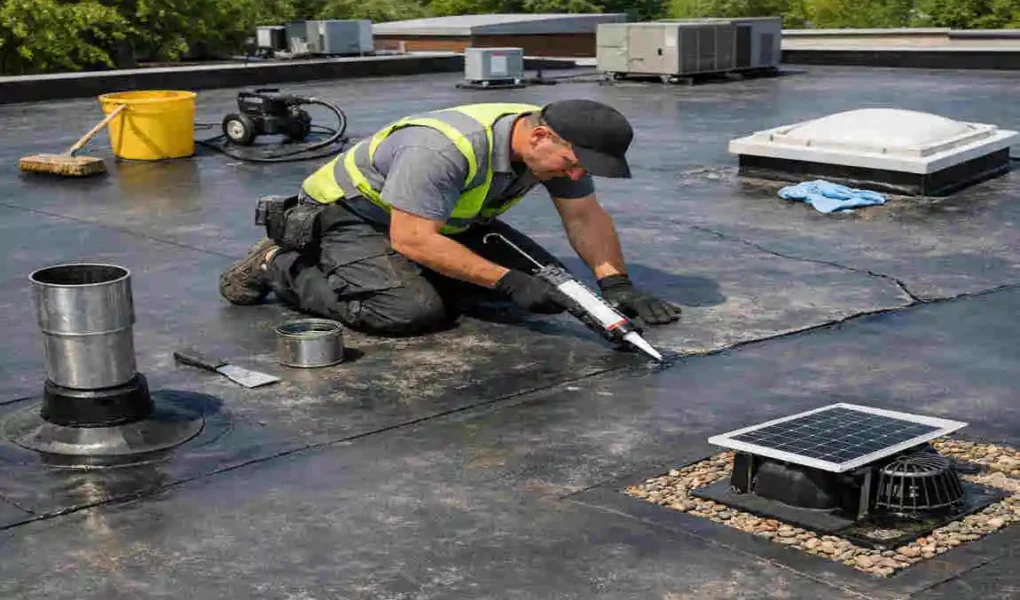
EPDM roof system maintenance is one of the smartest ways to protect a flat or low-slope roof. EPDM, or ethylene propylene diene monomer, is a durable rubber roofing membrane many property owners choose for its performance in tough weather.
Still, even strong roofing needs care. Over time, debris can collect on the surface, seams can weaken, water can pool in low spots, and flashing can wear out. If these small issues are ignored, they can lead to leaks and expensive repairs.
That is why regular maintenance matters. A simple roof care routine can help you catch problems early, keep water moving off the roof, and extend the life of the membrane.
Understanding the EPDM Roof System and Its Maintenance Needs
What Is an EPDM Roofing System?
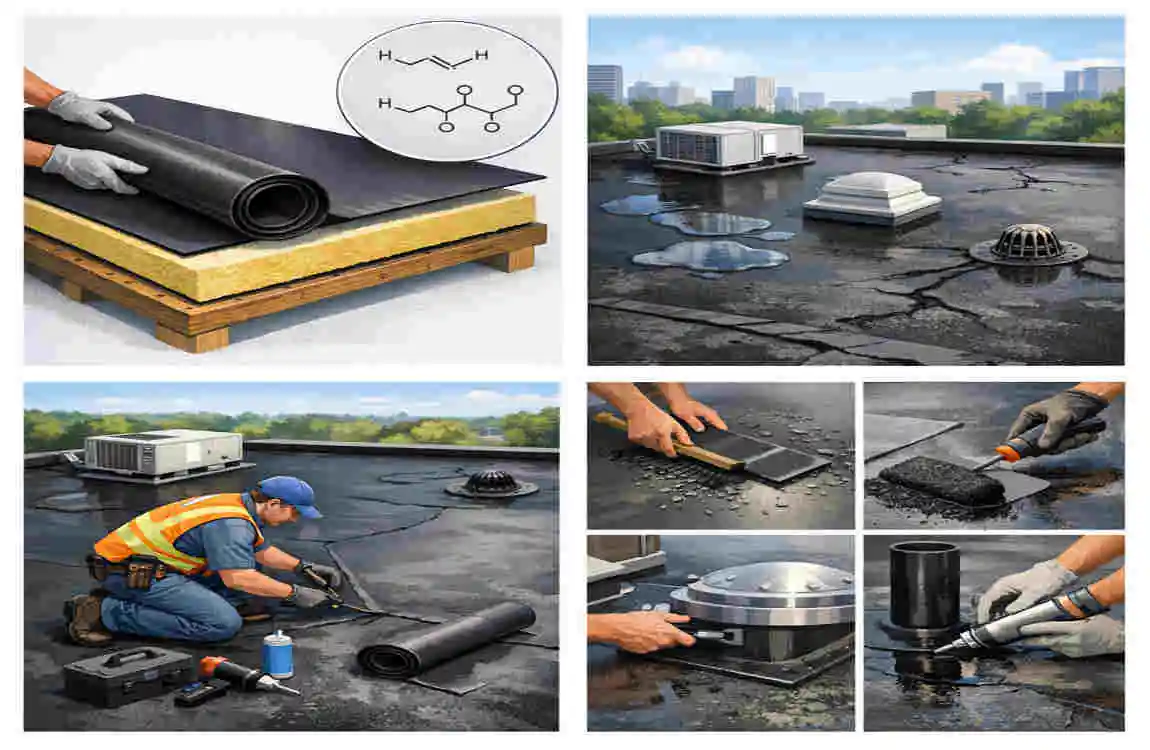
EPDM is a synthetic rubber roofing material used mainly on flat and low-slope roofs. It is flexible, weather-resistant, and relatively easy to maintain.
You will usually see it installed in one of three ways:
- Fully adhered: glued down to the roof surface
- Mechanically attached: secured with fasteners and plates
- Ballasted: held in place with stone or pavers
Each system has different maintenance needs, but all of them benefit from regular checks.
Why Maintenance Matters
A good EPDM roof can last a long time, but only if it stays in good condition. Maintenance helps protect the roof’s seams, flashing, drains, and membrane surface.
Regular inspections and cleaning can catch small problems before they become major leaks. That can save money, reduce downtime, and protect the building’s interior from water damage.
Common EPDM Roof Problems
Some of the most common issues include:
- Cuts, punctures, and tears in the membrane
- Loose seams or failed adhesive
- Standing water in low areas
- Damaged flashing around vents and edges
- Damage from storms or foot traffic
These issues may start small, but they can become serious if they are ignored.
How Often Should You Maintain It?
A smart schedule usually includes:
- Monthly or as needed visual checks
- Seasonal inspections
- Professional inspection at least once a year
- Extra checks after severe weather
If the roof is older, has trees nearby, or supports a lot of equipment, it may need more attention.
Essential EPDM Roof Inspection Practices
Inspect the Membrane Surface
Start by looking at the surface of the roof. Check for:
- Punctures
- Cracks
- Blisters
- Loose areas
- Unusual wear patterns
Changes in texture or colour can be a warning sign. Try not to walk on the roof more than necessary, and avoid sharp tools that could make the problem worse.
Check Seams and Joints
Seams are one of the most important areas to inspect. If they begin to lift or separate, water can get underneath the membrane.
Look for:
- Raised seam edges
- Gaps
- Deteriorated adhesive
- Old repair areas that may be failing again
If a seam looks weak, have a roofing professional check it.
Inspect Flashing and Roof Penetrations
Flashing protects areas around:
- Pipes
- Vents
- Skylights
- HVAC units
- Roof edges
These areas often fail before the main membrane does. Small gaps or loose flashing can allow water into the roof system. Make sure any repair materials used are compatible with EPDM.
Look for Ponding Water and Drainage Issues
Water that stays on the roof after rainfall is a concern. It may point to a drainage problem, slope issue, or blockage.
Check drains, gutters, and scuppers for:
- Leaves
- Dirt
- Trash
- Ice or other debris
If ponding keeps happening, the roof may need a deeper inspection.
Keep a Roof Inspection Record
A simple log helps a lot. Write down:
- Inspection dates
- Problem areas
- Photos
- Repairs made
- Follow-up notes
This record helps you track patterns and plan future maintenance more wisely.
Best Practices for Cleaning and Preventive EPDM Roof Maintenance
Remove Debris Regularly
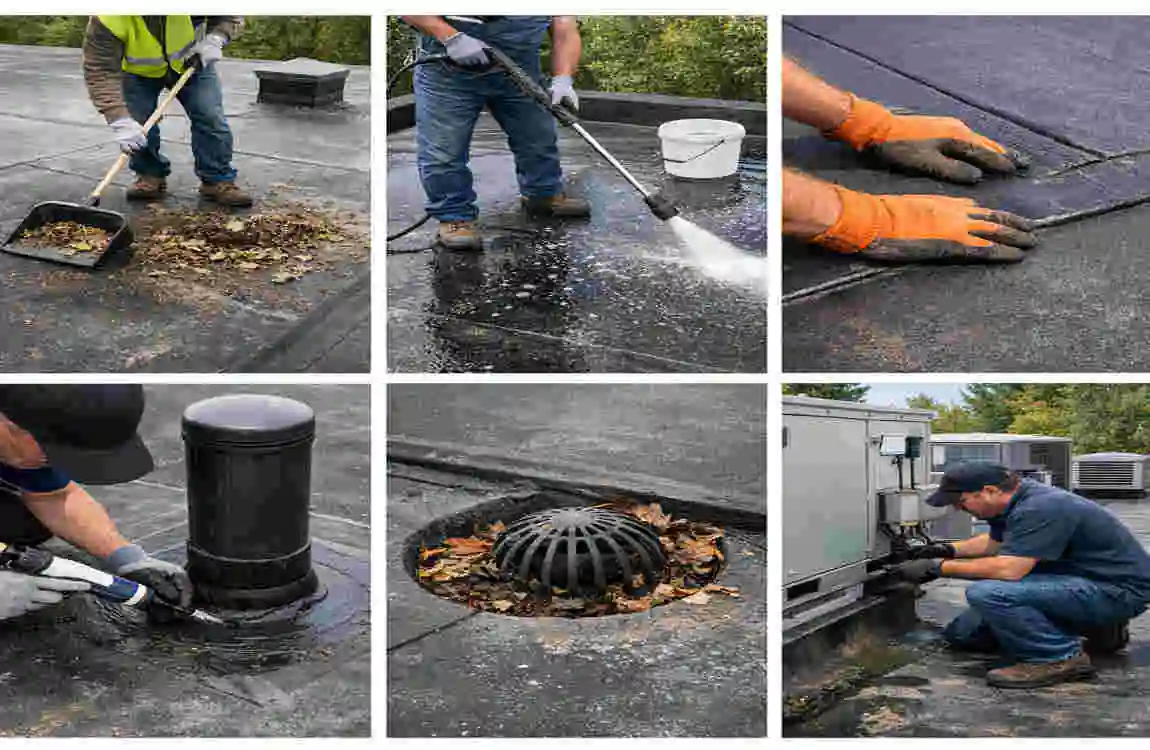
Leaves, sticks, and dirt can block drains and hide damage. They can also trap moisture on the roof surface.
Use soft, non-abrasive tools when cleaning. Avoid anything that could scratch or puncture the membrane.
Clean the Roof Safely
Always follow the roofing manufacturer’s instructions. Some cleaners are safe for EPDM, while others are not.
Avoid:
- Harsh chemicals
- Petroleum-based cleaners
- Strong solvents
- Abrasive scrubbers
These products can damage the rubber surface or weaken future repairs.
Maintain Drains and Gutters
Good drainage is critical. Water should move off the roof quickly and freely.
Check that:
- Drain covers are clear
- Gutters are not blocked
- Scuppers are open
- Water flows away as designed
If cleaning doesn’t fix the problem, have a contractor inspect the system.
Prevent Damage From Foot Traffic
Too much foot traffic can wear down the membrane. Limit roof access when possible, and use proper walkways if available.
Also keep in mind:
- Do not leave sharp tools on the roof
- Do not drag equipment across the surface
- Make sure all contractors know the roof type before work begins
Protect the Roof Around Equipment
Rooftop equipment can create extra wear. Ensure HVAC units and service areas are clean and properly supported.
Trim overhanging branches and remove debris that could fall onto the roof during storms.
EPDM Roof Repair, Leak Prevention, and Weather Protection
Spot Early Signs of Leaks
Inside the building, leaks may show up as:
- Ceiling stains
- Damp insulation
- Musty smells
- Water spots near walls or vents
A leak may appear far from the actual roof opening because water can travel under the membrane first. That is why the visible stain is not always the true source.
Repair Small Damage Quickly
Small cuts and punctures should be repaired as soon as possible. Before applying a patch, the damaged area must be cleaned and prepared correctly.
A basic repair usually involves:
- Cleaning the surface
- Preparing the area with the right product
- Applying a compatible EPDM patch
- Pressing and sealing it properly
If the damage is large, or if the insulation below is wet, a professional should handle it.
Maintain Seams and Flashing
Seam failure and flashing damage can let water into the roof assembly. That is why these areas need extra attention.
Use only compatible EPDM repair materials such as approved tapes, primers, and adhesives. Generic sealants may not bond correctly and can fail early.
Prepare for Heavy Rain and Storms
Before bad weather, check drainage and remove loose items from the roof. After strong wind, hail, or falling branches, inspect the roof when it is safe to do so.
Look closely at:
- Roof edges
- Flashing
- Drainage points
- Any new punctures or lifted areas
Watch Weather Effects Year-Round
Both hot and freezing weather affect roofing materials. Over time, expansion and contraction can stress seams and flashing.
That is why climate-aware maintenance matters. Inspect the roof after extreme temperature swings and clear away ice, leaves, or other blockages when needed.
Professional EPDM Roof Maintenance, Costs, and Long-Term Performance
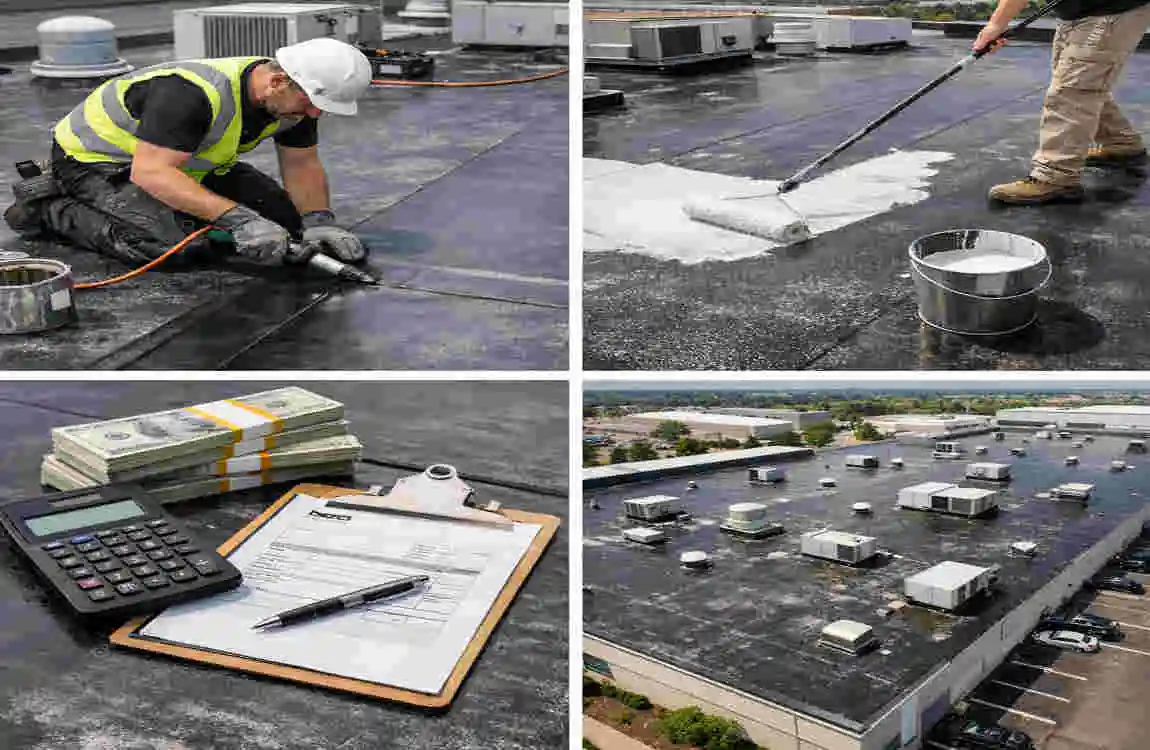
When to Hire a Professional
Some problems are better left to a roofing contractor. You should call a professional if you notice:
- Repeated leaks
- Widespread seam failure
- Ponding that keeps coming back
- Large punctures or tears
- Flashing damage around multiple areas
A trained contractor can often spot hidden issues that a basic visual check can miss.
What Affects Maintenance Costs?
EPDM maintenance costs vary based on:
- Roof size
- Roof age
- Accessibility
- Amount of damage
- Number of repairs needed
- Drainage condition
- Rooftop equipment
A small repair may be affordable, but larger problems can cost more if they affect insulation or underlying roof layers.
Maintenance vs. Replacement
Regular maintenance can delay the need for a full replacement. But if the roof has repeated leaks, widespread damage, or saturated insulation, replacement may be the better long-term choice.
A professional should review the full roof system, not just the visible membrane, before making that call.
Simple Maintenance Schedule
A practical EPDM roof schedule looks like this:
- Monthly: quick visual check for debris and drainage issues
- Seasonally: inspect membrane, seams, flashing, and drains
- After storms: check for damage when it is safe
- Yearly: schedule a full professional inspection
Keeping a written log makes this much easier to manage.
Frequently Asked Questions About EPDM Roof System Maintenance
How often should an EPDM roof be inspected?
Check it regularly, with seasonal inspections and at least one professional inspection each year. You may need more frequent checks after storms or on older roofs.
How do you clean an EPDM rubber roof?
Remove loose debris first, then use manufacturer-approved cleaners and soft tools. Avoid harsh chemicals and abrasive scrubbing.
What is the best way to repair a small hole?
Use a compatible EPDM patch and follow the correct prep steps. If you are unsure, hire a roofing professional.
Can standing water damage an EPDM roof?
EPDM handles moisture well, but standing water can still point to drainage or structural issues that should be fixed.
How long can an EPDM roof last with proper maintenance?
That depends on the roof quality, climate, installation, and care. Good maintenance can support long service life, but no roof lasts forever.
What cleaning products should be avoided?
Avoid petroleum-based products, strong solvents, and harsh chemicals that may damage the membrane.
Maintenance Area | Essential Tips |
|---|---|
Roof Inspection | Inspect the EPDM roof at least twice a year and after severe storms. |
Roof Cleaning | Remove leaves, dirt, branches, and debris regularly. |
Seam Inspection | Check seams for separation, gaps, or signs of damage. |
Leak Prevention | Look for water stains, ponding water, and moisture inside the building. |
Flashing Maintenance | Inspect flashing around vents, skylights, and roof edges. |
Drainage System | Keep gutters and drains clear to prevent standing water. |
Membrane Repair | Repair tears, punctures, and damaged areas using compatible EPDM materials. |
Foot Traffic | Limit unnecessary walking on the membrane to prevent punctures. |
Related Posts