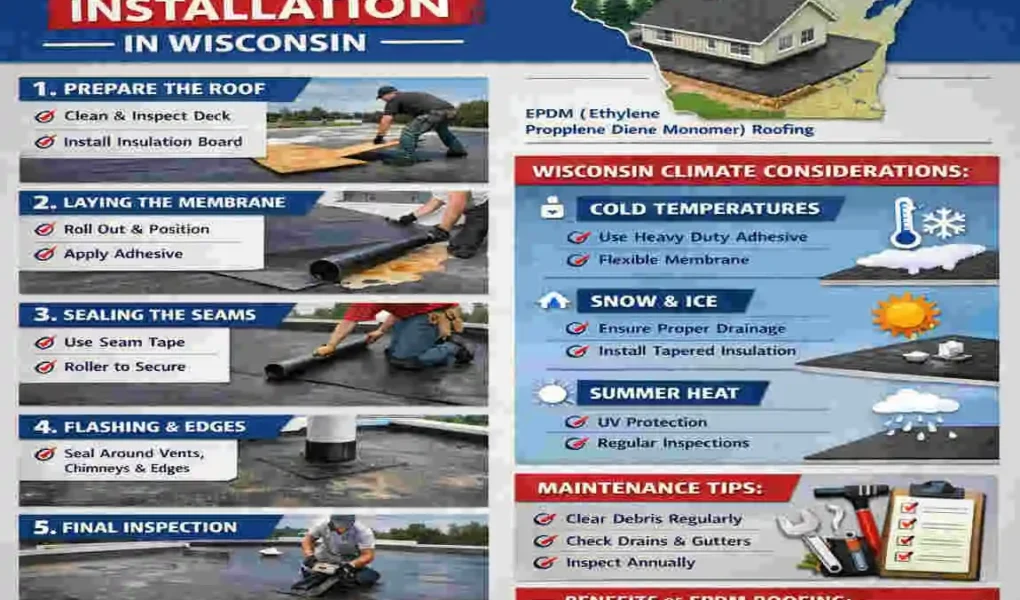
EPDM roofing is a smart choice for many flat and low-slope roofs in Wisconsin. It is simple, durable, and built to handle tough weather. If you are comparing roofing options, EPDM roof installation in Wisconsin is worth understanding before you decide.
Wisconsin weather can be rough on a roof. Heavy snow, freezing temperatures, rain, strong sun, and wind all create stress over time. That is why homeowners and property owners often look for a roofing system that stays flexible, resists moisture, and holds up through the seasons.
EPDM Roof Installation Wisconsin: What Homeowners Need to Know
What Is EPDM Roofing?
EPDM stands for ethylene propylene diene monomer. That sounds technical, but the idea is simple. It is a rubber roofing membrane used mostly on flat or low-slope roofs.
The membrane comes in large sheets and forms a protective layer over the roof. Its job is to keep water out of the building. When installed correctly, it gives strong protection and can last for many years.
Why EPDM Is Popular
EPDM has been used for a long time because it is reliable and cost-effective. Many property owners like it because it is:
- Flexible
- Water-resistant
- Simple to repair
- Good for large roof areas
- Well-suited for cold weather
That makes it a practical option for Wisconsin homes and buildings.
What You Will Learn Here
This article walks you through the full process in simple language. You will understand how EPDM works, how it is installed, what it costs, and what to ask before hiring a contractor.
What Is EPDM Roofing and How Does It Work?
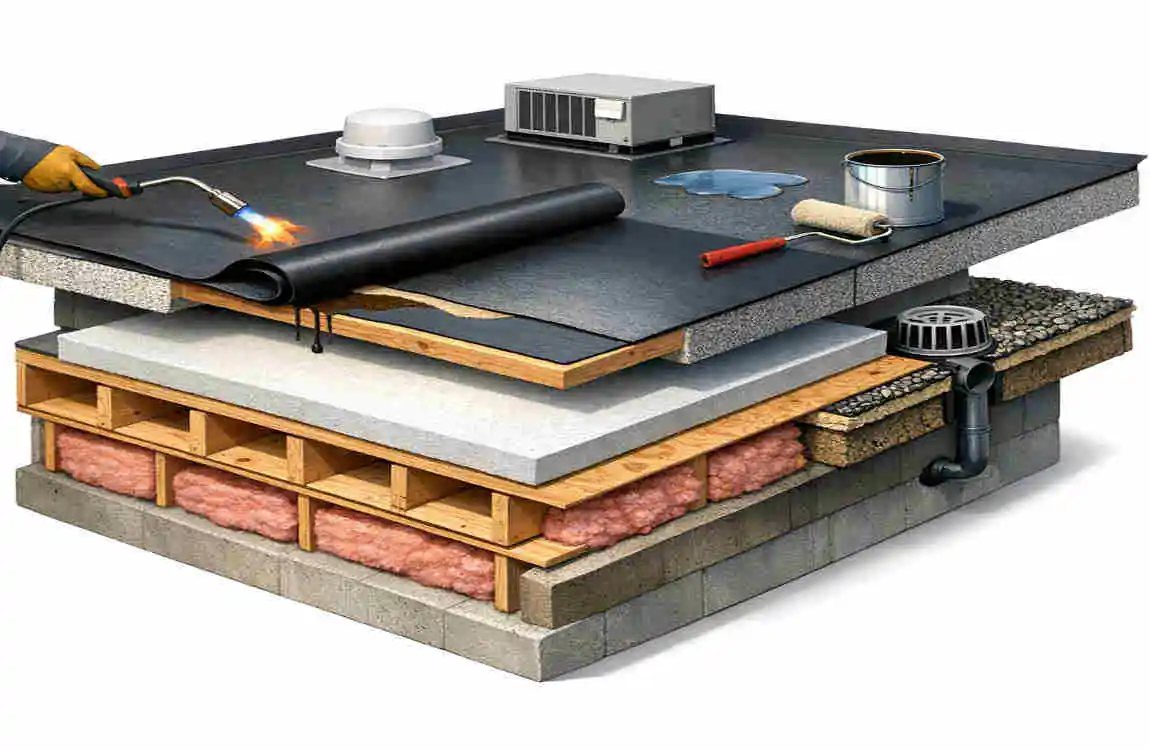
The Basic Idea
EPDM roofing is a single-ply membrane system. That means the roof uses one main layer of rubber-like material instead of several layers of traditional roofing products.
The membrane covers the roof surface and is sealed so water cannot pass through. It protects the roof deck and the building below.
Main Parts of an EPDM Roof
A complete EPDM system often includes:
- The rubber membrane
- Insulation
- Adhesive or fasteners
- Flashing
- Seams and seals
- Drainage details
Each part matters. If one part is installed poorly, the whole roof can suffer.
How It Handles Weather
EPDM performs well in cold weather because it stays flexible. That matters in Wisconsin, where temperatures rise and fall often. When a roofing material can expand and contract without cracking, it usually lasts longer.
It also works well against rain and snow, which is a major reason many people choose it.
Residential vs Commercial Use
EPDM is used on both homes and commercial buildings. It is especially common on garages, additions, porches, apartment buildings, offices, and other structures with flat or low-slope roofs.
Homeowners often choose it when durability and low maintenance matter more than style.
Why EPDM Roof Installation Is a Good Choice for Wisconsin
Wisconsin Weather Creates Roofing Challenges
Wisconsin roofs face many weather conditions in a single year. A roof may see snow in winter, rain in spring, strong sun in summer, and freezing nights in fall.
That kind of weather can wear down weaker roofing systems. EPDM is popular because it can handle these changes better than some other materials.
Strong in Freezing Temperatures
A roof in Wisconsin needs to stay flexible in the cold. EPDM does this well. It is less likely to become brittle when temperatures drop.
This helps reduce cracking and weather-related damage.
Good for Snow and Moisture
Snow can sit on the roof for long periods. When it melts, water can find weak spots if the roof is not sealed properly. EPDM helps protect against this by creating a strong waterproof layer.
That is one reason it is a common choice for flat roofs in snowy areas.
Handles Sun and Summer Heat
Wisconsin does not only deal with cold. Summer sunlight also affects roofing materials. EPDM has strong weather resistance and can withstand seasonal heat and UV exposure.
Wind and Movement Resistance
Roofs expand and contract as temperatures change. EPDM can move with the building better than some stiff materials. When attached correctly, it also handles wind well.
When EPDM May Not Be the Best Fit
EPDM is not the perfect choice for every roof. It may not be ideal if you want a very steep roof, a highly decorative finish, or a roofing system designed for a specific architectural style.
Still, for many flat and low-slope roofs in Wisconsin, it remains a strong option.
EPDM Roof Installation Process in Wisconsin
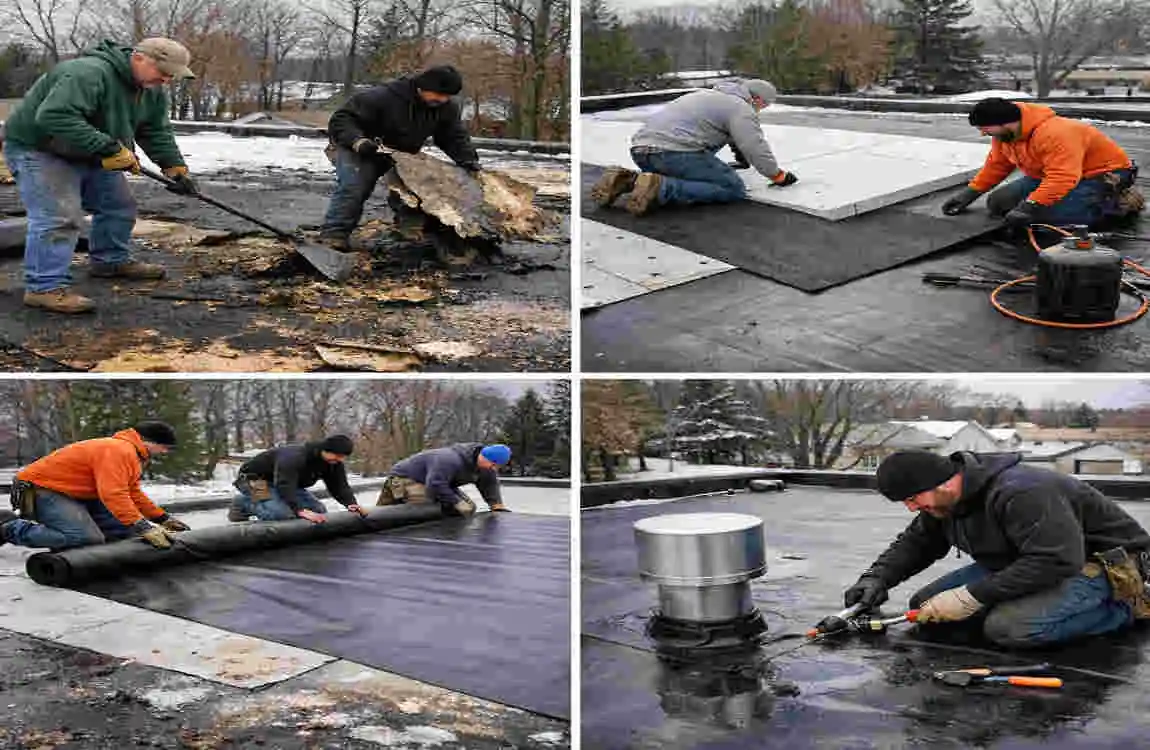
Roof Inspection and Planning
A good project starts with a full inspection. The contractor checks the roof structure, drainage, current materials, and any signs of damage.
This step helps determine whether the roof needs repairs before installing the new membrane.
Measuring the Roof
The roof must be measured carefully. Accurate measurements help the contractor order the right amount of material and avoid waste.
A clear project plan also helps keep the work on schedule.
Preparing the Existing Roof
Sometimes the old roof must be removed. In other cases, the surface can be prepared for a new layer.
The roof deck must be clean, dry, and solid before installing the membrane.
Checking the Roof Deck
If the roof deck has soft spots, rot, or structural damage, fix those problems first. EPDM performs best on a strong, stable base.
Adding Insulation and Underlayment
Insulation can improve energy performance and help the roof meet local needs. Underlayment may also be added depending on the system being used.
Cutting and Positioning the Membrane
The membrane is cut to fit the roof layout. Then it is carefully placed to cover the roof surface evenly.
Do this step carefully to avoid wrinkles, gaps, or stress points.
Installation Methods
EPDM can be installed in a few different ways:
- Fully adhered: glued to the roof surface
- Mechanically fastened: secured with fasteners
- Ballasted: held down with stone or similar material
The best method depends on the roof design, local conditions, and project goals.
Sealing the Seams and Flashing
Seams are one of the most important parts of the roof. They must be sealed properly to keep water out.
Flashing around vents, pipes, skylights, and roof edges also needs close attention.
Final Drainage and Cleanup
Good drainage helps prevent standing water. After installation, the contractor checks the surface, cleans up the site, and confirms that everything is sealed correctly.
Why Professional Installation Matters
EPDM may sound simple, but it must be installed correctly. Wisconsin weather can expose weak points quickly. A skilled installer helps reduce leaks, poor drainage, and early failure.
EPDM Roof Cost, Maintenance, and Lifespan in Wisconsin
What Affects the Cost?
There is no single price for EPDM roof installation in Wisconsin. Costs depend on several factors, including roof size, thickness, labour, insulation, and tear-off needs.
Common Cost Factors
Cost Factor: Why It Matters
Roof size Bigger roofs need more material and labour
Roof shape Complex layouts take more time
Membrane thickness Thicker material often costs more
Insulation needs Better insulation raises the total cost
Tear-off work Removing old roofing adds labour and disposal costs
Flashing and drainage Extra detailing increases the project price
Maintenance Basics
EPDM is low maintenance, but not maintenance-free. A simple checkup a few times a year can help you catch problems early.
Look for:
- Loose seams
- Cracks or punctures
- Bubbles or blisters
- Standing water
- Leaks around vents and edges
Seasonal Maintenance in Wisconsin
In winter, watch for heavy snow and ice buildup. In spring, check for damage from freeze-thaw cycles. In summer, inspect the roof after storms or strong heat.
Catching a small issue early is usually easier than fixing a major leak later.
How Long EPDM Lasts
A properly installed EPDM roof can last for many years. Lifespan depends on material quality, installation, weather exposure, and maintenance.
With proper care, it can provide long-term value.
Repair or Replace?
Small leaks, seam issues, or punctures can often be repaired. But if the roof has widespread damage, major ageing, or repeated leaks, replacement may make more sense.
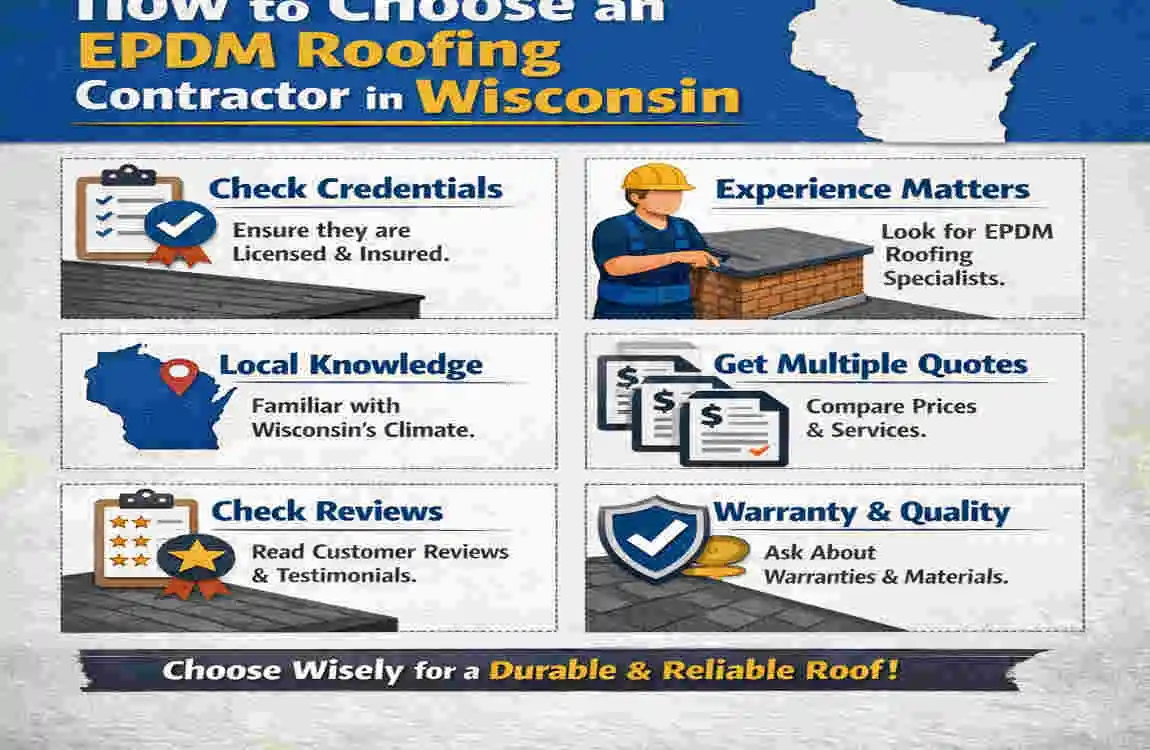
How to Choose an EPDM Roofing Contractor in Wisconsin
Why Local Experience Matters
A contractor who knows Wisconsin weather can make better choices about materials, fasteners, sealing, and drainage. Local experience matters because roofing needs change by climate.
Questions to Ask Before Hiring
Ask about:
- Experience with EPDM
- Licensing and insurance
- Warranty coverage
- Installation method
- Roof inspection process
- Timeline and cleanup
These questions help you compare contractors more clearly.
What to Look For
A reliable contractor should give a clear written estimate, explain the work in simple language, and answer your questions without pressure.
Be careful if someone offers a vague quote or avoids details.
Signs of a Weak Contractor
Watch out for these warning signs:
- No proof of insurance
- Very low pricing with no explanation
- Poor communication
- No written contract
- No clear warranty information
Preparing for Installation
Before work begins, clear the area around your building if needed. Talk with the contractor about access, noise, and timing so the project can move smoothly.
EPDM Roof Installation Wisconsin FAQs
How much does EPDM roof installation cost in Wisconsin?
The cost depends on roof size, labour, material thickness, insulation, and whether you must remove the old roof.
How long does an EPDM roof last in Wisconsin?
A properly installed EPDM roof can last for many years, especially with routine maintenance and quick repairs when needed.
Is EPDM roofing good for Wisconsin winters?
Yes. EPDM performs well in cold temperatures because it stays flexible and resists cracking.
Can EPDM roofing handle heavy snow?
Yes, when installed correctly. It is commonly used on flat and low-slope roofs in snowy regions.
How long does EPDM roof installation take?
The timeline depends on roof size, weather, and preparation work. A simple project may take less time than a large or damaged roof.
Can EPDM be installed over an existing roof?
Sometimes yes, but it depends on the condition of the current roof and local building rules. A contractor should inspect the roof first.
What thickness of EPDM is best?
That depends on the building and budget. A contractor can recommend the right thickness based on durability needs and how the roof will be used.
Does EPDM roofing require maintenance?
Yes, but not a lot. Regular inspections, cleaning, and quick repairs help extend the roof’s life.
Is EPDM better than TPO for Wisconsin?
Both have benefits. EPDM is often favoured for flexibility and cold-weather performance. At the same time, TPO may appeal to some property owners for other reasons.
Should I hire a professional?
Yes, especially in Wisconsin. Proper installation is very important for long-term roof performance.
| Topic | Short Information |
|---|---|
| Roofing Material | EPDM is a durable synthetic rubber membrane commonly used on low-slope and flat roofs. |
| Wisconsin Climate | EPDM can handle cold temperatures, snow, rain, and seasonal weather changes when properly installed. |
| Best Roof Type | Especially suitable for flat and low-slope residential or commercial roofs. |
| Installation Process | Typical work includes roof inspection, surface preparation, insulation, membrane installation, seam sealing, flashing, and final inspection. |
| Cold Weather Installation | Installation requires careful attention to temperature, adhesives, membrane handling, and surface moisture. |
| Snow & Ice | Proper drainage and secure membrane attachment are important for Wisconsin’s winter conditions. |
| Lifespan | A properly installed EPDM roof can provide long-term service, with actual lifespan depending on material quality, installation, maintenance, and weather exposure. |
| Maintenance | Regular inspections, cleaning drains, checking seams, and repairing damaged flashing can help extend roof life. |
Related Posts