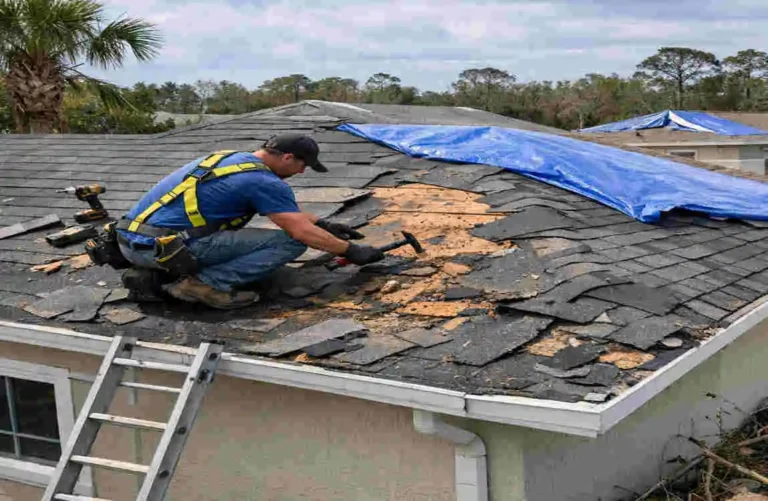
Colorado Springs roof damage often occurs after severe weather because homes here face hail, strong winds, heavy rain, snow, and sudden changes in weather. A roof may look fine at first, but storm damage is not always easy to spot from the ground.
That is why a quick check after a major storm matters. Even small issues can turn into leaks, ceiling stains, or bigger structural problems if you ignore them. If you own a home in Colorado Springs, knowing what to look for can save you stress and money.
Common Causes of Storm-Related Roof Damage in Colorado Springs
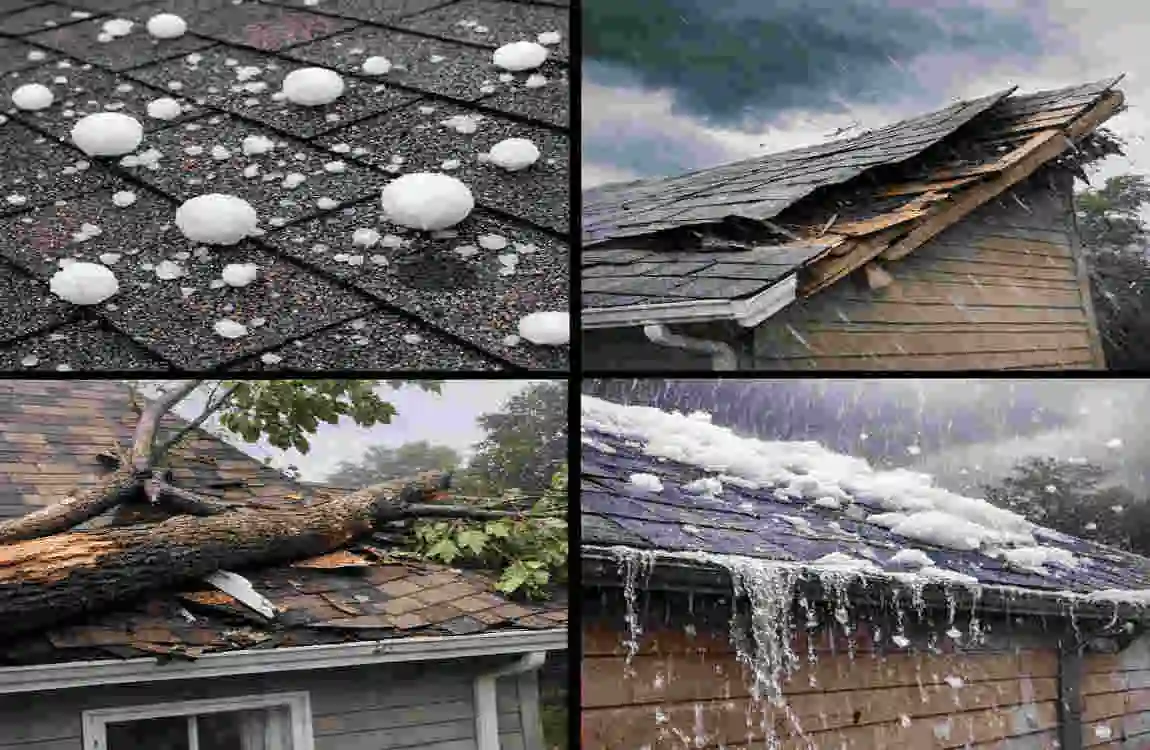
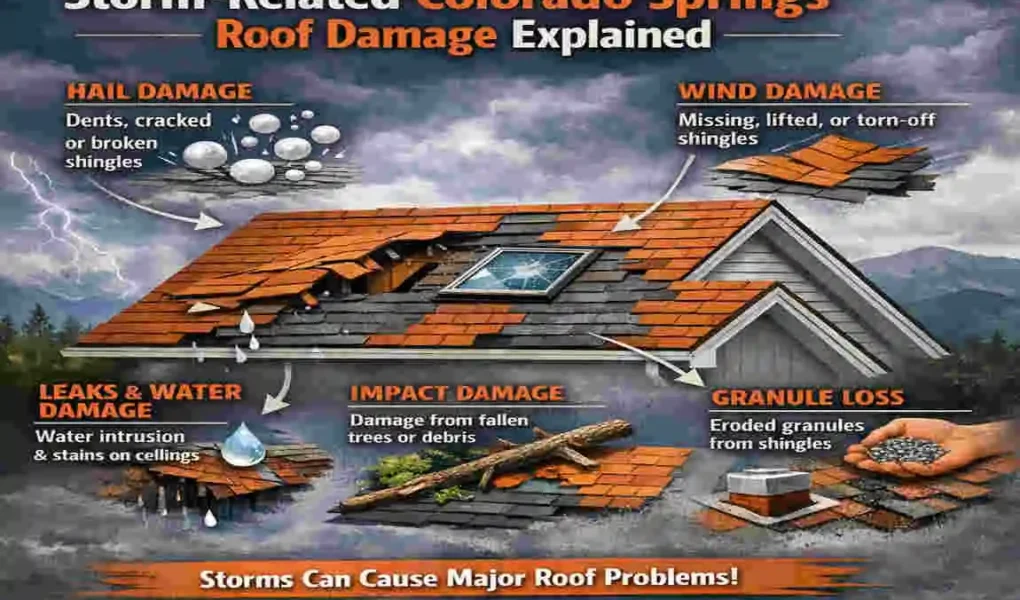
Hail can dent, crack, or loosen roofing materials. Asphalt shingles may lose protective granules, while metal parts such as gutters, vents, and flashing may show visible dents.
Even small hailstones can cause damage over time. The roof may still look normal, but the surface may be weakened and more likely to leak later.
High Wind Damage
Strong wind can lift shingles, loosen flashing, or blow away roof materials entirely. The most common trouble spots are roof edges, ridges, vents, and gutters.
Sometimes the wind does not remove shingles, but it still weakens them. That makes future storms more damaging.
Heavy Rain and Water Damage
Heavy rain can quickly reveal weak spots in the roof. Water often enters around flashing, skylights, chimneys, and other roof openings.
A small leak can spread inside the home before you notice it. That is why roof checks after storms are so important.
Snow and Ice Damage
Snow adds weight to the roof, and ice can create drainage problems. When meltwater refreezes, it can push moisture into weak areas.
Poor drainage and old roofing materials make this worse. Over time, snow and ice can lead to leaks and surface wear.
How to Identify Colorado Springs Roof Damage After a Storm
Exterior Warning Signs
Look for these common signs on the outside of the home:
- Missing, cracked, or curled shingles
- Dented gutters or metal flashing
- Loose roof materials
- Broken vents
- Visible holes or punctures
- Granules collecting near downspouts
These signs often indicate storm damage, even if the roof still seems mostly intact.
Interior Warning Signs
Inside the home, watch for:
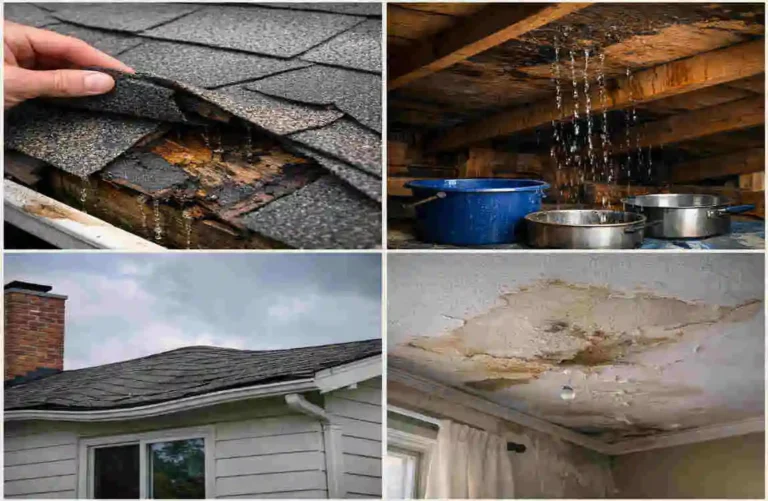
- Water stains on ceilings
- Damp walls
- Peeling paint
- Musty smells
- Moisture in the attic
- Sagging ceiling areas
If you see any of these, the roof may already be letting water in.
Damage That Is Hard to See
Some hail and wind damage is subtle. Shingles may look fine from the ground but still have hidden bruising, loose edges, or subsurface damage.
A professional inspection can help find these hidden issues before they become bigger repairs.
What to Do Immediately After Storm Damage
Prioritize Safety
Do not climb onto a damaged roof yourself. Wet surfaces, loose shingles, and hidden weak spots can make it dangerous.
Stay away from broken wires, standing water, and areas with visible structural damage.
Document the Damage
Take photos and short videos from safe places. Capture the roof, gutters, siding, windows, and any visible interior damage.
Also note the date of the storm and the kind of weather you experienced, such as hail, wind, or heavy rain.
Prevent Additional Damage
If water is coming inside, place containers under leaks and move furniture or valuables away from the area. If needed, arrange temporary roof protection from a professional.
Avoid unsafe DIY patch jobs. Quick, poor repairs can cause more damage later.
Arrange a Roof Inspection
A roof inspection typically includes the shingles, flashing, vents, gutters, attic space, and roof decking. The goal is to find both visible and hidden problems.
The sooner you inspect, the faster you can stop water intrusion and prevent further damage.
Colorado Springs Roof Damage and Insurance Claims
When Storm Damage May Be Covered
Homeowners insurance may cover certain storm-related roof damage, but coverage depends on the policy. Deductibles, exclusions, and the exact cause of damage all matter.
Do not assume everything is covered. Always read your policy and ask questions if anything is unclear.
How to Prepare for a Claim
To make the claim process smoother, keep your records organized:
- Photos and videos of the damage
- Repair estimates
- Temporary repair receipts
- Notes about the storm date and weather
- Written communication with the insurance company
Good records can help support your claim and reduce confusion.
Avoiding Common Insurance Mistakes
Do not wait too long to report damage. Do not make permanent repairs before documenting the roof condition. And do not assume every problem came from the latest storm.
Clear facts and careful documentation make a big difference.
Repair or Replace? Choosing the Right Solution
When Roof Repair May Be Enough
Repair may work if the damage is limited to a small area. This can include replacing a few shingles, fixing flashing, or sealing a minor leak.
If the roof is still in good overall condition, repair is often the simpler option.
When Roof Replacement May Be Necessary
Replacement may be the better choice if the damage is widespread. This is common after severe hail, major wind events, or repeated storm damage on an older roof.
If the roof already has age-related wear, repeated repairs may cost more in the long run than a full replacement.
How to Prevent Future Storm-Related Roof Damage
Schedule Regular Roof Inspections
Inspect your roof regularly, especially before and after storm season. Early checks can catch small problems before they grow.
That simple habit can extend the life of your roof.
Maintain Gutters and Downspouts
Clogged gutters make water back up onto the roof. Clean them often so water drains away from the home properly.
After a storm, check for loose or damaged gutters too.
Trim Nearby Trees
Branches can scrape the roof or break off during strong weather. Trim weak or dead limbs before they become a problem.
This is one of the easiest ways to reduce storm risk.
Maintain Flashing and Roof Penetrations
Flashing around vents, chimneys, and skylights should stay sealed and secure. These areas often leak first when storms hit.
If seals look worn, fix them early.
Choosing a Professional for Colorado Springs Roof Damage

What to Look For
Choose a roofing professional who offers:
- Proper licensing and insurance
- Storm damage experience
- Clear written estimates
- Good communication
- Helpful inspection results
A good roofer should explain the damage in simple language, not confuse you with jargon.
Questions to Ask
Ask these questions before hiring:
- What damage do you see?
- Is repair enough, or do I need replacement?
- Are there signs of hidden moisture?
- What materials do you recommend?
- Can you provide a detailed estimate?
These questions help you compare options with confidence.
Common Mistakes Homeowners Should Avoid
Many homeowners make avoidable mistakes after a storm. The most common ones are:
- Ignoring small leaks
- Delaying repairs
- Climbing onto the roof without safety gear
- Hiring only the cheapest contractor
- Forgetting to document damage
- Assuming all damage came from the latest storm
Avoiding these mistakes can save time and protect your home.
Frequently Asked Questions
What is the most common cause of Colorado Springs roof damage?
Hail and strong winds are two of the most common causes, though heavy rain and snow can also damage roofs.
How can I tell if hail damaged my roof?
Look for dents, missing granules, bruised shingles, damaged gutters, and signs of wear around roof edges.
Should I inspect my roof after a storm?
Yes. A post-storm inspection can help you catch both visible and hidden damage early.
Can wind damage a roof without removing shingles?
Yes. Wind can loosen shingles, damage flashing, and weaken roof areas even when nothing is missing.
Does homeowners insurance cover storm-related roof damage?
It may, but coverage depends on your policy, deductible, and the type of damage.
Should I repair or replace my storm-damaged roof?
That depends on the roof’s age, the size of the damage, and what a professional inspection finds.
How can I prevent future roof damage in Colorado Springs?
Regular inspections, gutter cleaning, tree trimming, and prompt repairs can reduce storm-related problems.
Related Posts