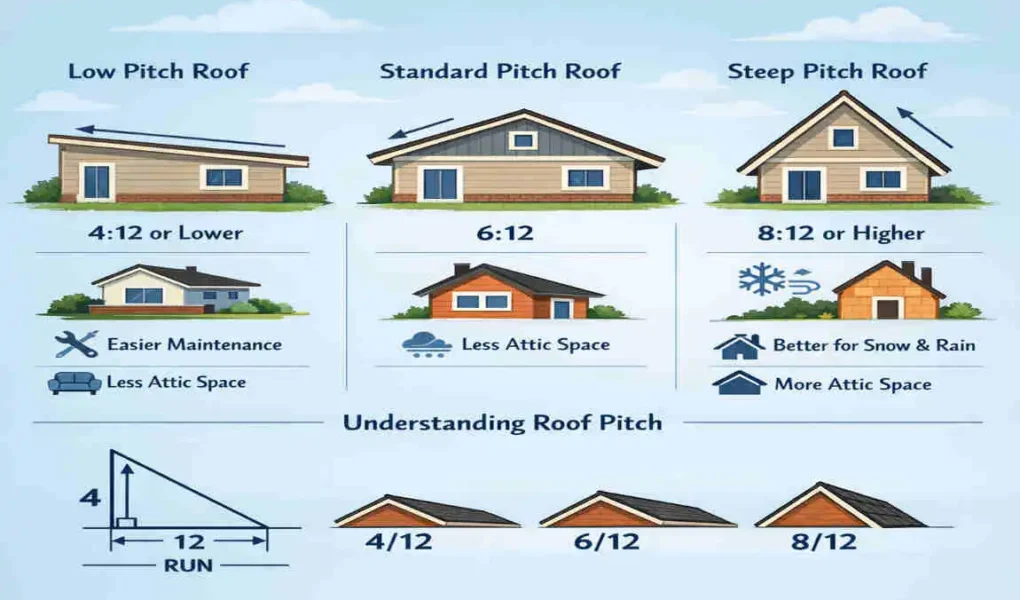
If you have ever looked at a house and wondered why one roof looks flat while another looks steep, you were already noticing roof pitch. In simple terms, roof pitch means how steep a roof is.
If you are asking what a typical roof pitch is, the short answer is that many homes use a moderate pitch, often around 4:12 to 6:12. That range works well for many houses because it balances appearance, water drainage, and construction costs.
Roof pitch matters for more than looks. It affects how well rain and snow move off the roof, what materials can be used, how much attic space you get, and how easy the roof is to build and maintain.
Understanding Roof Pitch
What Does Roof Pitch Mean?
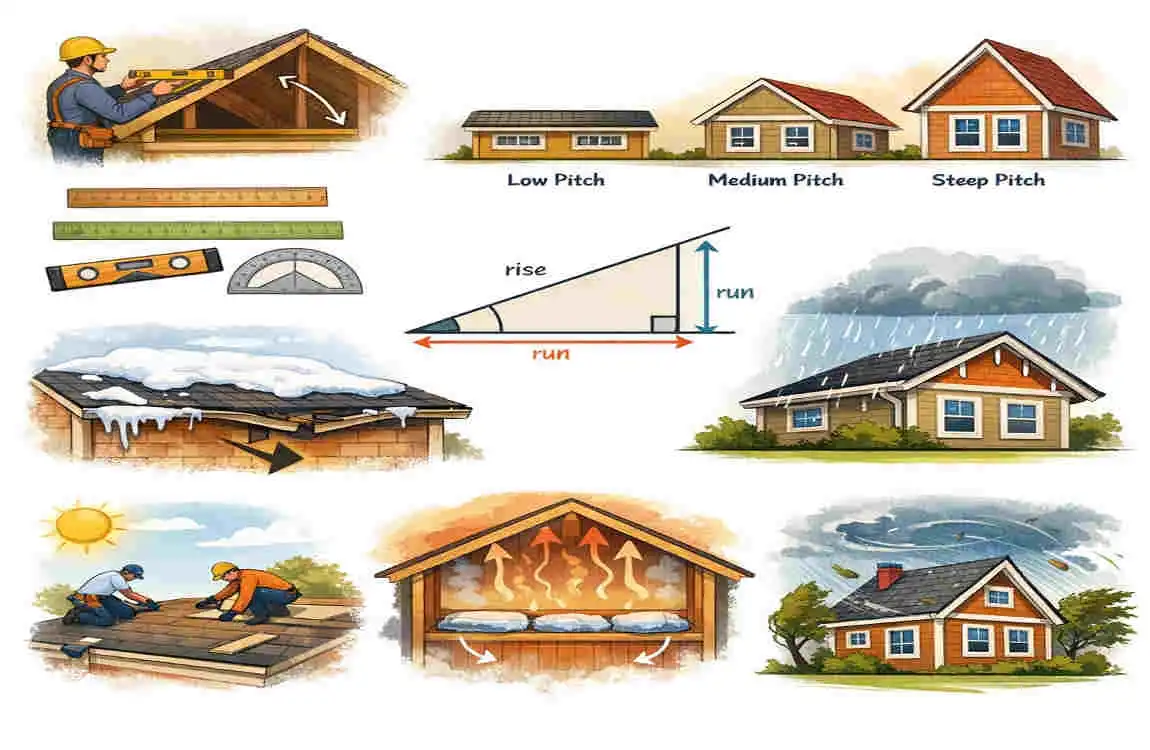
Roof pitch describes the steepness of a roof. It is usually shown as a Ratio, such as 6:12.
That number means the roof rises 6 inches for every 12 inches of horizontal distance. So a 6:12 roof is steeper than a 4:12 roof, but not as steep as an 8:12 roof.
Homeowners often hear the words “pitch” and “angle” used together. They are related, but contractors usually talk in ratios because they are easier to use in building work.
How Is Roof Pitch Measured?
Roof pitch is measured by comparing the vertical rise to a 12-inch horizontal run.
Here are a few simple examples:
- 3:12 = rises 3 inches for every 12 inches across
- 4:12 = rises 4 inches for every 12 inches across
- 6:12 = rises 6 inches for every 12 inches across
- 8:12 = rises 8 inches for every 12 inches across
A homeowner can sometimes estimate pitch from inside an attic or from the ground with the right tools. Still, for the most accurate result, a roofing professional is usually the safer choice.
Roof Pitch vs. Roof Slope
People often use pitch and slope interchangeably in everyday conversation. In residential roofing, that is usually fine.
Still, the terms are not always used the same way in technical settings. Knowing both helps you talk clearly with a contractor, especially if you are getting repair or replacement quotes.
What’s a Typical Roof Pitch for a House?
Common Residential Roof Pitches
So, what’s a typical roof pitch for a house? In many residential neighborhoods, a roof pitch between 4:12 and 6:12 is very common.
This range is popular because it gives a good mix of practical benefits. It sheds water well, looks balanced on most homes, and works with many common roofing materials.
A 6:12 roof pitch is often seen as a comfortable middle ground. It is steep enough to drain well, but not so steep that construction becomes too difficult or expensive.
Of course, there is no single perfect answer. Some homes need lower slopes, while others look better with steeper roofs.
Low-Slope Roofs
Low-slope roofs usually have pitches of 1:12, 2:12, or 3:12.
These roofs have a gentler look, which can work well on modern homes and some simple designs. But they also need careful drainage planning because water does not move off them as quickly.
Low-slope roofs may require specialized roofing systems designed for that purpose. If the pitch is too low for the material, leaks can become a problem.
Medium-Slope Roofs
Medium-slope roofs usually have pitches of 4:12, 5:12, or 6:12.
This is the sweet spot for many homes. The roof looks traditional, drains well, and is not overly difficult for roofers to install or maintain.
That is why many people consider this range the standard roof pitch for residential homes.
Steep-Slope Roofs
Steep-slope roofs often have pitches of 7:12, 8:12, 9:12, and higher.
These roofs have a stronger visual impact and often create more attic volume. They are also helpful in snowy climates because snow slides off more easily.
The trade-off is between cost and safety. Steeper roofs usually require more labor, more time, and more care during installation and repair.
Common Roof Pitch Examples
Roof PitchGeneral TypeTypical Characteristics
2:12 Low Slight slope, limited drainage capability
3:12 Low Gentle slope, common on some modern designs
4:12 Moderate Practical residential option
5:12 Moderate Good balance of appearance and drainage
6:12 Moderate Common traditional residential pitch
8:12 Steep More dramatic appearance and attic potential
10:12+ Very Steep Strong visual impact, more difficult installation
These are general categories, not strict rules. The right roof design still depends on the home, the climate, the roofing material, and local code requirements.
Factors That Determine the Right Roof Pitch
Climate and Weather
Weather is one of the biggest reasons roof pitch matters.
If your area gets heavy rain, you want a pitch that helps water move away quickly. If your area gets snow, a steeper roof can help snow slide off rather than build up.
Wind also matters. In some places, roof shape and pitch must be chosen carefully so the home can handle local weather conditions.
Roofing Material
Not every roofing product works on every pitch.
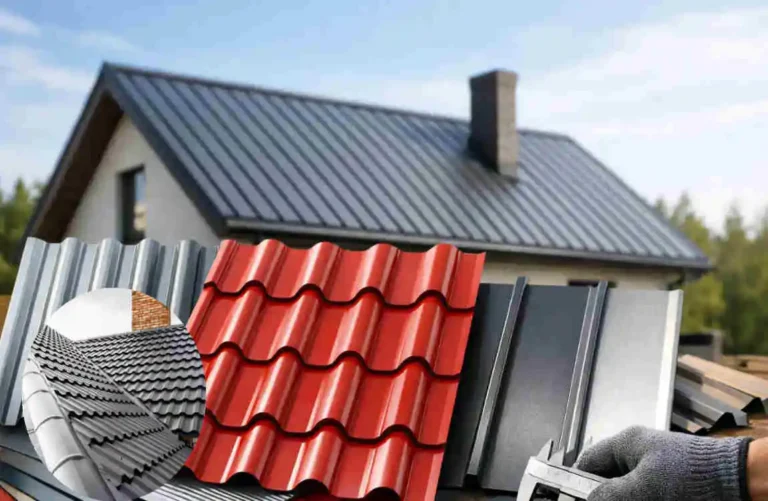
For example, asphalt shingles need enough slope to drain properly. Metal roofing can work on a wide range of slopes, depending on the system. Tile often needs stronger structure and a suitable pitch. Membrane systems are usually designed for low-slope roofs.
Before choosing a pitch, homeowners should always check the manufacturer’s material rules.
Home Design and Architecture
Roof pitch has a big effect on curb appeal. A roof that fits the house style will always look better than one that feels out of place.
For example:
- Ranch homes often use lower or moderate pitches
- Farmhouses often use moderate pitches
- Colonial homes often use steeper, classic roof forms
- Modern homes may use low slopes or bold mixed rooflines
- Cape Cod homes often use steeper pitches for a compact look
So, the best pitch is not only about performance. It is also about style.
Attic and Interior Space
A steeper roof can create more usable attic space. That can be helpful if you want extra storage, better airflow, or room for a future conversion.
A lower roof pitch may limit that space, but it can still work well if the home does not need much attic volume.
Roof pitch also affects insulation and ventilation planning, so it should always be part of the overall design.
Construction Budget
Steeper roofs often cost more because they are harder to work on. Roofers may need extra safety gear, more setup time, and more effort to move materials.
That does not mean a steep roof is a bad idea. It just means pitch affects both the design and the budget.
How to Choose the Best Roof Pitch
Start With Your Climate
If your home gets lots of rain or snow, choose a pitch that supports good drainage. That simple step can prevent many future problems.
Check Building Codes
Local building codes may limit or guide what pitch you can use. This is especially important if you are changing an existing roof or building a new one.
Match the Home Style
Your roof should fit the shape and style of the house. A pitch that looks right on one home may look awkward on another.
Pick Compatible Roofing Materials
Some materials require a greater slope than others. Always choose a pitch that works with the roofing product you want to use.
Think About Cost and Maintenance
A roof is not just about the day it is built. Think about how much it will cost to maintain over time.
Use a Roofing Professional for Structural Changes
If you are changing the roof shape or pitch, work with a qualified professional. Roof structure is not something to guess at.
Best Roof Pitch for Different Home Styles
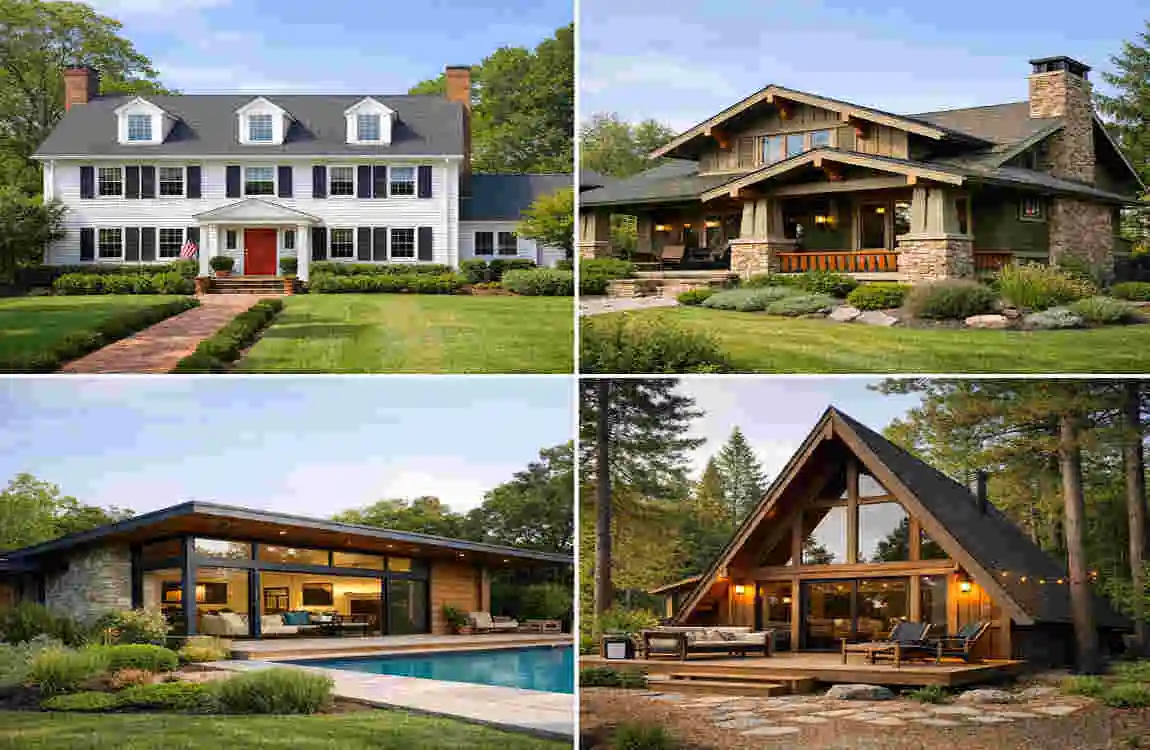
Here is a simple way to think about common home types:
- Ranch-style homes: Often use low to moderate pitches
- Modern homes: May use low slopes or mixed rooflines
- Farmhouse homes: Usually look good with moderate pitches
- Colonial homes: Often use steeper, traditional pitches
- Cape Cod homes: Commonly use steeper pitches
- Craftsman homes: Often use moderate pitches with strong lines
- Contemporary homes: Can use low, moderate, or mixed pitches depending on design
The best choice is the one that fits both the house and the climate.
FAQ About Typical Roof Pitch
What’s a typical roof pitch for a residential house?
A typical residential roof pitch is often in the 4:12 to 6:12 range. That said, homes can have lower or steeper pitches depending on design and location.
Is a 6:12 roof pitch common?
Yes. 6:12 is a very common roof pitch because it offers a good balance of drainage, appearance, and buildability.
Is a 4:12 roof pitch good?
Yes, a 4:12 roof pitch can be a good choice, especially for many residential homes. It is moderate, practical, and often easier to work with than steeper roofs.
What is considered a steep roof pitch?
A pitch around 8:12 or higher is generally considered steep, though exact definitions can vary.
What is the most common roof pitch for a modern house?
Modern homes can use many different pitches. Some use low slopes for a sleek look, while others use moderate pitches for a more balanced design.
How do I know my roof pitch?
You can measure it by checking how much the roof rises over a 12-inch run. If you are unsure, a roofing professional can measure it accurately.
Does roof pitch affect roofing cost?
Yes. Steeper roofs often cost more because they are more difficult and time-consuming to install and maintain.
| Roof Pitch | Description | Common Use |
|---|---|---|
| 2:12–4:12 | Low-slope roof | Modern homes, sheds |
| 4:12–6:12 | Moderate pitch | Common residential roofs |
| 6:12–9:12 | Steep pitch | Traditional and luxury homes |
| 9:12+ | Very steep pitch | Snowy climates, dramatic designs |
Related Posts