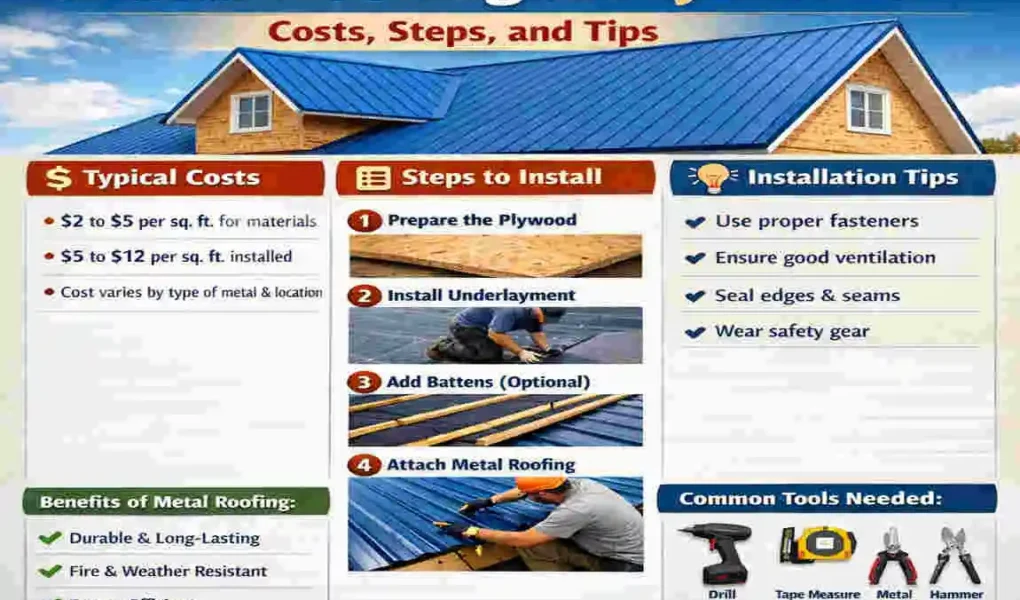
Metal roofing is a smart choice for many homes because it is strong, long-lasting, and handles bad weather well. If you are planning to install metal roofing panels on plywood, the good news is the job is manageable when the roof deck is solid and the work is done carefully.
| Topic | Information |
|---|---|
| Installation Method | Metal roofing panels are installed over suitable plywood roof decking, usually with an approved underlayment. |
| Average Cost | Costs vary by location, metal type, roof size, and labor. |
| Common Materials | Galvanized steel, aluminum, standing-seam panels, and metal roofing screws. |
| Preparation | Inspect plywood for rot, moisture damage, and weak areas before installation. |
| Installation Steps | Inspect decking, replace damaged plywood, install underlayment, attach panels, and seal flashing. |
| Main Benefits | Durable, lightweight, weather-resistant, and relatively low maintenance. |
| Common Challenges | Condensation, leaks, expansion, and noise if installation is incorrect. |
| Maintenance Tips | Inspect fasteners, flashing, seams, and roof penetrations regularly. |
| Best Underlayment | Use an underlayment approved for the selected metal roofing system and local conditions. |
| Professional Advice | Follow manufacturer instructions and local building codes for ventilation, fastening, and moisture control. |
Metal roofing panels can be installed over plywood roof decking, but the roof must be clean, dry, and in good shape first. The biggest factors affecting success are proper underlayment, good waterproofing, and correct fastening. If these parts are done wrong, even high-quality metal roofing can leak or fail early.
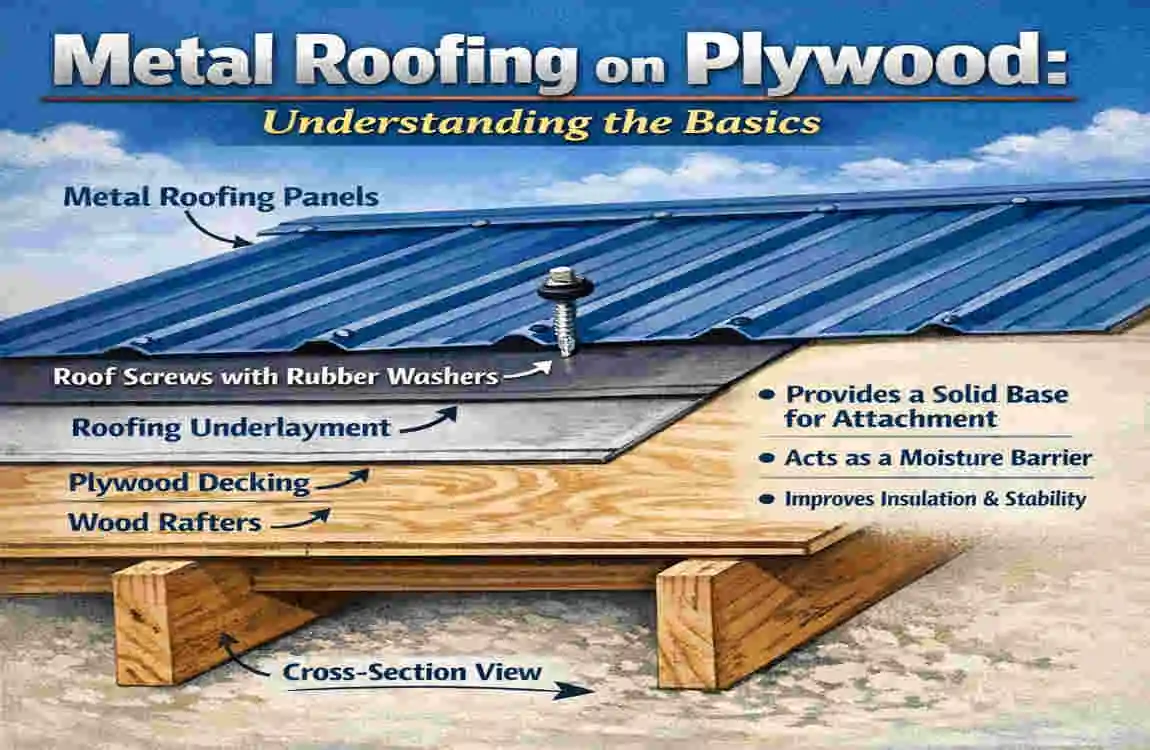
Metal Roofing on Plywood: Understanding the Basics
What Is Metal Roofing Installed on Plywood?
When people talk about a metal roof over plywood, they mean metal panels are attached to a wood roof deck made from plywood sheets. The plywood acts as the base layer under the roof system. It supports the roof structure and provides a flat surface for the underlayment and panels.
This setup is very common in residential roofing. It works well as long as the plywood is strong and not damaged by water, rot, or sagging.
Can You Install Metal Roofing Directly on Plywood?
Yes, you can install metal roofing panels directly over plywood, but in most cases you still need an underlayment. A roofing underlayment is usually needed between the plywood and the metal panels. This layer blocks moisture, protects the deck, and reduces the chance of leaks.
So while the panels may sit on plywood, the full system usually includes:
- Plywood roof decking
- Roof underlayment
- Metal roofing materials
- Fasteners and flashing
This layered approach improves durability and weather protection.
Types of Metal Roofing Panels for Residential Roofs
Several common metal roofing materials are used on homes. The right one depends on budget, look, and roof shape.
Common panel types
- Corrugated panels: affordable and practical
- Standing seam panels: sleek look and strong weather performance
- R-panel or ribbed panels: often used on homes and outbuildings
- Metal shingles: designed to look more like traditional roofing
Each type has its own fastening method and installation style. That is why it is important to follow the manufacturer’s instructions closely.
Choosing the Right Plywood Thickness and Condition
The plywood under the roof should be thick enough and in good condition. If the deck is weak, the roof may not hold fasteners well.
Good plywood should be:
- Dry
- Flat
- Free from rot
- Not soft or spongy
- Properly fastened to the framing
Many roofers prefer roof decking that is at least 1/2 inch thick, though local codes and roof design may call for more. The exact thickness can depend on spacing between rafters or trusses and the weight of the roofing system.
Benefits and Limitations of Metal Roofing on Plywood
Metal roofing has many advantages, but it is not perfect for every home.
Benefits
- Long service life
- Strong weather resistance
- Better fire resistance
- Low maintenance
- Energy efficiency when properly installed
- Lightweight compared with some other roofing types
Limitations
- Higher upfront cost
- Noise during heavy rain if not insulated well
- Needs careful installation
- Leaks can happen if flashing or screws are wrong
So yes, metal roofing is a smart investment, but only when installed correctly on a solid base.
When Is Roof Decking Replacement Necessary?
Replace the plywood if it shows signs of serious damage. Do not install new metal panels over rotten wood and hope for the best.
Replace decking when you see:
- Rot or mould
- Soft spots
- Warped sheets
- Water staining
- Broken edges
- Loose or failed fasteners
If the deck is weak, replacing it now can save you from costly roof problems later.
How Much Does Metal Roofing on Plywood Cost?
Metal roofing installation cost depends on roof size, panel type, plywood condition, and whether you hire labour or do the work yourself.
Average Metal Roofing Material Costs
Metal panels come in a range of price points. Basic panels are more affordable, while premium standing seam systems cost more.
Plywood Roof Decking Replacement Costs
If the existing plywood is damaged, it may need to be replaced before installation. That adds material and labour costs.
Underlayment, Flashing, Screws, and Other Supplies
Smaller items may seem cheap on their own, but they still add to the total cost. Good flashing and quality screws matter a lot for long-term roof performance.
Labour Costs for Professional Metal Roof Installation
Metal roofing labour often makes up a large part of the project price. Labour depends on roof steepness, access, and roof complexity.
Factors That Affect Total Roofing Costs
Several things can change the final price:
- Roof size
- Roof pitch
- Metal type
- Amount of plywood repair
- Number of valleys, vents, and chimneys
- Local labour rates
- Removal of old roofing
DIY Installation vs. Hiring a Roofing Contractor
Doing the work yourself can save money, but it also increases the risk of mistakes. Metal roofing is not as forgiving as some people think. A small error with screws or flashing can create a leak.
Hiring a contractor usually costs more, but it gives you skill, speed, and warranty support.
Cost-Saving Tips Without Compromising Roof Quality
Here are a few smart ways to save money without cutting corners:
- Buy materials after getting multiple estimates
- Repair only the plywood that truly needs replacement
- Choose a panel style that fits your budget
- Avoid cheap fasteners and flashing
- Plan the project before starting so there are fewer delays
Short cost comparison table
Item Typical Cost Range
Metal roofing panels $3 to $12 per sq. ft.
Plywood roof decking $1.50 to $4.50 per sq. ft.
Underlayment $0.50 to $1.50 per sq. ft.
Fasteners and screws $50 to $200 total
Flashing and trim $100 to $500 total
Labour $4 to $10+ per sq. ft.
Note: Prices vary by location, roof size, metal type, and project complexity.
Tools and Materials Needed for Metal Roofing Installation
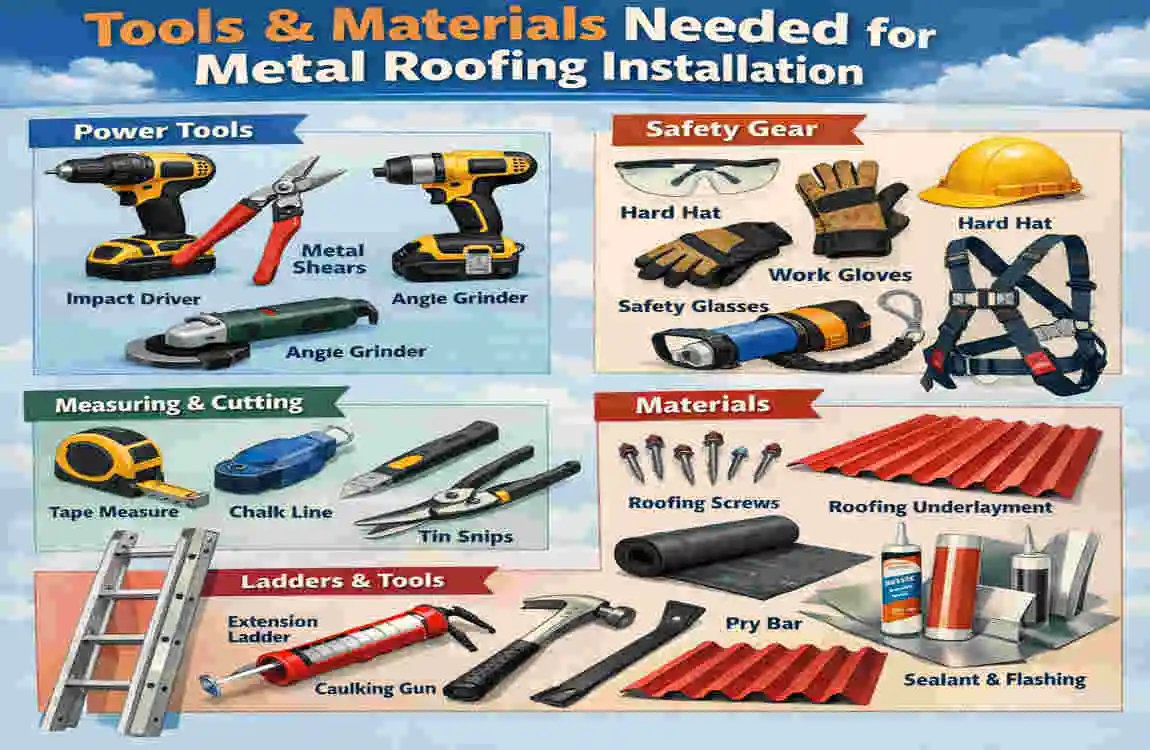
Before you begin, gather everything you need. A well-prepared job goes faster and has fewer mistakes.
Metal Roofing Panels and Compatible Fasteners
Use panels made for your roof design. Also use compatible fasteners designed for metal roofing. The wrong screw can loosen, leak, or damage the panel.
Plywood Sheathing and Roof Underlayment
If your deck needs repair, have plywood ready before installation. You also need quality underlayment to protect the roof from moisture.
Measuring Tape, Chalk Line, and Drill
These tools help you measure carefully and keep your panel lines straight. Accuracy matters a lot in metal roofing work.
Metal Snips and Panel-Cutting Tools
Use tools made for cutting metal roofing materials. Avoid tools that can warp the panel or damage the finish.
Ridge Caps, Eave Trim, and Flashing
These parts help seal edges, joints, ridges, valleys, and roof openings. They are essential for waterproofing.
Safety Equipment and Protective Clothing
Always think about safety. Metal panels can be sharp, and roofs can be slippery.
Helpful safety items
- Gloves
- Safety glasses
- Boots with good grip
- Fall protection
- Long sleeves
- Hearing protection when cutting
Preparing a Roofing Materials Checklist
Before starting, make a checklist so nothing is missed.
Simple checklist
- Metal panels
- Underlayment
- Plywood sheets
- Fasteners
- Flashing
- Ridge caps
- Trim pieces
- Sealant
- Tools
- Safety gear
How to Install Metal Roofing Panels on Plywood: Step-by-Step Guide
The best way to install metal roofing is to move step by step and not rush. Good preparation makes the finished roof stronger and cleaner.
Inspect the Existing Roof and Plywood Deck
Start by checking the whole roof deck. Look for soft spots, water damage, missing nails, or uneven surfaces. If the plywood is bad, fix it before anything else.
This step is important because metal panels need a stable base.
Remove Old Roofing Materials When Necessary
If old roofing material is in the way, remove it first. Sometimes you can install a metal roof over an existing layer, but that depends on local codes, the roof’s condition, and the system you use.
If the old roof is damaged or uneven, removing it is often the safer choice.
Repair Damaged or Uneven Plywood
Replace rotten sections and secure loose sheets. The surface should be smooth and flat. If the deck has dips or high spots, the panels may not lie properly and could trap water.
Install a Suitable Roofing Underlayment
Once the deck is ready, install the underlayment. This layer helps protect the plywood from moisture and adds another barrier against leaks.
Make sure the underlayment is laid straight, overlapped correctly, and fastened properly. A weak underlayment job can reduce the value of the whole roof.
Measure the Roof and Plan Panel Placement
Careful measurement is one of the most important steps in metal roof installation. Plan the layout before you fasten anything.
Measure the roof length and width, then decide where each panel will start and end. This helps you avoid awkward gaps and poorly placed seams.
Position and Fasten Metal Roofing Panels Correctly
Place the first panel straight, because every panel after it will follow that line. If the first panel is crooked, the whole roof can look uneven.
Use the correct fasteners and spacing. Do not over-tighten screws, because that can crush seals or warp the panel. Tight enough is good. Too tight is a problem.
Install Flashing Around Edges, Valleys, and Chimneys
Flashing is one of the most important parts of a roof. It seals tricky areas where water tends to enter.
Pay close attention to:
- Eaves
- Ridges
- Valleys
- Chimneys
- Skylights
- Wall intersections
Good flashing work helps prevent leaks and keeps the roof system stable.
Secure Ridge Caps and Finish Roof Details
After the panels are in place, install the ridge caps and trim. These finishing parts protect the roof’s top edge and help seal the system.
This is also the time to check all exposed edges and closing pieces. Everything should fit neatly and cover open gaps.
Inspect Seams, Fasteners, and Waterproofing
Before calling the project done, inspect the full roof carefully. Look for loose screws, open seams, bent trim, or missing sealant.
Finished roof checklist
- Panels are straight
- Fasteners are tight, not over-tightened
- Flashing is installed in all problem areas
- Ridge caps are secure
- No gaps or visible openings
- Waterproofing looks complete
- Cut edges are protected
- All debris has been removed
Also remember: follow the metal panel manufacturer’s installation instructions. Different systems have different fastening patterns, overlap rules, and trim details. Skipping those directions can shorten the roof’s life.
Common Metal Roofing Installation Mistakes and Maintenance Tips
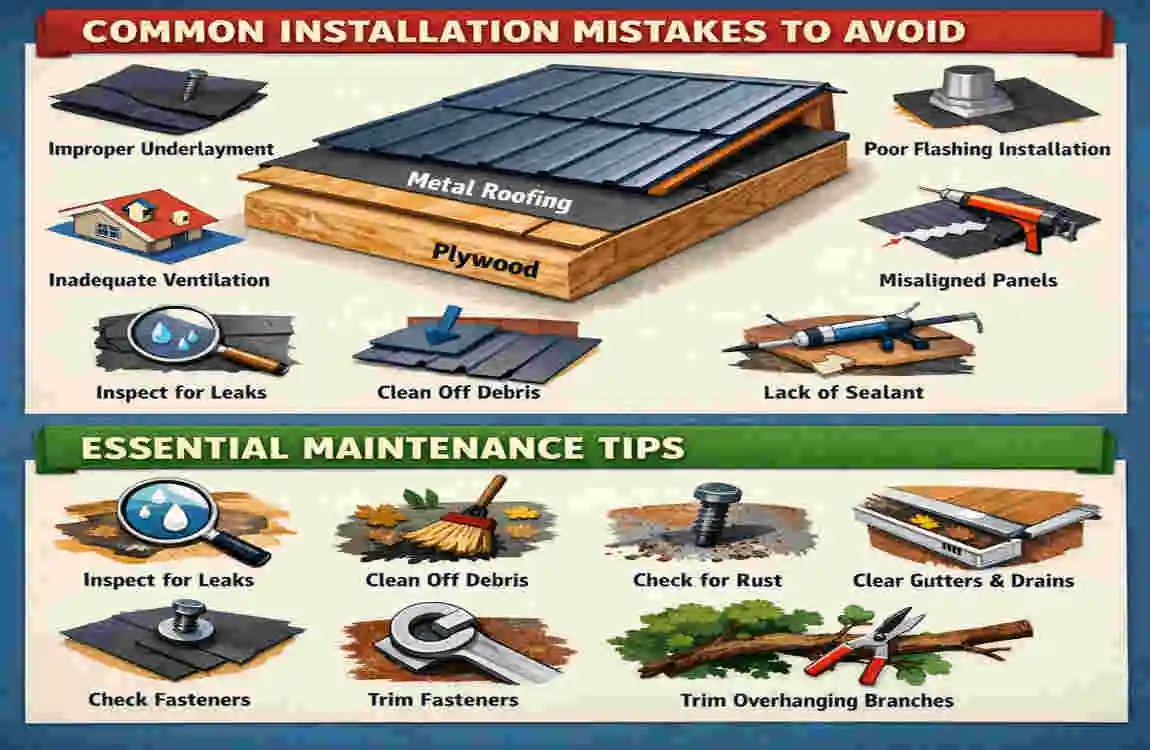
Installing Panels Over Rotten or Wet Plywood
This is one of the worst mistakes. If the plywood is damaged, the roof may fail early even if the metal panels are new.
Using Incorrect Screws or Fastener Spacing
Wrong screws can loosen over time or fail to seal properly. Fasteners also need proper spacing to keep the panels secure in wind and weather.
Overlapping Panels Improperly
If overlaps are too small or too loose, water can enter. Follow the system layout carefully so seams work as intended.
Ignoring Roof Ventilation and Moisture Control
A roof needs to breathe. Poor ventilation can trap moisture under the panels and damage the deck over time.
Cutting Metal Panels With Unsuitable Tools
Wrong cutting tools can leave rough edges or damage the coating. That can lead to rust and poor fit.
Preventing Leaks, Rust, and Loose Fasteners
These simple habits help protect your roof:
- Check fasteners regularly
- Clear debris from valleys and gutters
- Touch up damaged coating when needed
- Watch for signs of rust
- Seal small issues early
Cleaning and Inspecting Metal Roofing Regularly
A metal roof does not need a lot of care, but it should still be checked. Inspect it after strong storms and at least once or twice a year.
Look for:
- Loose screws
- Dented panels
- Worn sealant
- Debris buildup
- Damaged flashing
Knowing When to Call a Roofing Professional
Some jobs are best left to a professional, especially if the roof is steep, large, or badly damaged. Call an expert if you see structural problems, major leaks, or widespread plywood rot.
Frequently Asked Questions About Metal Roofing on Plywood
How much does it cost to install metal roofing panels on plywood?
Total metal roofing installation costs can vary widely. Still, they usually depend on roof size, panel type, plywood repairs, underlayment, flashing, and labour. Smaller roofs cost less, while complex roofs cost more.
Can you install metal roofing panels directly on plywood?
Yes, metal panels can be installed over plywood. However, most roofs still need underlayment between the plywood and the panels for better moisture protection.
Do you need underlayment beneath metal roofing?
In most cases, yes. Underlayment protects the deck, manages moisture, and improves the roof’s long-term performance.
What plywood thickness is best for metal roofing?
That depends on the roof structure and local code, but many roofs use strong, flat plywood that’s at least 1/2 inch thick. A contractor can confirm the right thickness for your home.
How long does metal roof installation take?
A simple roof may take a few days. A larger or more complex roof can take longer, especially if plywood repair or full tear-off is needed.
Is it cheaper to install metal roofing yourself?
It can be cheaper upfront, but only if the work is done correctly. Mistakes can become expensive later. If you are not confident, hiring a pro may save money over time.
How long does metal roofing last on a plywood deck?
A properly installed metal roof can last many years, often decades, if the plywood stays sound and the roof is well maintained.
Can you install metal roofing over an existing shingle roof?
Sometimes, yes, but it depends on local rules, roof condition, and the roofing system. If the old roof is damaged or uneven, removal is usually the better option.
Related Posts