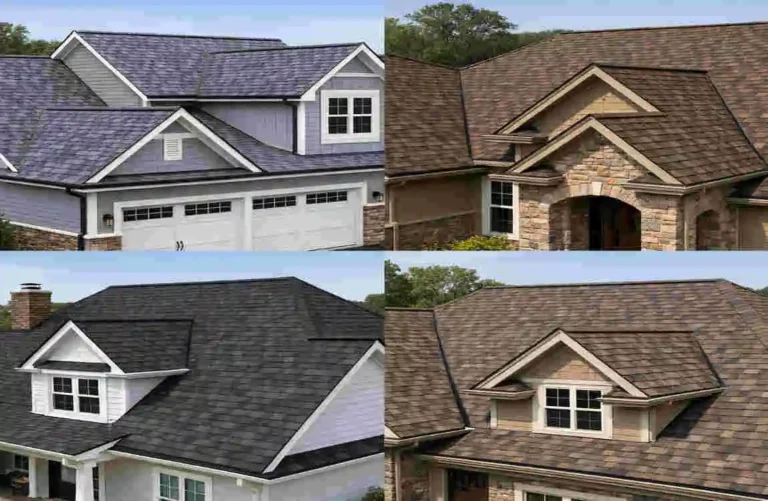
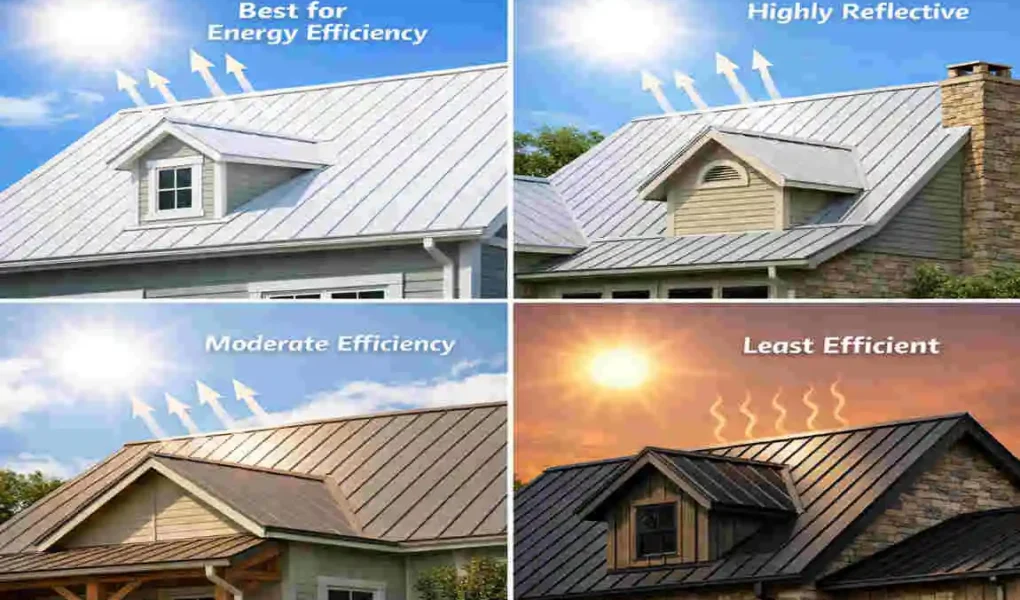
If you are wondering which color metal roof is most energy-efficient for your home, the short answer is this: white and reflective silver roofs usually perform best. They reflect more sunlight, absorb less heat, and can help keep your home cooler in warm weather.
But the best roof color is not just about looks. It also depends on your climate, roof coating, home style, and long-term energy goals. A roof that works well in a hot area may not be the best choice in a colder region.
How Roof Color Affects Energy Efficiency
The Science Behind Heat Reflection
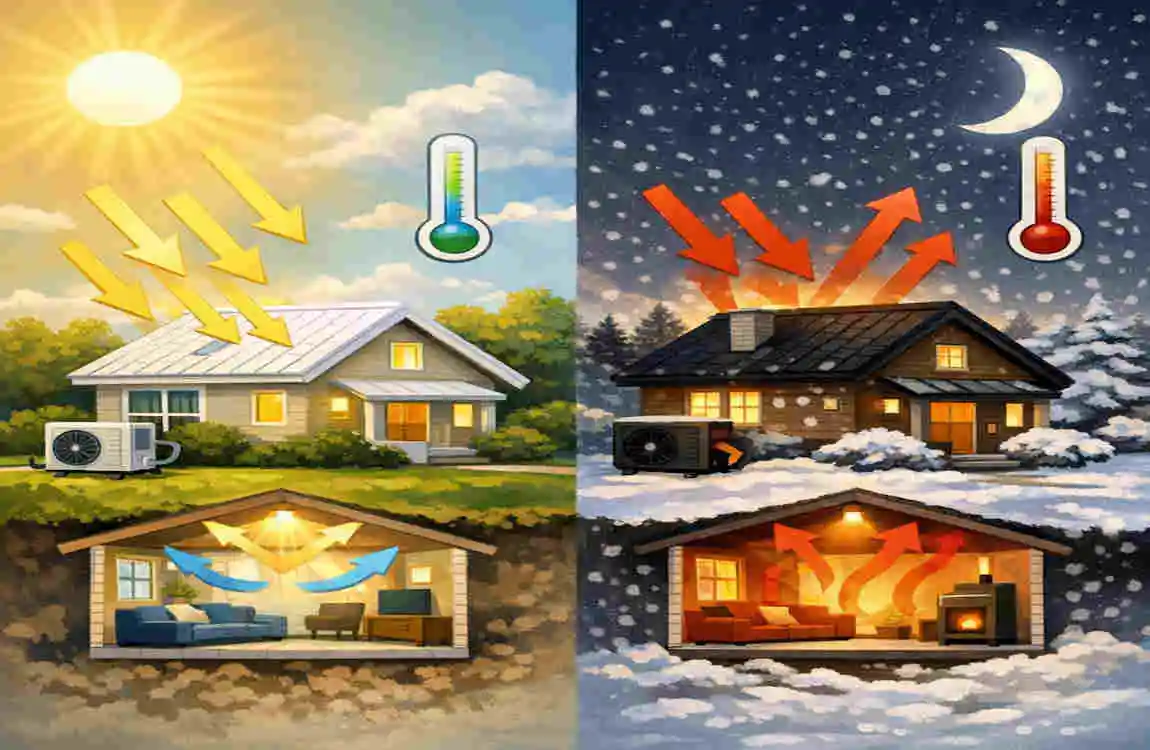
Sunlight carries heat. When it hits your roof, some of that heat gets reflected, and some gets absorbed. Lighter colors reflect more sunlight, while darker colors absorb more heat.
That is why roof color matters so much. A roof that absorbs less heat can help reduce indoor temperatures and lower air conditioning use.
Solar Reflectance and Thermal Emittance
Two simple ideas matter here:
- Solar reflectance is how much sunlight a roof reflects.
- Thermal emittance means how well a roof releases absorbed heat.
A roof with strong reflectance and good emittance usually performs better in warm climates.
Why Metal Roofs Perform Better Than Traditional Roofs
Metal roofs often beat other roofing types because they can reflect sunlight well and cool down faster after the sun sets. With the right coating, they can be very energy efficient.
They also last a long time, which adds value beyond energy savings.
What Color Metal Roof Is Most Energy Efficient?
White Metal Roof
White is usually the most energy-efficient choice. It reflects the most sunlight and helps keep heat away from the house.
This makes it a strong option for hot and sunny climates. If saving on cooling costs is your main goal, white is hard to beat.
Reflective Silver Roof
Silver roofs also perform very well. They offer excellent sunlight reflection and often look sleek and modern.
Many homeowners like silver because it balances performance with a clean, stylish appearance.
Light Gray Roof
Light gray is another smart option. It does not reflect quite as much as white or silver, but it still offers strong energy performance.
It is also easier to match with many home styles, which makes it a popular middle-ground choice.
Beige or Tan Roof
Beige and tan roofs work well if you want a softer look. They still reflect more heat than darker colors while blending nicely with many exteriors.
If you want good efficiency and attractive curb appeal, this can be a practical choice.
Light Blue Roof
Light blue roofs are less common, but they can still perform well. They are often chosen for coastal or relaxed home styles.
They bring a fresh look while still supporting decent heat reflection.
Best Roof Colors for Different Climate Zones
Hot and Sunny Areas
If you live in a place with strong sun and high temperatures, choose white, silver, or light gray. These colors help reduce heat buildup and can make indoor spaces more comfortable.
Moderate Climate
In mixed climates, colors like beige, light gray, or light blue can strike a good balance between efficiency and style.
Cold Regions
If you live in a colder area, darker colors like dark gray, brown, or black may be helpful because they absorb more solar heat. That can support winter warmth.
Cool Roof Technology Explained
What Is a Cool Roof?
A cool roof is designed to reflect more sunlight and absorb less heat than a standard roof. It can be made using special coatings, materials, or finishes.
Reflective Paints and Coatings
Even if your roof is not pure white, a reflective coating can improve performance. This means the finish can matter just as much as the color.
ENERGY STAR® Rated Metal Roofs
Some metal roofs meet high efficiency standards because of their reflective properties. These products are designed to reduce heat gain and improve comfort.
Does Roof Finish Matter More Than Color?
Yes, in many cases, finish matters a lot.
Standard Paint Finish
A basic finish may look good, but it may not reflect as much heat.
Cool Roof Coatings
These coatings are designed to reflect sunlight more effectively.
Reflective Pigments
Some roof paints include pigments that improve reflectivity even in darker shades.
PVDF Paint Systems
These are high-performance finishes that help protect color and improve long-term roof quality.
Factors to Consider Before Choosing a Metal Roof Color
Local Climate
Your climate should be the first thing you think about. Hot area? Go lighter. Cold area? Darker may help.
Home Orientation
If your roof gets direct sun for most of the day, a reflective color can make a bigger difference.
Roof Pitch
A steep roof may shed heat differently than a low-slope roof. The angle can affect performance.
Neighborhood Appearance
You want your roof to fit the look of nearby homes and the overall area.
HOA Requirements
Some communities have color rules. Always check before deciding.
Long-Term Maintenance
Very light roofs may show dirt more easily, while darker roofs may fade faster in the sun.
Benefits of Choosing an Energy-Efficient Metal Roof
Lower Cooling Bills
The biggest benefit is reduced heat entering your home. That can help lower air conditioning costs.
Improved Indoor Comfort
A cooler roof can make rooms feel less hot during the day.
Longer Roof Life
Metal roofs are already durable, and better heat performance can help them last even longer.
Reduced Carbon Footprint
Using less energy is better for the environment.
Better Home Value
An efficient roof can make your home more appealing to future buyers.
Common Myths About Metal Roof Colors
Dark Roofs Always Increase Energy Bills
Dark roofs can absorb more heat, but the full roof system and coating also matter.
White Roofs Get Dirty Too Quickly
White roofs may show dirt more clearly, but proper maintenance helps.
Color Is the Only Factor That Matters
It is important, but coating, material, and insulation also affect performance.
Metal Roofs Make Homes Hot
That is not true. In fact, metal roofs can be highly efficient when well designed.
Metal Roof Color vs. Asphalt Shingle Color
Heat Reflection Comparison
Metal roofs usually reflect heat better than asphalt shingles, especially when they are light-colored or coated with cool coatings.
Energy Savings
Metal roofs often provide stronger savings in warm climates.
Lifespan
Metal roofs generally last much longer than asphalt shingles.
Maintenance
Metal roofing often requires less frequent replacement and is easier to manage over time.
Expert Tips for Choosing the Right Metal Roof Color
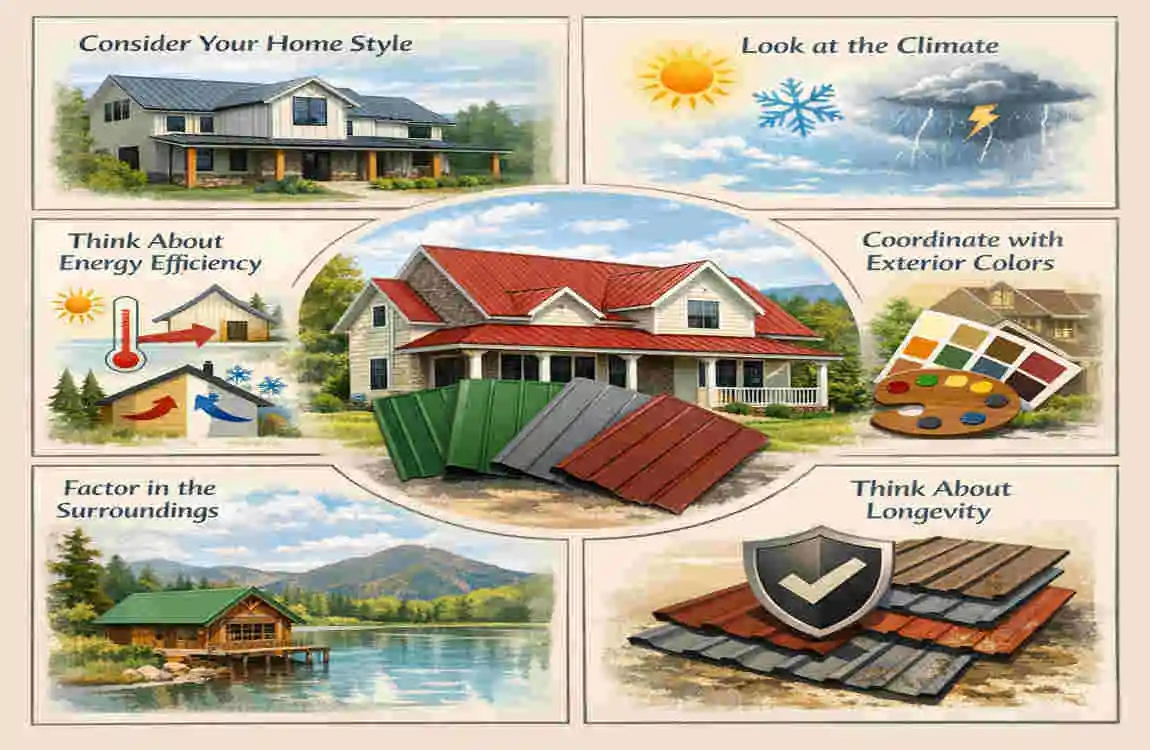
- Match the color to your climate
- Look for reflective coatings
- Think about energy savings over time
- Balance appearance with performance
- Check product ratings before buying
Common Mistakes to Avoid
- Choosing color based only on looks
- Ignoring your local weather
- Skipping roof coating quality
- Forgetting HOA rules
- Not checking energy performance ratings
Frequently Asked Questions
What color metal roof is most energy efficient?
White and reflective silver are generally the most energy-efficient options.
Do dark metal roofs increase cooling costs?
Yes, dark roofs usually absorb more heat, which can raise cooling needs in warm climates.
Is a white metal roof always the best choice?
Not always. It is best for hot climates, but style and local rules also matter.
Does roof coating affect energy efficiency?
Yes. A reflective coating can greatly improve performance, even on darker colors.
Are metal roofs more energy-efficient than asphalt shingles?
Usually, yes. Metal roofs with reflective finishes often perform better.
| Feature | Information |
|---|---|
| Topic | What Color Metal Roof Is Most Energy Efficient? Complete Guide |
| Most Energy-Efficient Color | White is the most energy-efficient metal roof color because it reflects the highest amount of sunlight and heat. |
| Other Efficient Colors | Light gray, beige, light bronze, and reflective silver also perform well in reducing heat absorption. |
| Cool Roof Technology | Modern metal roofs with reflective or “cool roof” coatings improve energy efficiency regardless of color. |
| Best for Hot Climates | White, light gray, and reflective metallic finishes help keep homes cooler and reduce air conditioning costs. |
| Best for Cold Climates | Dark colors like black, charcoal, and dark brown absorb more heat, which may provide slight heating benefits during winter. |
| Energy Savings | A reflective metal roof can reduce cooling energy costs by 10%–25%, depending on climate and insulation. |
Related Posts