A storm-proof roof helps protect your home from strong winds, heavy rain, hail, and flying debris. If you live in an area with rough weather, knowing what makes a roof storm-proof can save you from costly damage and keep your family safer.
The good news is that a roof does not have to be perfect to perform well in storms. It just needs the right materials, shape, installation, and maintenance. When these parts work together, your roof becomes much stronger and more reliable during severe weather.
What Does a Storm-Proof Roof Mean?
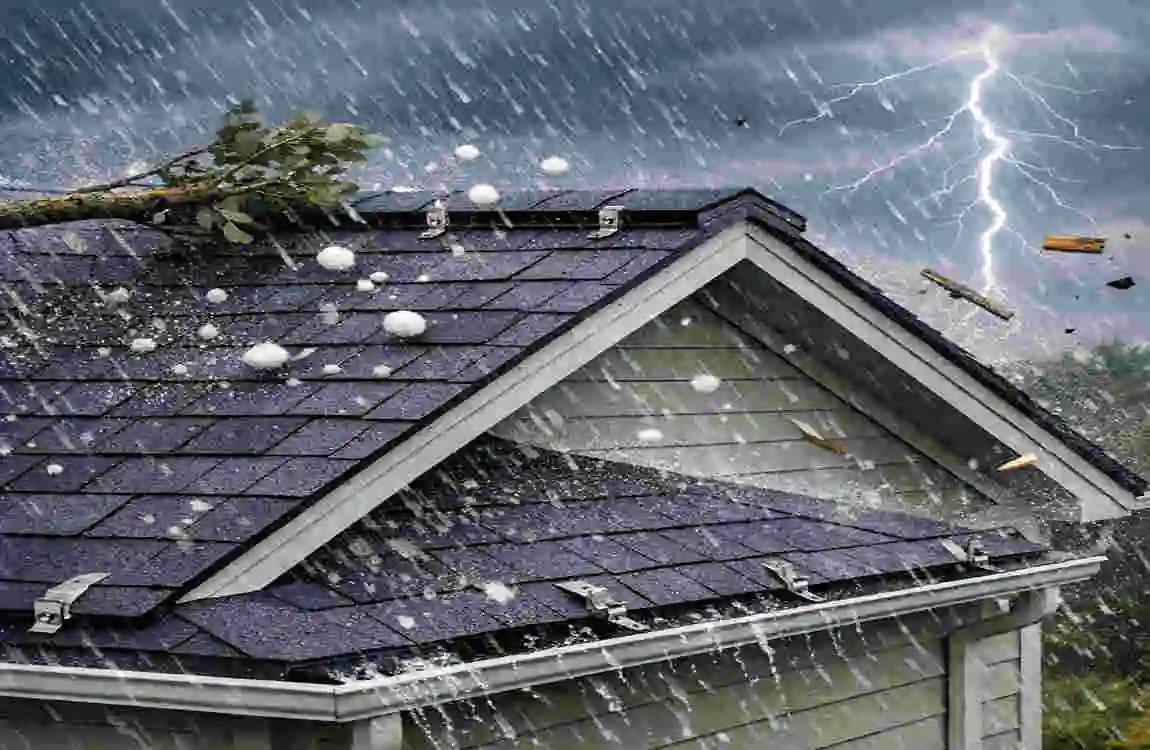
A storm-proof roof is designed to handle harsh weather better than a regular roof. It is built to resist wind uplift, stop leaks, and reduce damage from hail or debris.
A normal roof may work fine in calm weather, but a storm-ready roof provides extra protection when conditions worsen. That means fewer repairs, less stress, and better safety for your home.
Key Things That Make a Roof Storm-Proof
Strong Roofing Materials
The material you choose plays a big role in storm resistance. Some roofing products are tougher than others.
Here is a quick comparison:
Roofing MaterialStorm PerformanceMain Benefit
Impact-resistant asphalt shingles Good Affordable and durable
Metal roofing Very good Strong against wind and rain
Clay or concrete tiles Good Long-lasting and heavy
Basic shingles Fair Less resistant to damage
Metal roofs and impact-resistant shingles are often the best choices for storm-prone areas.
Smart Roof Design
Roof shape matters more than many homeowners realise. A hip roof usually performs better in storms because it slopes on all sides. This helps the wind move more easily around the house.
A steep slope also helps water drain faster, reducing the risk of leaks and standing water.
Proper Installation
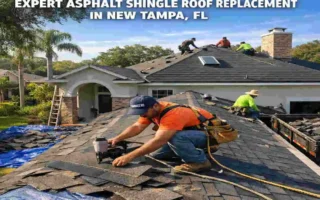
Even the strongest roofing material can fail if it is installed badly. That is why professional installation is so important.
A roof must be sealed, aligned, and fastened properly. Small mistakes during installation can lead to loose shingles, leaks, or weak spots during a storm.
Wind-Resistant Features
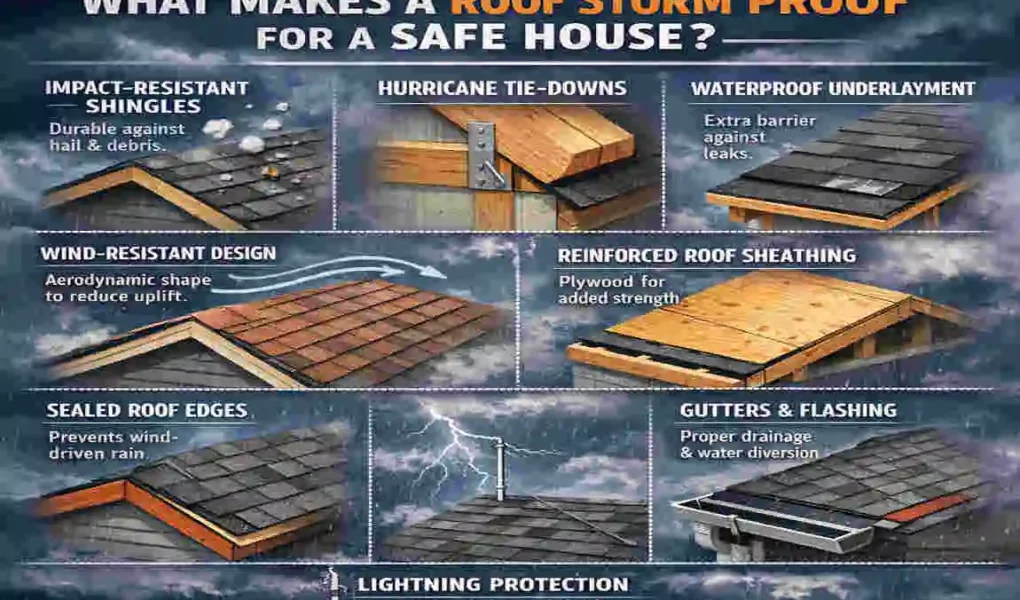
A roof becomes much stronger when it includes parts made for high winds.
These may include:
- Wind-rated shingles
- Strong roof decking
- Underlayment
- Hurricane clips or straps
- Secure fasteners
These features help keep the roof in place when strong winds try to lift it.
Waterproofing Protection
Storms often bring heavy rain, so waterproofing is just as important as strength.
Good waterproofing includes underlayment, flashing, and waterproof membranes. Flashing around chimneys, vents, and edges helps stop water from getting inside your house.
6. Regular Maintenance
A roof stays stronger when you care for it regularly. Small problems can turn into big ones during a storm.
Check for:
- Loose or missing shingles
- Cracks around flashing
- Clogged gutters
- Soft or damaged spots
Inspect your roof at least twice a year and after major storms.
Common Roof Problems During Storms
Storms can cause several types of roof damage. The most common problems are:
- Shingle blow-off
- Leaks and water damage
- Broken flashing
- Wind lifting the roof structure
- Debris impact
If you notice any of these issues, it’s important to fix them quickly.
How to Improve Roof Storm Resistance
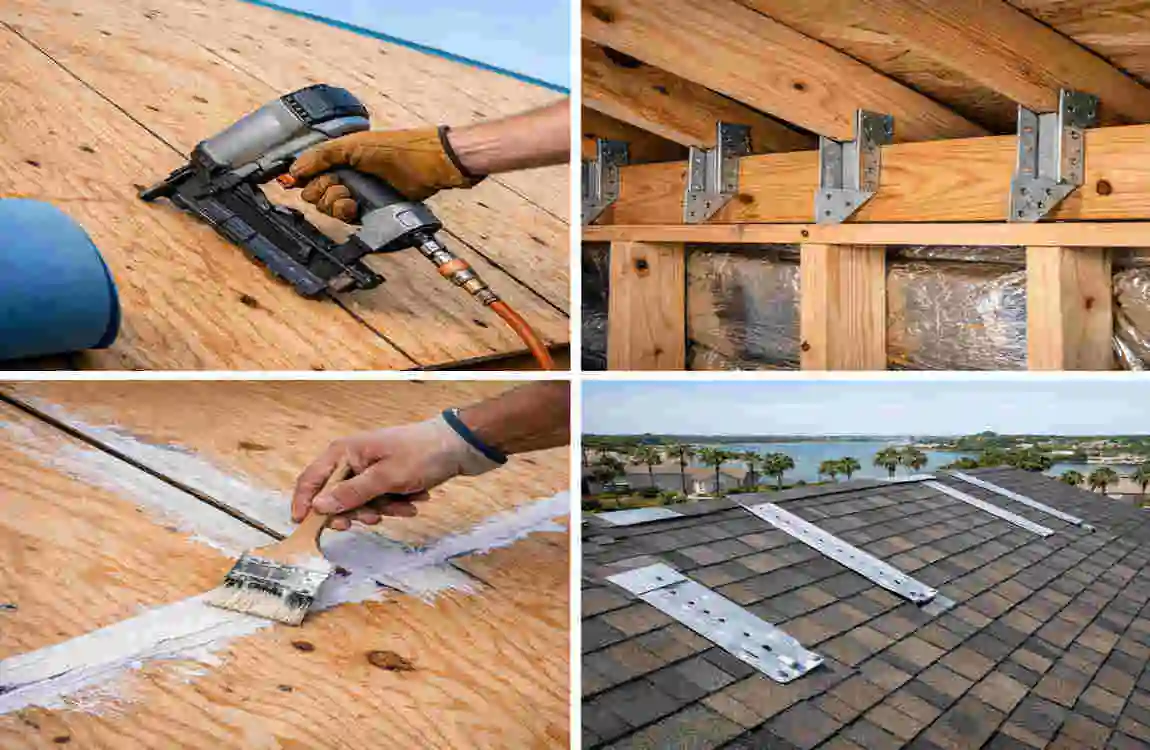
If you want a stronger roof, focus on simple upgrades. Start with better materials and proper installation. Then add wind-resistant features such as clips, straps, and thicker underlayment.
You should also keep your gutters clean and ensure water drains properly away from the roof. A certified roofing contractor can help you choose the best upgrades for your home.
Benefits of a Storm-Proof Roof
A storm-proof roof gives you many advantages:
- Better home safety
- Fewer repair costs
- Less water damage
- Higher property value
- More peace of mind during storms
In simple words, it helps protect your house when weather turns rough.
FAQ
What makes a roof storm-proof?
A storm-proof roof uses strong materials, secure installation, wind-resistant parts, and waterproof protection.
Which roof is best for storms?
Metal roofing and impact-resistant shingles are among the best options.
Can an old roof be improved?
Yes. You can add stronger materials, better flashing, hurricane straps, and improved drainage.
How often should a roof be checked?
At least twice a year and after any major storm.
| Key Factor | What It Means | Why It Matters for Storm Protection |
|---|---|---|
| Strong Roofing Material | Metal, asphalt shingles, or concrete tiles | Resists high winds, heavy rain, and hail damage |
| Proper Roof Design | Sloped or aerodynamic shape | Reduces wind uplift and water pooling |
| Secure Fastening System | High-quality nails, screws, and clips | Prevents roof panels from being lifted off |
| Waterproof Underlayment | Protective layer under roofing material | Stops leaks during heavy rainfall |
| Wind-Resistant Installation | Correct spacing and sealing techniques | Keeps roof stable in strong storms |
| Reinforced Roof Edges | Strong fascia and edge protection | Prevents wind from peeling roof layers |
| Regular Maintenance | Inspections and repairs before storm season | Identifies weak points early to avoid damage |
Related Posts