A thatched roof may look old-fashioned at first, but many homeowners are starting to see its value again. In a world where people want natural materials, lower energy use, and charming home design, thatched roofing is becoming a smart choice for some homes.
The benefits of a thatched roof extend beyond its aesthetic appeal. It can help with insulation, support eco-friendly living, and give your home a warm, timeless character. If you are thinking about roofing options and want something different from the usual modern choices, a thatched roof is worth a closer look.
What Is a Thatched Roof?
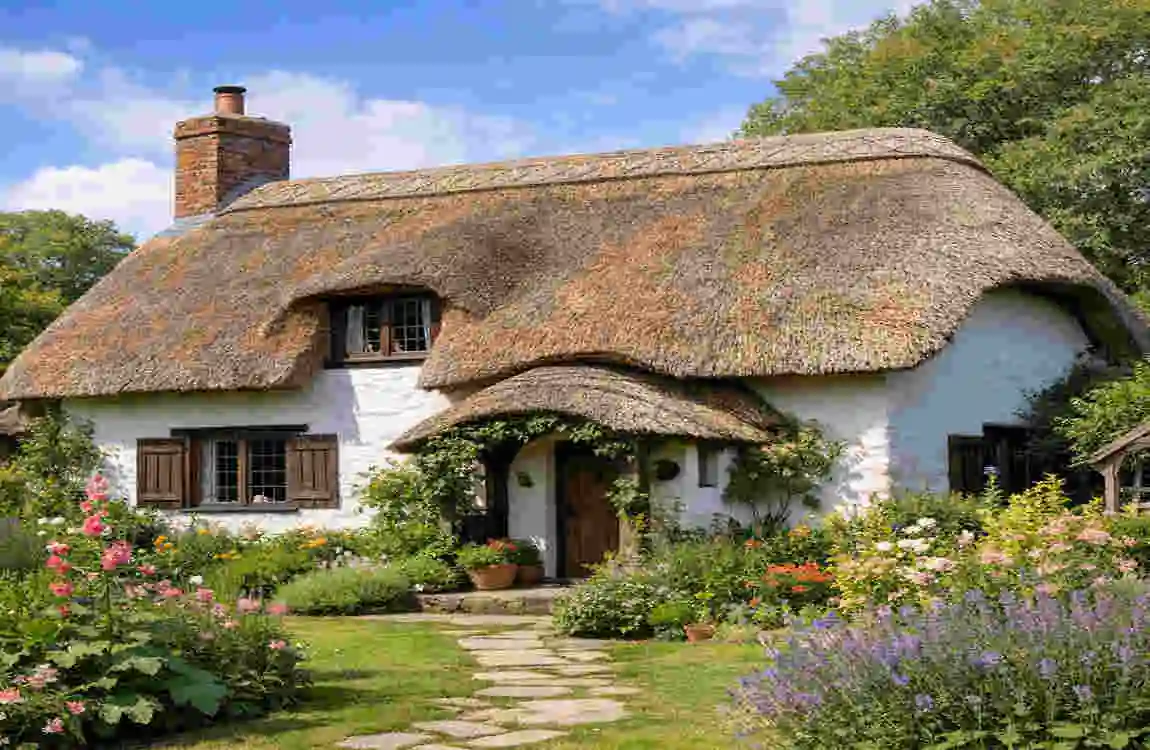
A thatched roof is made by layering dry plant materials to form a thick, protective covering over a home. This roofing style has been used for centuries in many parts of the world.
Common thatching materials include:
- Straw
- Reed
- Palm leaves
- Water reed
These natural materials are tightly tied or layered to keep out rain and protect the home below. Thatched roofs have a long history in rural villages, cottages, and traditional homes. Even today, they are still valued for their natural look and practical performance.
Benefits of a Thatched Roof
Excellent Natural Insulation
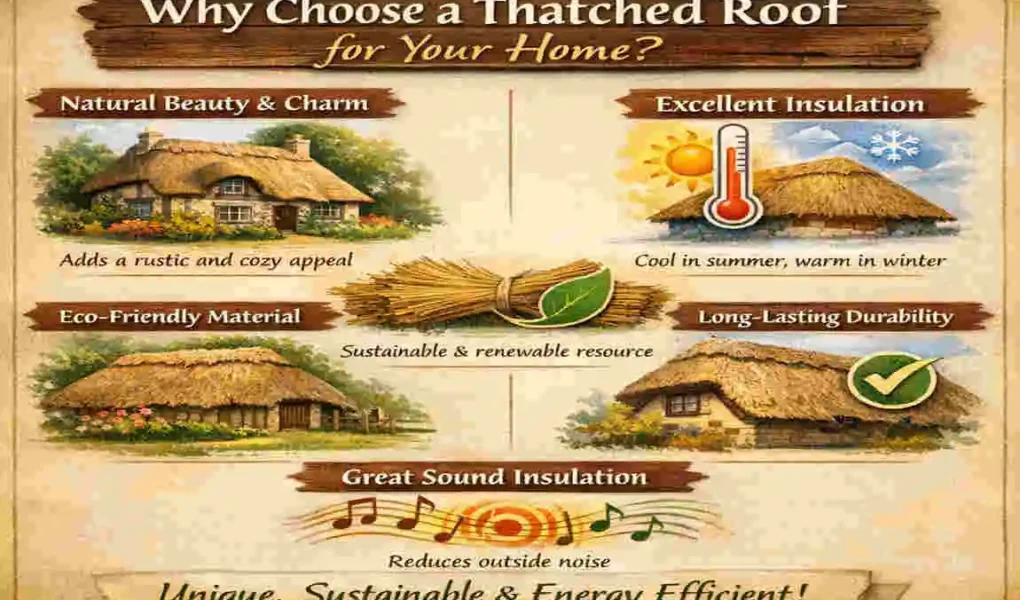
One of the biggest benefits of a thatched roof is insulation. The thick layers of natural material help keep heat in during winter and block excessive heat during summer.
This means your home can stay more comfortable throughout the year. You may also use less heating and cooling, which can help reduce energy bills. For many homeowners, this is a major reason to consider thatch.
Eco-Friendly and Sustainable
Thatched roofs are made from renewable, natural materials. Unlike many modern roofing products, they do not depend on heavy manufacturing or synthetic chemicals.
This makes them a strong choice for people who want a greener home. They are also biodegradable, which means they break down naturally over time. If you care about sustainability, this roofing style fits well with that goal.
Unique Beauty and Character
A thatched roof gives a home a soft, warm, and natural look. It stands out in a way that modern roofing often cannot.
It is especially attractive on:
- Cottages
- Country homes
- Garden homes
- Eco-style houses
The roof adds charm and personality, which can improve curb appeal and make the home feel more inviting. If you want your house to look special and memorable, thatch can do that beautifully.
Energy Efficiency
Because thatched roofs help control indoor temperature, they also support energy efficiency. When your home stays cooler in summer and warmer in winter, you may need less artificial heating and cooling.
This can lower energy use and support a more eco-friendly lifestyle. In simple terms, the roof works with nature instead of against it.
Durability and Longevity
Many people assume thatched roofs are fragile, but that is not always true. With proper installation and regular care, a thatched roof can last for decades.
Its lifespan depends on:
FactorWhy It Matters
Material quality: Better materials usually last longer
Installation skill: A well-built roof performs better
Climate and weather affect wear and tear
Maintenance: Regular care extends roof life
A skilled thatcher is very important here. Good craftsmanship makes a big difference in how well the roof holds up over time.
Sound Insulation
Another useful advantage is sound control. The thick natural layers can help reduce outside noise, which makes your home feel quieter and more peaceful.
This can be helpful if you live near roads, open fields with strong wind, or busy outdoor areas. A quieter home often feels more restful, and that adds to everyday comfort.
Is a Thatched Roof Right for Your Home?
A thatched roof can be a wonderful choice, but it is not right for every house. It works best in certain settings and with the right expectations.
Ideal Homes for Thatched Roofing
Thatched roofs often suit:
- Traditional cottages
- Country homes
- Eco-friendly residences
- Homes in scenic rural areas
These homes often naturally match the style, making the roof feel like part of the design rather than an add-on.
Factors to Consider
Before choosing thatch, think about a few important points:
- Local climate
- Some weather conditions are better for thatched roofs than others.
- Maintenance needs
- Thatched roofs need regular care to stay in good condition.
- Installation cost
- The upfront price may be higher than standard roofing options.
- Skilled labor
- You need an experienced thatcher, and that may not be easy to find everywhere.
If you are willing to invest in the care and craftsmanship, the results can be beautiful and rewarding.
Maintenance Tips for a Thatched Roof
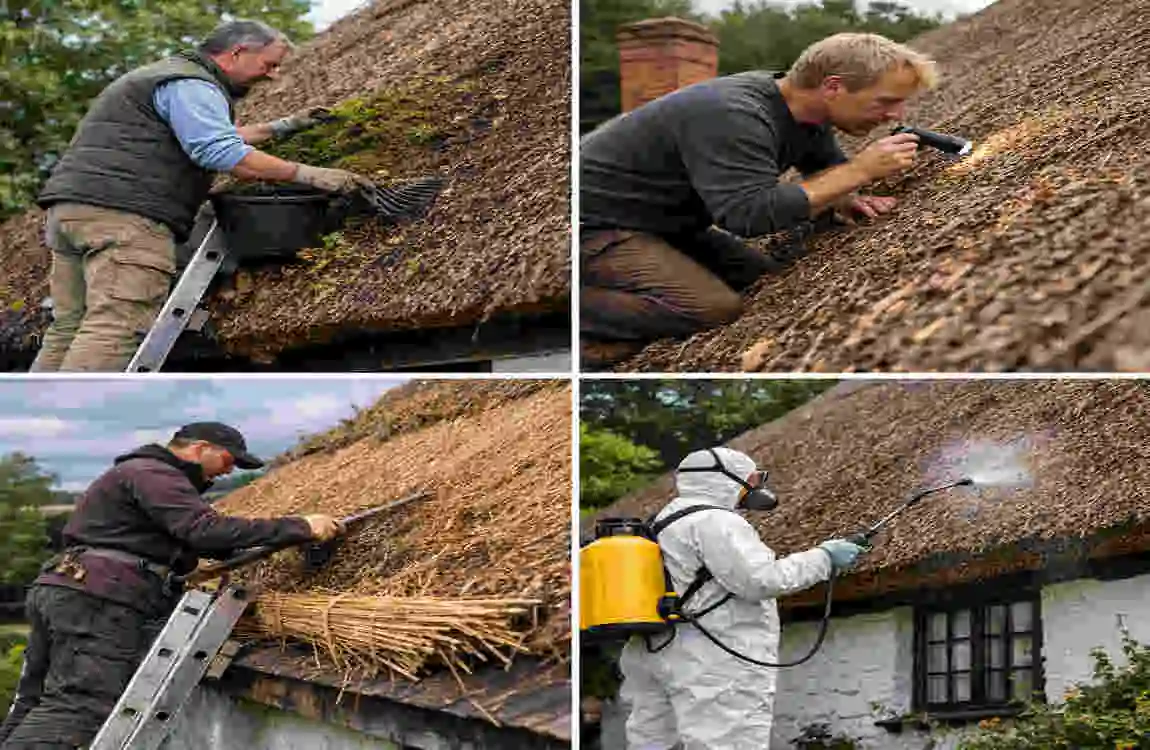
How to Keep a Thatched Roof in Good Condition
A thatched roof can last a long time, but only if you look after it properly. Simple maintenance goes a long way.
Keep these tips in mind:
- Schedule regular inspections
- Remove moss, leaves, and debris
- Make sure ventilation is good
- Fix small issues early
- Hire experienced professionals for repairs
It is also wise to watch for signs of damage after storms or heavy winds. Small problems can grow quickly if they are ignored. Regular care helps protect both the roof and the home underneath it.
Frequently Asked Questions
What are the main benefits of a thatched roof?
The main benefits are natural insulation, energy efficiency, eco-friendliness, and unique visual appeal.
How long does a thatched roof last?
With good materials and regular care, a thatched roof can last 20 to 60 years.
Are thatched roofs energy efficient?
Yes. Their natural layers help keep indoor temperatures more stable, which can reduce energy use.
Do thatched roofs require a lot of maintenance?
They do need regular inspections and occasional repairs, but proper care helps them last much longer.
Are thatched roofs environmentally friendly?
Yes. They are made from renewable, biodegradable materials and usually have a lower environmental impact than many modern roofing types.
Related Posts