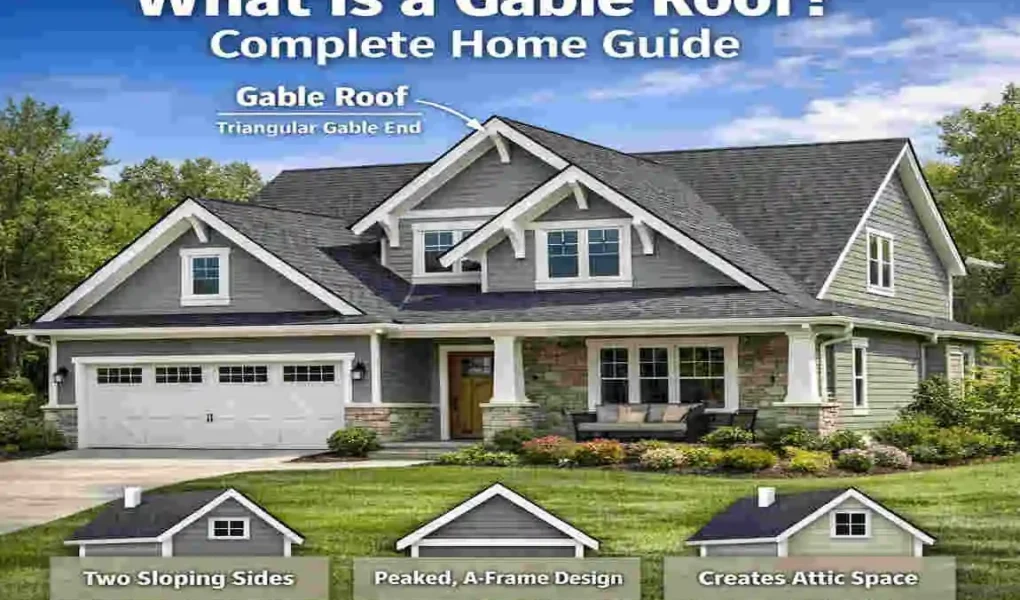
That triangle end is called the gable end. You see this roof style in many houses because it looks simple, works well in different climates, and is usually easier to build than many other roof types.
A gable roof has a clear and clean design. The two roof sides slope down from the ridge, which helps rain and snow slide off easily. This makes it a practical choice for many homeowners.
It also gives the home a classic look. Some gable roofs look very traditional, while others feel modern depending on the materials and finish.
How Does a Gable Roof Work?
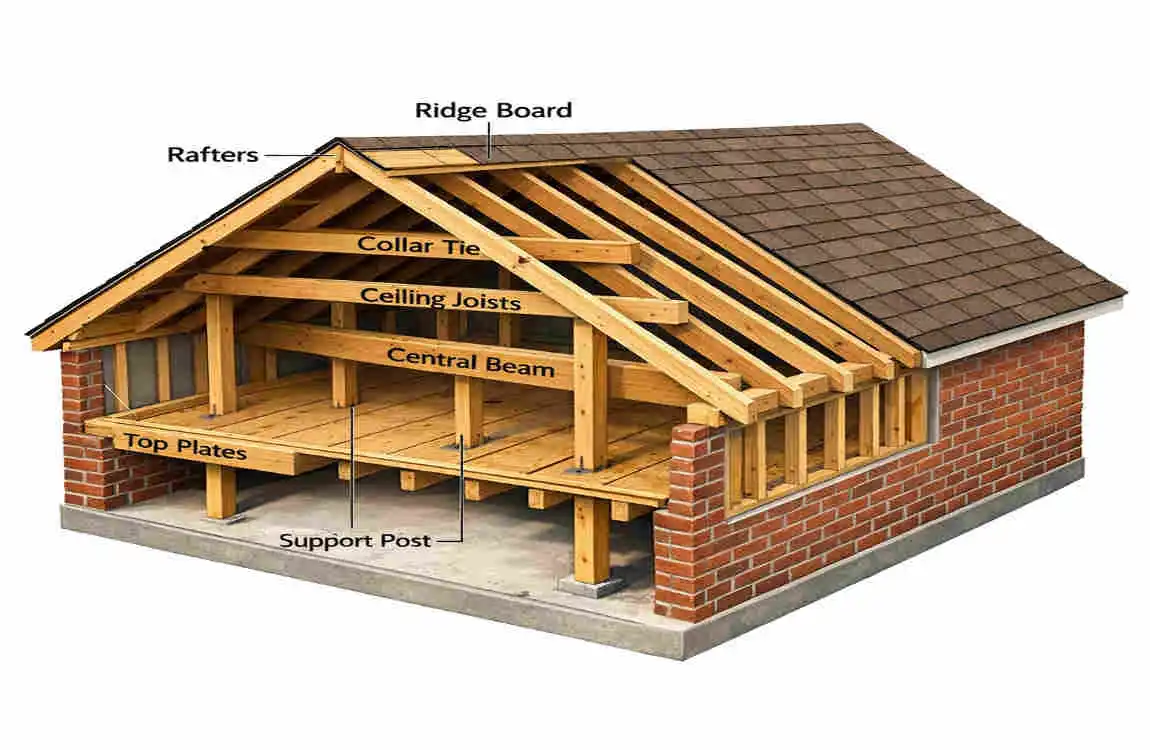
A gable roof works by using slope to move water, snow, and debris away from the house. The angled sides help protect the home and reduce standing water on the roof surface.
Roof pitch and slope
The pitch is the steepness of the roof. A steeper pitch usually helps rain and snow drain faster. A lower pitch can still work well, but it may not shed water as quickly.
Your roof pitch also affects the look of the house. Steeper gable roofs often look taller and more dramatic.
Main parts of the roof
A gable roof usually includes:
- Ridge: the top line where both sides meet
- Rafters or trusses: the frame that supports the roof
- Gable ends: the triangle walls at each end
- Roof covering: shingles, metal sheets, tiles, or other material
Each part works together to keep the roof strong and stable.
Drainage and ventilation
One big reason gable roofs are popular is drainage. Water moves down both sloping sides instead of sitting on top.
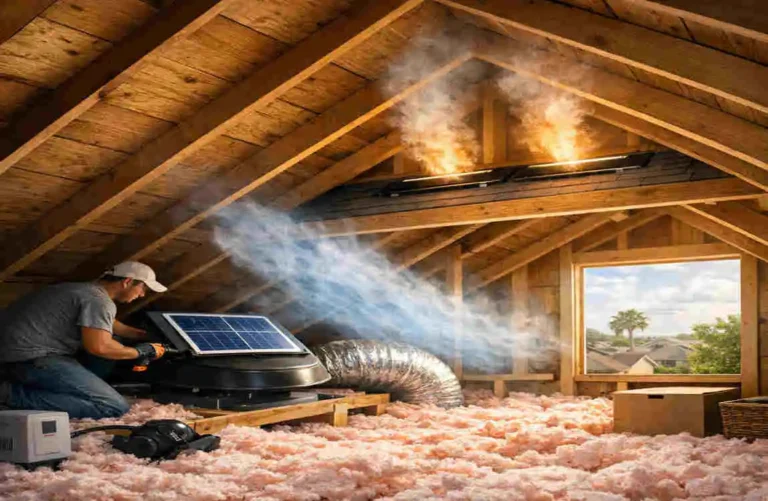
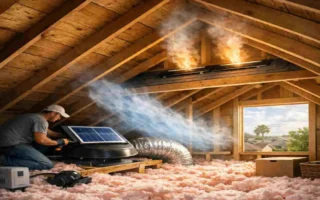
Good ventilation also matters. A well-ventilated gable roof can help reduce heat buildup in the attic and improve comfort inside the home.
Popular Types of Gable Roofs
Several gable roof types exist, and each has its own look and use.
Front-gable roof
A front-gable roof has the triangle end facing the front of the home. It gives the house a bold, noticeable appearance.
This style is often used in cottages, traditional homes, and small houses.
Side-gable roof
A side-gable roof places the triangular ends on the sides of the house. This is one of the most common roof styles in residential homes.
It has a simple look and fits many home designs.
Cross-gable roof
A cross-gable roof uses two or more gable sections that meet at different angles. This creates a more complex shape.
It works well for larger homes and homes with added wings or sections.
Dutch gable roof
A Dutch gable roof combines a hip roof and a gable roof. It gives extra attic space and a more decorative design.
Homeowners often choose this style when they want both function and style.
Gable and valley roof
This design uses multiple roof sections with valley areas where they meet. You often see it in larger or more detailed homes.
It can look beautiful, but it usually needs careful planning and stronger construction.
Benefits and Drawbacks of a Gable Roof
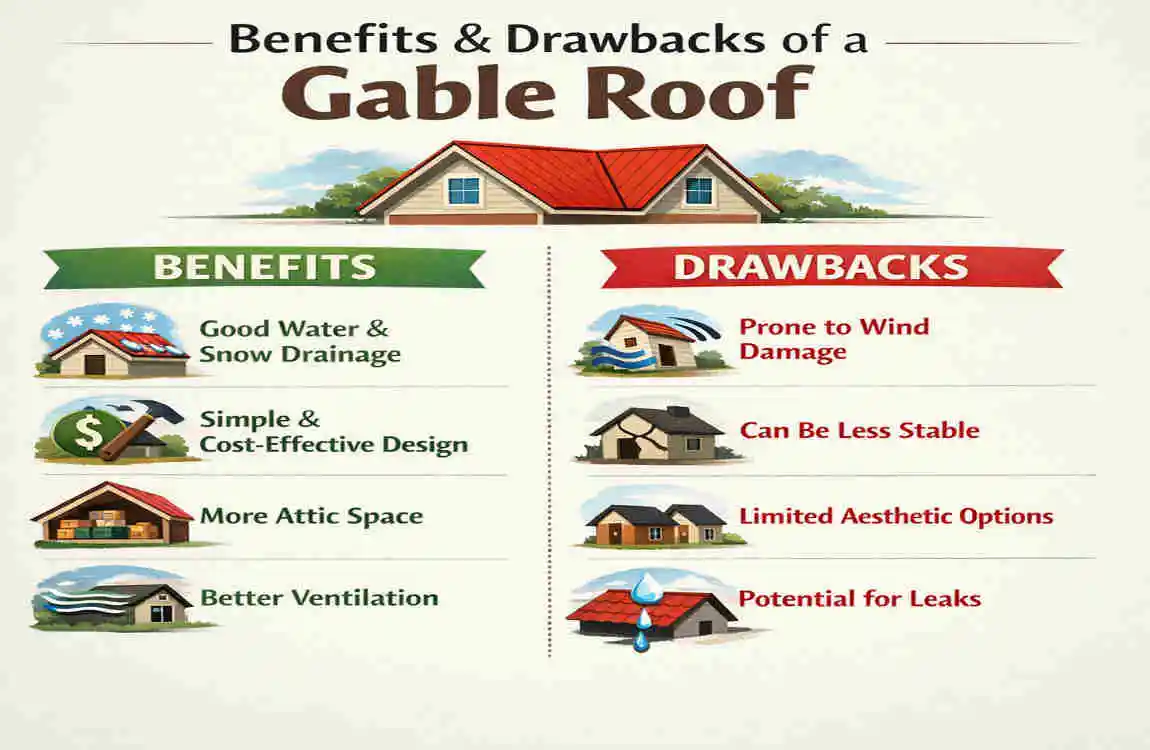
A gable roof has many strengths, but it also has a few weak points. Understanding both sides helps you decide if it is right for your home.
Main benefits
Excellent water drainage
The slope helps rain and snow move off the roof fast. This lowers the chance of water pooling and leaking.
Good attic space
A gable roof often creates more space under the roof, which can be useful for storage or even attic rooms.
Simple construction
Because the shape is straightforward, builders can usually install it more easily than more complex roof styles.
Flexible design
A gable roof can work with many home styles, from simple houses to more modern builds.
Works in many climates
It performs well in areas with rain and snow, especially when the pitch is designed correctly.
Possible drawbacks
Can be vulnerable to strong winds
If not built well, gable ends can catch wind. This can create stress during storms.
Needs gable-end care
The triangle ends may need regular checks for cracks, damage, or weak spots.
Pitch must be planned well.
If the roof is too steep or too shallow for the climate, it may not perform as expected.
Overhangs need attention
Large overhangs can improve shade and style, but they also need proper support.
Gable Roof Materials, Design & Cost
The material you choose affects your roof’s look, lifespan, and cost.
Common roofing materials
Asphalt shingles
These are popular because they are affordable and widely available. They suit many gable roof designs.
Metal roofing
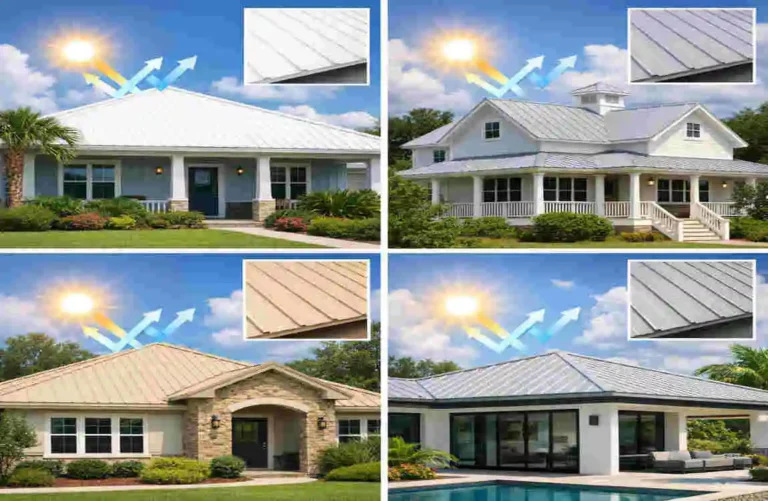
Metal is strong, long-lasting, and handles water runoff well. It also gives a modern look.
Clay or concrete tiles
These add weight and style. They work well in certain climates and create a more textured appearance.
Wood and other materials
Wood shakes can create a warm, natural look, but they need more care than some other options.
Design ideas for modern and traditional homes
A gable roof can look modern with clean lines and metal roofing. It can also look classic with shingles and simple trim.
The final design should match the rest of the house. That helps the home feel balanced and complete.
Factors that affect cost
The gable roof cost depends on several things:
- Roof size
- Material choice
- Roof pitch
- Labor and construction difficulty
- Local climate and building rules
A simple roof usually costs less than a complex one. A bigger or steeper roof may cost more because it needs more material and more work.
Maintenance needs
Check a gable roof regularly for loose shingles, leaks, damaged flashing, and wear around the edges. Regular care can help extend its life.
Gable Roof vs. Other Roof Styles
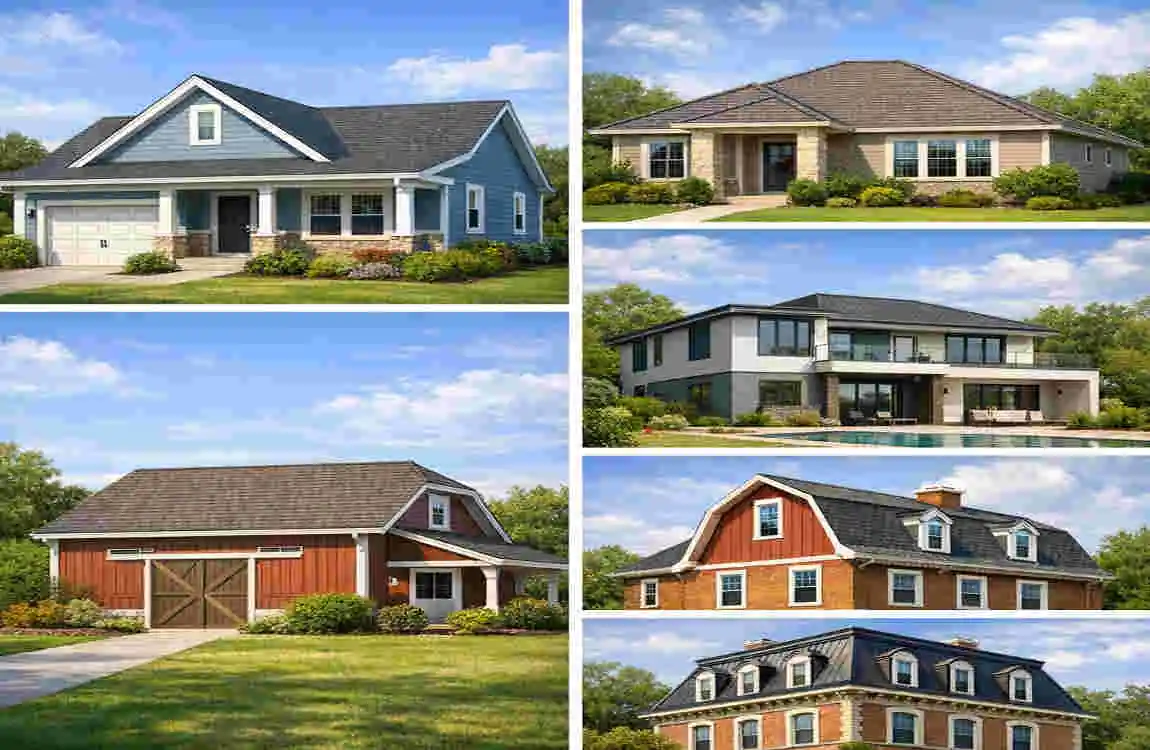
Choosing a roof style often depends on your home design, budget, and weather conditions.
Roof StyleMain LookDrainageAttic SpaceCostWind Resistance
Gable Roof Two sloping sides meeting at a ridge Very good Good Moderate Moderate
Hip Roof Slopes on all sides Very good Less space Often higher Strong
Shed Roof One single slope Good Limited Often lower Moderate
Mansard Roof Steep lower slope, flatter upper slope Good More space Higher Moderate
Gable roof vs. hip roof
A gable roof is often cheaper and simpler to build. A hip roof has slopes on all four sides, which can make it stronger in windy areas.
If you want more attic space and a simpler shape, a gable roof may be a better fit. If you want extra wind stability, a hip roof may be the stronger choice.
Gable roof vs. shed roof
A shed roof has only one slope. It often looks more modern and is used in contemporary homes.
A gable roof offers a more classic shape and usually provides more attic space.
Gable roof vs. mansard roof
A mansard roof creates more usable space but is more complex and often more expensive. A gable roof is simpler and easier to maintain.
FAQ: What Is a Gable Roof?
What is a gable roof?
A gable roof has two sloping sides that meet at a ridge, forming triangle-shaped ends.
Is a gable roof good for a house?
Yes, it is a common, practical choice for many homes because it drains water well and looks clean and simple.
What are the advantages of a gable roof?
The main advantages of a gable roof are good drainage, simple construction, attic space, and a flexible design.
What are the disadvantages of a gable roof?
The main disadvantages of a gable roof include wind sensitivity, potential gable-end issues, and the need for proper design.
Are gable roofs expensive?
They are usually not the most expensive roof style. The cost depends on size, materials, and roof design.
How long does a gable roof last?
That depends on the material and maintenance. A well-built roof with regular care can last for many years.
Which roofing material is best for a gable roof?
Asphalt shingles, metal, clay, and concrete can all work well. The best choice depends on climate, budget, and style.
Is a gable roof better than a hip roof?
Not always. A gable roof is often simpler and cheaper, while a hip roof may be better for high-wind areas.
| Topic | Short Information |
|---|---|
| What Is a Gable Roof? | A roof with two sloping sides that meet at a central ridge, creating a triangular wall section called a gable. |
| Main Design | Two roof slopes with a ridge running along the top. |
| Common Types | Open gable, boxed gable, cross-gable, front-gable, and side-gable roofs. |
| Key Benefit | Provides effective rainwater drainage and good attic or storage space. |
| Ventilation | Gable ends can include vents or windows to improve airflow. |
| Materials | Common options include asphalt shingles, metal, clay tiles, and concrete tiles. |
Related Posts