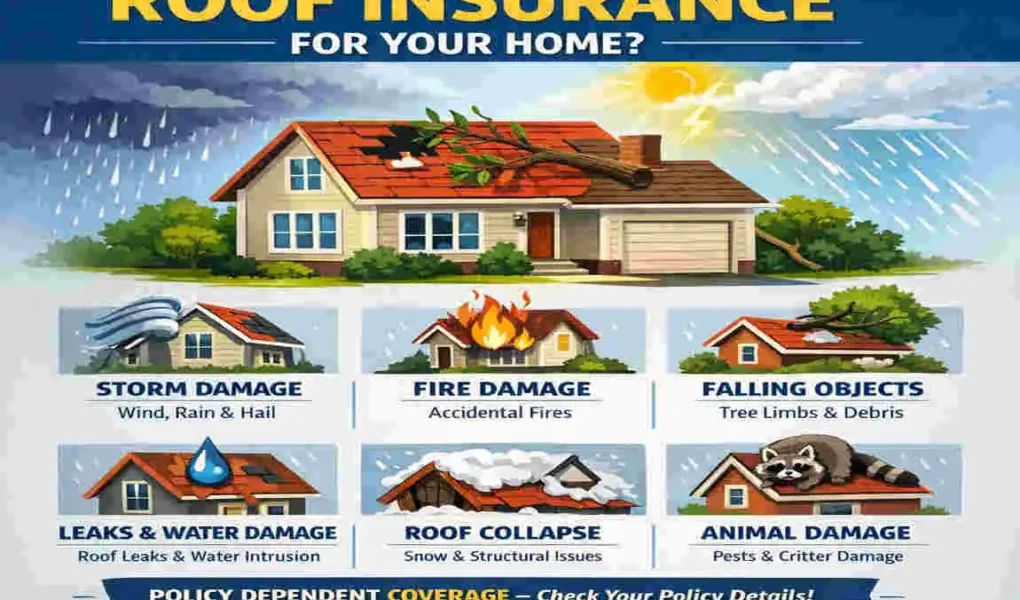
Your roof protects your home from rain, wind, heat, snow, and many other risks. When it gets damaged, repairs can be expensive and fast. That is why many homeowners want to know what is covered by roof insurance.
Roof insurance can help cover damage caused by sudden events such as storms, fire, hail, or falling trees. But it does not cover every kind of roof problem. Knowing the difference can save you stress, time, and money.
What Is Roof Insurance?

Understanding Roof Coverage
Roof insurance is usually part of your homeowners’ insurance policy. It helps pay for roof damage caused by covered events. In simple words, if something sudden and unexpected harms your roof, your policy may help.
Why Roof Insurance Is Important
A damaged roof can lead to leaks, mold, and even structural problems. Without coverage, you may have to pay for repairs yourself. Roof insurance helps protect your home and your budget after a bad event.
How Roof Insurance Works
When damage happens, you file a claim with your insurance company. They may send an adjuster to inspect the roof. If the damage is covered, the insurer may pay for repair or replacement, depending on your policy.
What Is Covered by Roof Insurance?
Storm Damage
Storms are among the most common causes of roof claims. Roof insurance often covers:
- Wind damage
- Hail damage
- Heavy rain can cause sudden roof damage
If a storm tears shingles off or dents the roof, your policy may help pay for repairs.
Fire and Smoke Damage
If a fire damages your roof, insurance usually covers the repair or replacement. Smoke and soot can also cause harm, and that may be included, too.
Falling Objects
If a tree branch, broken limb, or other object falls on your roof during a storm, the damage may be covered. This often includes impact damage from debris.
Lightning Strikes
Lightning can crack roofing material, start fires, or damage nearby systems. Roof insurance often covers this kind of sudden loss.
Snow and Ice Damage
Heavy snow can weigh down a roof and cause collapse. Ice dams can also lead to leaks and water damage. In many cases, these problems are covered if they occur suddenly rather than due to poor care.
Vandalism
If someone intentionally damages your roof, your homeowners’ policy may help cover the loss. This is less common, but it is usually treated as a covered event.
What Roof Insurance Usually Does Not Cover
Normal Wear and Tear
Roofs age over time. Shingles may curl, crack, or wear out naturally. Insurance usually does not pay for damage caused by normal aging.
Lack of Maintenance
If a roof has leaks due to neglect, your claim may be denied. Insurance expects homeowners to do basic upkeep and small repairs.
Pest Damage
Damage from rodents, insects, or birds is usually not covered. This is seen as a maintenance issue, not a sudden accident.
Manufacturer Defects
If roofing materials were made poorly, the roofing product itself may be the issue. In many cases, the manufacturer, not the insurance company, may be responsible.
Improper Installation
If a contractor installed the roof incorrectly, insurance may not cover the damage. Poor artistry is usually excluded from roof coverage.
Factors That Affect Roof Insurance Coverage
Roof Age
Newer roofs are often easier to insure. Older roofs may have lower coverage or higher costs because they are more likely to fail.
Roofing Material
The type of roof matters. Asphalt shingles, metal roofs, and tile roofs all age differently and may have different coverage rules.
Geographic Location
If you live in an area with hurricanes, hail, heavy snow, or strong winds, your roof coverage may be more expensive or more limited.
Policy Type
Some policies pay based on Actual Cash Value (ACV), while others use Replacement Cost Value (RCV).
- ACV pays based on age and wear
- RCV pays to replace the roof with a similar new one
How to File a Roof Insurance Claim
Inspect the Damage Safely
First, make sure the area is safe. Do not climb onto a damaged roof if it may be unstable.
Document Everything
Take clear photos and videos of the damage. Keep repair estimates, receipts, and any notes about when the damage happened.
Contact Your Insurance Company
Report the damage as soon as possible. The sooner you call, the faster your claim can move forward.
Meet the Insurance Adjuster
The insurance company may send an adjuster to check the roof. Be ready to show the damage and share your records.
Receive Claim Approval and Repairs
If the claim is approved, you can move ahead with repairs. Some policies pay first, while others may pay after repairs are completed.
Tips to Maximize Your Roof Insurance Benefits

Here are a few simple ways to protect your coverage:
- Inspect your roof regularly
- Keep maintenance records
- Fix small problems early
- Know what your policy excludes
- Review your coverage once a year
These steps can help you avoid claim problems later.
Signs You Should Contact Your Insurance Company
You should call your insurer if you notice:
- Missing shingles
- Roof leaks after a storm
- Hail dents
- A fallen tree or a large branch
- Sudden structural damage
If the damage happened after a covered event, it may be worth filing a claim.
Frequently Asked Questions
What is covered by roof insurance?
Roof insurance usually covers storm damage, hail, wind, fire, lightning, falling objects, and some other sudden events.
Does roof insurance cover leaks?
Yes, if a covered event causes the leak. It usually does not cover leaks from poor maintenance.
Will insurance replace an old roof?
Sometimes, but it depends on the roof’s age, condition, and your policy type.
Does homeowners’ insurance cover hail damage to roofs?
Yes, hail damage is usually covered by standard homeowners insurance.
Does insurance cover roof wear and tear?
No, normal wear and tear is usually not covered.
| Coverage Area | What Is Typically Covered? |
|---|---|
| Storm Damage | Roof damage caused by windstorms, hail, lightning, and severe weather events. |
| Fire Damage | Repair or replacement costs if the roof is damaged by fire or smoke. |
| Falling Objects | Damage from falling trees, branches, or other objects impacting the roof. |
| Vandalism | Roof repairs resulting from intentional damage or vandalism. |
| Weight of Ice or Snow | Structural damage caused by excessive snow or ice accumulation. |
| Water Damage | Interior water damage resulting from a covered roof-related incident. |
| Debris Removal | Costs to remove damaged roofing materials and debris after a covered loss. |
| Partial Roof Replacement | Repair or replacement of damaged sections when covered by the policy. |
| Full Roof Replacement | Complete roof replacement if the damage is extensive and covered. |
| Emergency Repairs | Temporary measures, such as tarping, to prevent further damage after a covered event. |
Related Posts