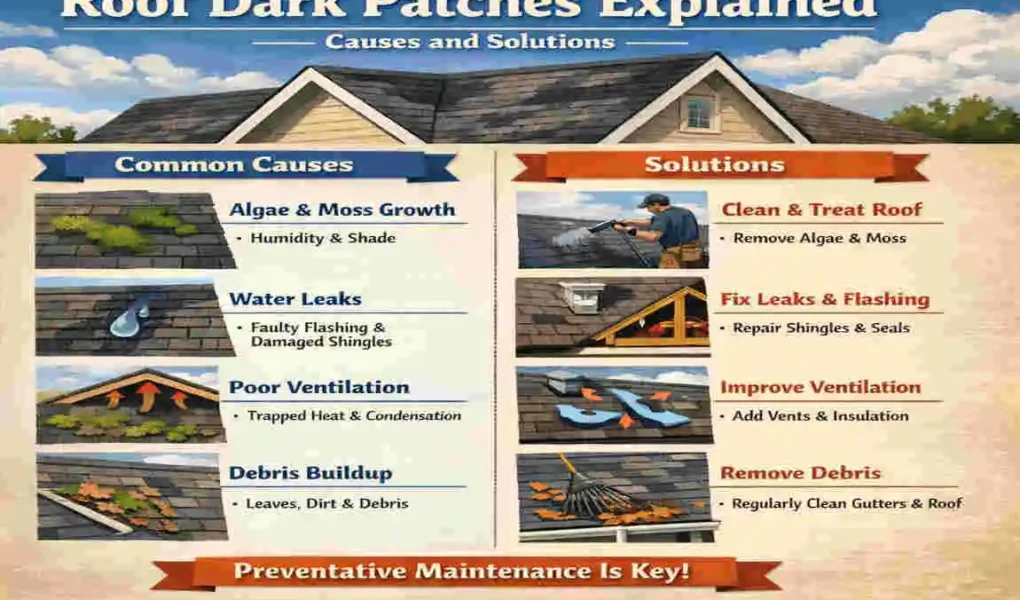
A dark patch on the roof is something many homeowners notice and worry about right away. Sometimes it is only a surface stain. Other times, it can point to a bigger issue, such as moisture, algae growth, dirt buildup, or roof ageing.
The important thing is to look closely before guessing. A dark area on the roof does not always mean a serious problem, but it should never be ignored if it keeps spreading or looks damp.
What Causes a Dark Patch on a Roof?
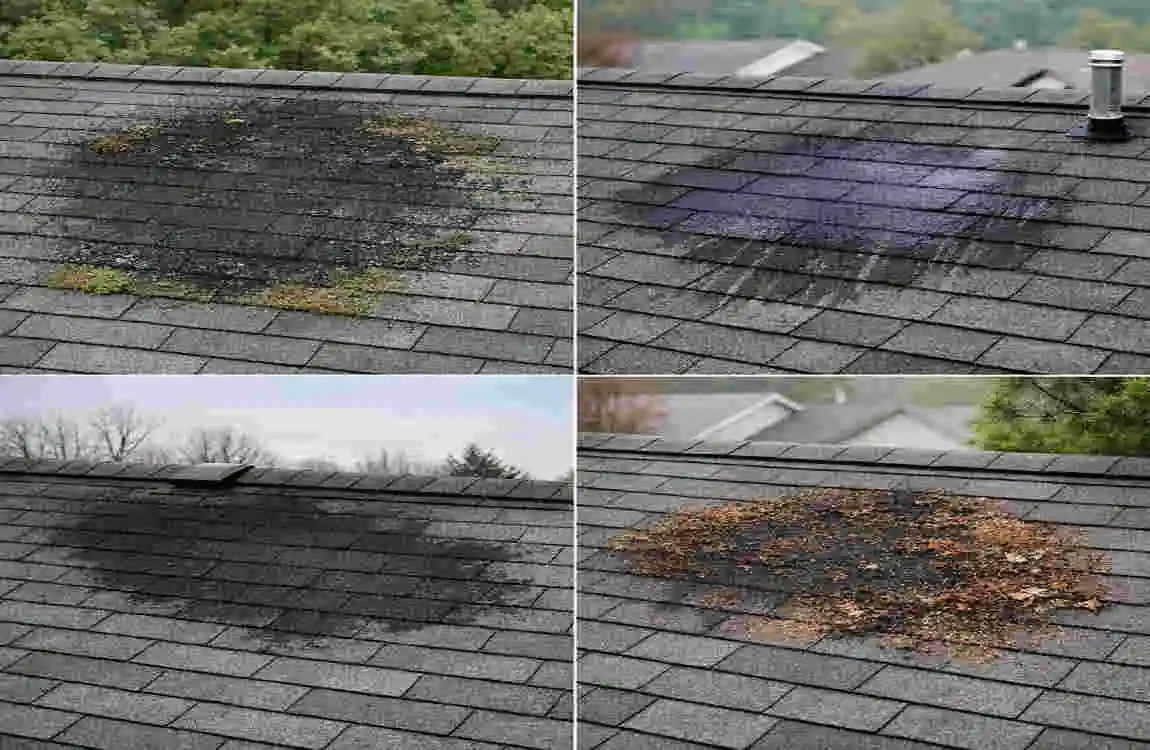
There are several common reasons for roof discolouration. Some are harmless at first. Others can become serious if left alone.
Moisture and Water Damage
One of the biggest causes of a dark patch on a roof is moisture. Water can seep into roofing materials through small cracks, damaged shingles, or weak flashing.
When that happens, the area may look darker because it stays damp longer than the surrounding roof. In some cases, the stain may also appear on ceilings or attic wood, which is a stronger sign of a leak.
If you see dark patches along with soft spots, dripping, or ceiling marks inside the house, moisture damage may be the issue.
Algae and Moss Growth
Algae often creates dark streaks or patches on roofs, especially in shaded or humid areas. It does not always mean the roof is damaged, but it can make the roof look older and dirtier than it really is.
Moss can also grow where moisture stays trapped. Moss is thicker than algae and may lift shingles over time, which can lead to real damage.
So, while algae stains may start as a cosmetic issue, they can become a roof problem if they are not cleaned and controlled.
Dirt, Debris, and Environmental Stains
Leaves, dust, pollen, and small bits of organic material can build up on a roof. Over time, this buildup can create dark spots or uneven colouring.
Nearby trees often make this worse by dropping debris and blocking sunlight. Poor drainage can also leave damp areas behind after rain.
Weather, smoke, and pollution can also contribute to roof staining. In many cases, the roof is not failing. It just needs cleaning and better maintenance.
Ageing or Damaged Roofing Materials
Roofing materials do not last forever. As shingles age, they lose colour, strength, and protective coating. Sun, heat, rain, and wind all slowly change how they look.
Older roofs often show patches of discolouration because the surface has worn unevenly. Cracked, curled, or missing shingles can also create dark areas that stand out more than the rest of the roof.
If your roof is older, a dark patch may be a sign that it is reaching the end of its useful life.
How to Identify the Cause of a Dark Roof Patch
You do not need to be a roofing expert to notice warning signs. A careful visual check can help you understand what may be going on.
Look at the Texture and Appearance
Ask yourself a few simple questions:
- Does the patch look wet?
- Does it appear streaked or flat?
- Is there fuzzy growth on the surface?
- Do the shingles look cracked, curled, or missing?
These clues can point to different causes. For example, fuzzy or thick growth usually suggests moss. A flat dark stain may be algae or dirt. Wet-looking spots may mean a leak.
Check Nearby Roof Areas
Look around gutters, vents, flashing, and roof valleys. These are common places for water problems to begin.
If the dark patch is near a roof seam or around a vent, that area may be letting in moisture. If the stain appears under a tree or where water drains slowly, debris or poor drainage may be the cause.
Inspect the Attic if Safe
If you can safely access the attic, look for water marks, mould, musty smells, or damp insulation. These signs often show that the dark roof patch is connected to a leak.
A roof stain on the outside is one thing. Moisture inside the attic is a stronger warning sign.
When to Call a Professional
A basic visual check is useful, but some cases need expert help. Call a roofing professional if:
- the patch keeps growing
- shingles are damaged
- you notice indoor water stains
- the roof is very old
- you are unsure what caused the discolouration
A trained inspection can save you time and prevent bigger repairs later.
Are Dark Roof Patches a Serious Problem?
Not every dark patch means the roof is failing. Still, some patches should be taken seriously.
When It May Be Cosmetic
A patch may be mostly cosmetic if algae, dirt, or light surface staining causes it. In these cases, the roof may still be strong underneath.
This is common on shaded roofs or older shingles that have changed colour over time.
When It May Point to Damage
A dark patch becomes more concerning when it looks damp, grows over time, or appears with missing shingles or ceiling stains. That can mean water is getting in.
If you ignore a real moisture problem, it can spread to insulation, ceilings, walls, and even indoor air quality.
Why Early Action Matters
Small roof problems are usually cheaper to fix early. Once water gets deeper into the structure, repairs can become much more expensive.
That is why a dark patch on the roof should always be checked rather than brushed off.
How to Fix Dark Patches on a Roof
The right fix depends on the cause. Cleaning helps with surface stains. Repairs are needed when there is damage. In some cases, replacement is the best answer.
Cleaning Algae and Surface Stains
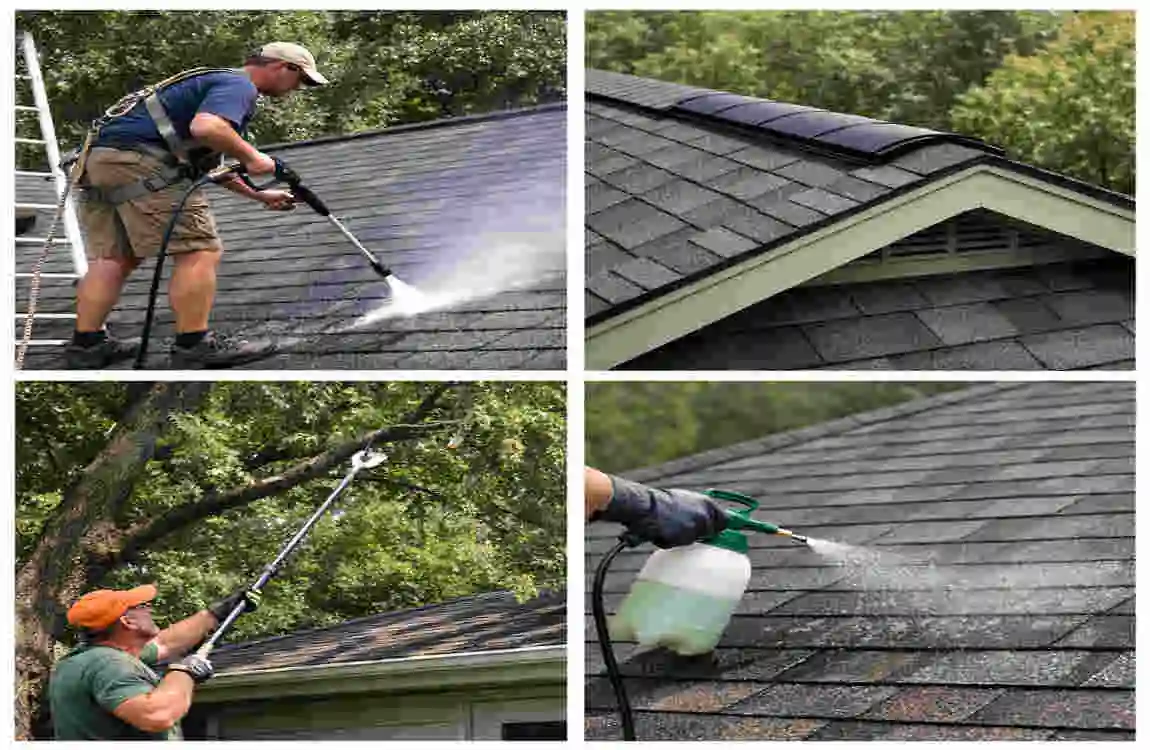
If the patch is from algae, dirt, or light debris, a safe roof cleaning may help. The method should depend on the roof material.
Be careful with high-pressure washing. It can damage shingles or strip away protective layers. A gentler cleaning approach is usually better.
Always follow the roof material’s care guidance when possible. That helps protect the roof while removing stains.
Repairing Leaks and Damaged Areas
If the patch is linked to a leak, cleaning alone will not solve the problem. Damaged shingles may need replacement, and flashing around vents or chimneys may need repair.
Sometimes the issue is drainage. In that case, clearing gutters or fixing water flow can stop the patch from returning.
When Roof Replacement May Be Necessary
A roof replacement may be the best choice if:
- the roof is very old
- damage is widespread
- leaks keep coming back
- many shingles are worn out
- repairs are becoming too frequent
If the roof has major wear across a large area, replacement may be more cost-effective than repeated patch repairs.
How to Prevent Dark Patches From Returning
A little roof care goes a long way. Good maintenance can help reduce future stains and damage.
Keep Gutters Clear
Clogged gutters trap water and debris. That can lead to staining and moisture problems near the roof edge.
Trim Nearby Trees
Branches that hang over the roof create shade and drop leaves. Trimming them helps sunlight reach the roof and keeps debris down.
Improve Ventilation
Proper roof ventilation helps reduce trapped heat and moisture. That can slow down algae growth and protect roofing materials.
Fix Leaks Quickly
If you notice a leak, do not wait. Small moisture problems often grow into larger ones.
Schedule Roof Inspections
Regular checks help catch stains, damage, and weak spots early. This is one of the easiest ways to protect your roof.
FAQ About a Dark Patch on a Roof Home
Why is there a dark patch on my roof?
The most common reasons are moisture, algae, moss, dirt, debris, or ageing roofing materials.
Does a dark spot on a roof always mean a leak?
No. A dark spot can be only a stain. But if it looks damp or keeps spreading, it should be checked.
How do I remove dark patches from roof shingles?
Use a safe cleaning method that is compatible with your roofing material. Avoid harsh pressure washing, which can damage shingles.
Can algae cause dark patches on a roof?
Yes. Algae often causes dark streaks or stains, especially in damp or shaded areas.
When should I call a roofing professional?
Call a pro if you see leaks, damaged shingles, recurring stains, or if you are not sure what caused the patch.
Can dark roof patches be prevented?
Yes. Good drainage, regular cleaning, tree trimming, ventilation, and inspections all help prevent them.
Should I replace my roof because of dark patches?
Not always. It depends on the roof’s age, condition, and whether the patch is only surface-level or tied to more serious damage.
| Cause | What It Looks Like | Solution |
|---|---|---|
| Algae Growth | Dark black or greenish streaks | Clean the roof and consider algae-resistant shingles |
| Moss | Thick, dark green patches | Carefully remove moss and improve sunlight and drainage |
| Water Damage | Irregular dark or damp-looking areas | Find and repair leaks promptly |
| Mold or Mildew | Dark spots with possible discoloration | Remove the growth and address moisture problems |
| Debris Buildup | Patches beneath leaves or branches | Clear debris regularly and trim nearby trees |
| Aging Shingles | Uneven darkened areas | Inspect shingles and replace damaged or worn sections |
| Poor Drainage | Dark areas near gutters or valleys | Clean gutters and improve roof drainage |
Related Posts