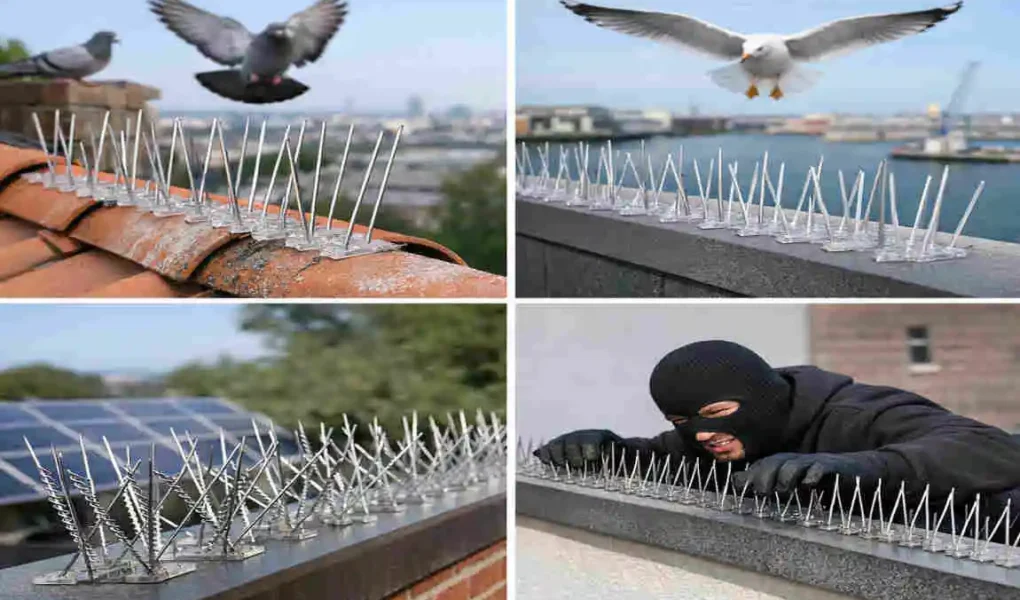
If you have ever looked up and noticed small spikes along a roof edge, chimney, gutter, or solar panel, you may have wondered what the spikes on roofs are for. The short answer is simple: they are usually made to keep birds away.
These spikes help stop birds from landing, perching, or building nests in unwanted areas. They are common on homes, businesses, and buildings where birds often gather. In many cases, they also help protect the roof from dirt, droppings, and nesting debris.
What Are the Spikes on Roofs For?
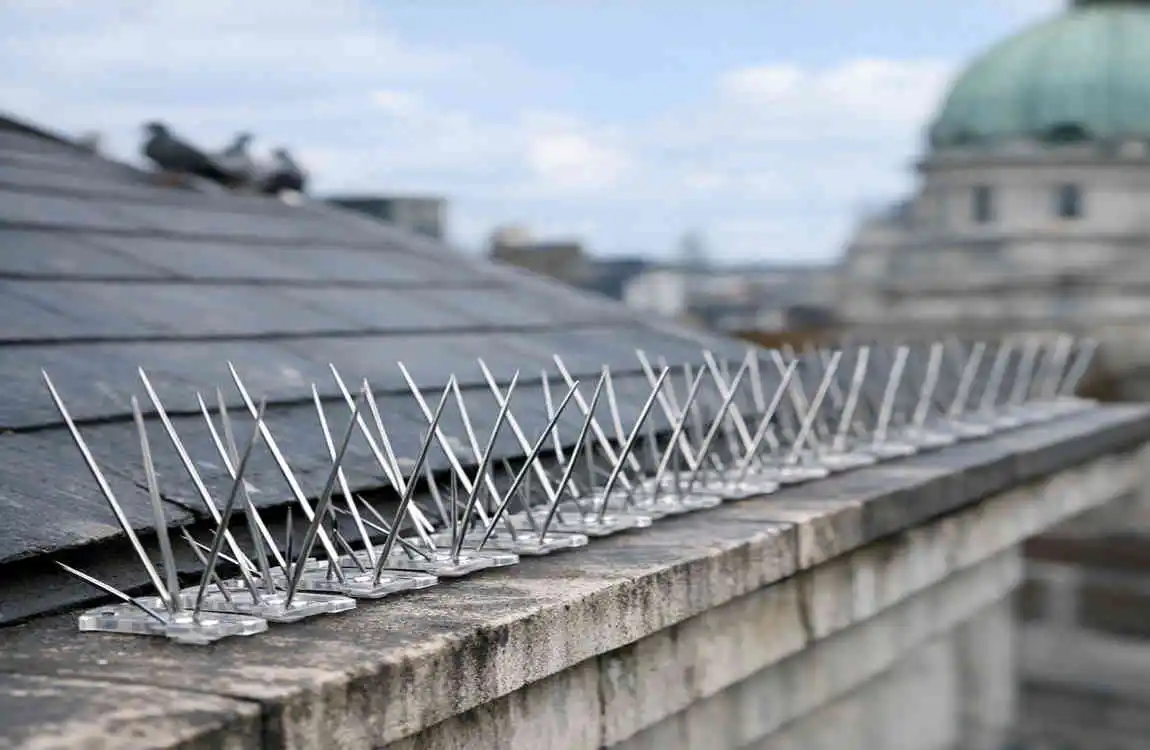
Roof spikes are usually bird deterrent spikes. They are designed to make narrow surfaces uncomfortable for birds to land on. Birds may still fly nearby, but they are less likely to settle on the protected area.
Most often, these spikes are used to discourage birds from sitting on:
- Roof edges
- Chimneys
- Gutters
- Eaves
- Solar panels
- Building ledges
The goal is not to trap or harm birds. Instead, the spikes create a space that feels too awkward for them to use.
How Do Roof Spikes Work?
Creating an Uncomfortable Landing Area
Birds like flat, stable places where they can rest. Roof spikes break up that surface. When birds try to land, the narrow rods make it hard for them to balance comfortably.
This simple design is what makes them useful. Birds usually move on and choose another spot.
Preventing Nesting
Birds often look for sheltered areas to build nests. Roof edges, chimneys, and ledges can seem like safe places to them. Spikes make those spots less attractive.
By blocking access, they help prevent birds from returning to the same area again and again.
Protecting Roof Components
Birds can leave behind droppings, twigs, feathers, and other debris. Over time, that can create a mess and even cause damage in some areas.
Roof spikes help reduce that activity, making upkeep easier and keeping the roof cleaner.
Common Types of Roof Spikes
There are several kinds of roof spikes, and the best one depends on where you want to install them.
Stainless Steel Bird Spikes
These are strong, long-lasting, and rust-resistant. They are a good choice for outdoor areas that face rain, sun, and changing weather.
Plastic Bird Spikes
Plastic versions are often lighter and more affordable. They may work well in some residential settings where heavy-duty material is not needed.
Polycarbonate Spikes
These are often chosen when appearance matters. They are weather-resistant and can look less noticeable on a roof.
Solar Panel Bird Spikes
These are made to help keep birds from nesting under solar panels. That area can be a common hiding spot for birds, so special deterrents are often useful there.
Wide-Base and Narrow-Base Spikes
The base size matters because different roof areas need different coverage.
- Wide-base spikes suit wider ledges and flat surfaces.
- Narrow-base spikes work better on smaller edges and tighter areas.
Where Are Roof Spikes Commonly Installed?
Roof spikes are often placed where birds naturally like to land. Some of the most common spots include:
Location Main Purpose
Roof edges Discourage birds
Chimneys Prevent nesting
Solar panels Block nesting underneath
Gutters Reduce bird activity and debris
Ledges Prevent perching
You may also see them on porches, awnings, and commercial rooftops.
Benefits of Installing Roof Spikes
Helps Keep Birds Away
The biggest benefit is simple: roof spikes make it harder for birds to land. That means less perching and less nesting.
Protects Roof Areas
Birds can leave behind mess and nesting material. In some cases, that can cause problems over time. Spikes help reduce that risk.
Reduces Bird Droppings
Droppings can stain surfaces and create extra cleaning work. Roof spikes can help keep the area cleaner.
Protects Solar Panels
If birds build nests under solar panels, it can interfere with the space beneath them. Special bird spikes made for solar panels can help prevent that.
Low Maintenance
Once properly installed, good-quality spikes usually require little attention. That makes them a practical long-term option.
Non-Lethal Bird Control
A key point is that bird spikes are meant to deter, not harm. They create an uncomfortable landing space without being designed to injure birds.
Are Roof Spikes Safe?
Yes, properly installed roof spikes are generally considered a safe bird-deterrent method. They are made to keep birds from landing, not to hurt them.
That said, installation matters. Spikes should be placed correctly so they work well and stay secure. It is also important to choose products meant for bird control, not sharp items intended for other uses.
If your area has protected bird species, it is wise to check local rules before removing nests or installing deterrents.
How to Install Roof Spikes
Inspect the Roof
First, look for the places where birds land most often. This helps you focus on the right areas instead of covering the whole roof.
Clean the Surface
The area should be free of dirt, debris, and old nesting material. A clean surface helps the spikes stay in place better.
Measure the Area
Measure the length of the surface to determine how much spike material you need.
Choose the Correct Product
Pick spikes based on the roof material, bird size, and the location you want to protect.
Secure the Spikes
Follow the installation instructions that come with the product. Some spikes use adhesive, while others may use screws or clips.
Inspect the Installation
After installing, check that the spikes cover the full area and are firmly attached.
Roof Spikes vs. Other Bird Deterrents
Roof spikes are not the only option. Depending on the situation, other deterrents may work better.
- Bird netting: Good for blocking access to larger spaces
- Bird wire: Useful on ledges and narrow surfaces
- Reflective deterrents: Can help in some open areas
- Bird gels: May work on certain flat surfaces
- Ultrasonic devices: Sometimes used in broader control plans
In many cases, the best choice depends on the bird problem, roof design, and how visible you want the solution to be.
Are Roof Spikes Effective?
Yes, roof spikes can be effective when they are installed correctly. Their success depends on a few things:
- They must cover the right spots
- They should match the bird size and surface
- They need proper installation
- They should be checked from time to time
If birds are still landing nearby, it may mean some areas were missed, or the spikes were not the best fit for the space.
How Much Do Roof Spikes Cost?
The cost of roof spikes can vary a lot. It depends on:
- Type of spikes
- Roof size
- Length of coverage needed
- Roof height
- How easy the area is to reach
- Material quality
- Professional labor, if needed
Because every roof is different, there is no single price that fits all projects.
How to Choose the Right Roof Spikes
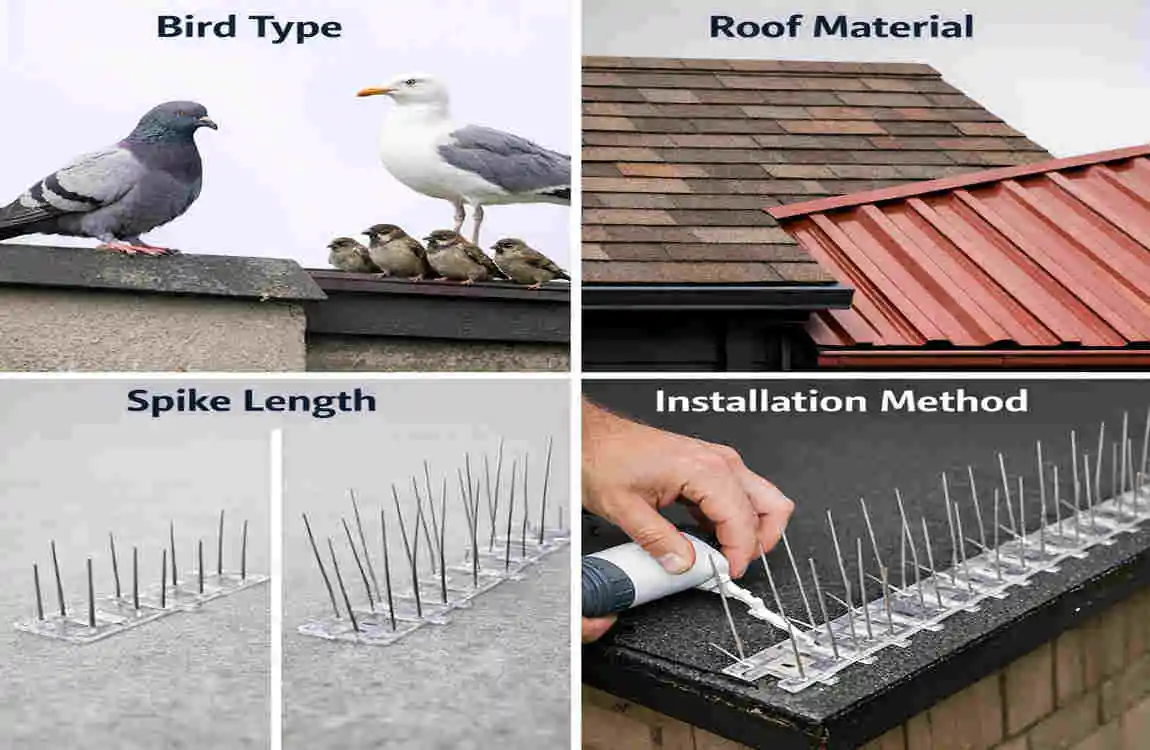
When choosing roof spikes, think about these points:
- Roof material
- Bird species
- Installation location
- Weather conditions
- Product durability
- Appearance
- Installation method
- Budget
A well-matched product usually works better and lasts longer.
Common Mistakes to Avoid
Installing Too Few Spikes
If you leave gaps, birds may still land in the open spaces.
Leaving Gaps Between Sections
Birds often look for the easiest place to settle, so full coverage matters.
Using the Wrong Spike Size
A spike that is too small may not cover the area well enough.
Installing Over Dirty Surfaces
Dirt and debris can stop the spikes from attaching properly.
Ignoring Active Bird Areas
Always place spikes where birds actually land, not just where they might land.
Frequently Asked Questions
What are the spikes on roofs for?
They are mainly used to prevent birds from landing, perching, or nesting on roofs.
Are roof spikes meant to hurt birds?
No. Proper bird-deterrent spikes are designed to discourage birds, not injure them.
Do roof spikes actually work?
Yes, they can work well when installed in the right places and with the right product.
Can roof spikes damage shingles?
Improper installation can cause problems, so the attachment method should suit the roof material.
Can you install bird spikes on a roof yourself?
Yes, for small and easy areas. For steep or hard-to-reach roofs, a professional is safer.
How long do roof spikes last?
That depends on the material, weather, quality, and care.
Are roof spikes good for solar panels?
Yes, specialized solar panel bird deterrents can help prevent nesting underneath.
| Aspect | Information |
|---|---|
| What Are Roof Spikes? | Small pointed structures installed on roofs to provide protection, decoration, or support. |
| Main Use | They can deter birds and animals from landing or nesting on roof surfaces. |
| Common Types | Bird spikes, snow guards, lightning rods, decorative finials, and architectural roof spikes. |
| Materials | Usually made from stainless steel, galvanized metal, aluminum, or durable plastic. |
| Key Benefit | Help protect roofing areas from birds, snow movement, or other potential problems. |
| Where Used | Roof edges, ridges, chimneys, ledges, gutters, and other exposed areas. |
Related Posts