Commercial PVC roofing is a smart roofing option for many business buildings. It is a single-ply membrane roof, which means it uses a single layer of plastic-based material to protect the building from water, heat, and everyday weather damage.
Many property owners choose this roofing type for its durability, waterproofing, and energy efficiency. It is especially useful for flat or low-slope roofs, where water can collect if the roof is not designed well.
If you are comparing commercial roofing materials, PVC is worth a close look. It can work well for warehouses, offices, stores, restaurants, and other commercial spaces that need a reliable roof with simple upkeep.
What Is Commercial PVC Roofing?
Understanding PVC Roofing Membranes
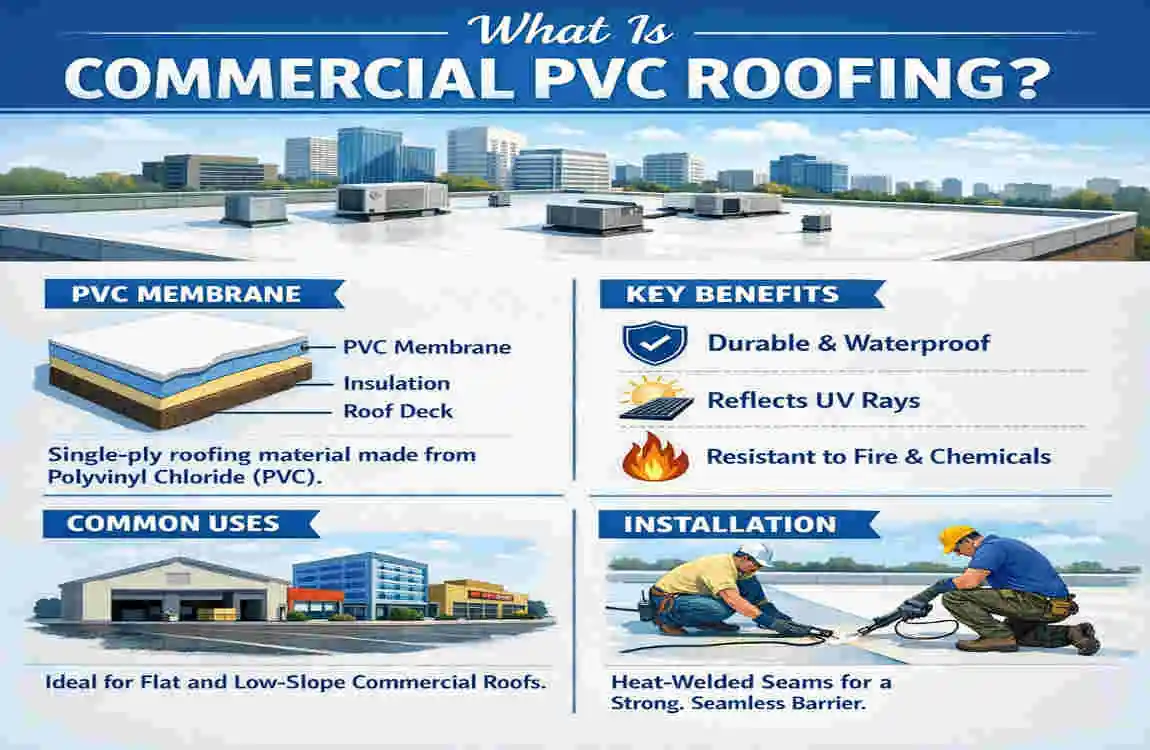
PVC stands for polyvinyl chloride. In roofing, it is made into a flexible membrane sheet that covers the roof surface and helps protect the building underneath.
This type of roofing differs from traditional systems such as shingles or built-up roofs. Instead of using multiple layers, it relies on a single membrane sealed tightly at the seams. That makes it a practical choice for modern commercial roofs.
Where Is PVC Roofing Used?
Commercial PVC roofing is commonly used on:
- Warehouses
- Office buildings
- Retail stores
- Restaurants
- Schools
- Other commercial facilities
- Low-slope and flat-roof buildings
How Does Commercial PVC Roofing Work?
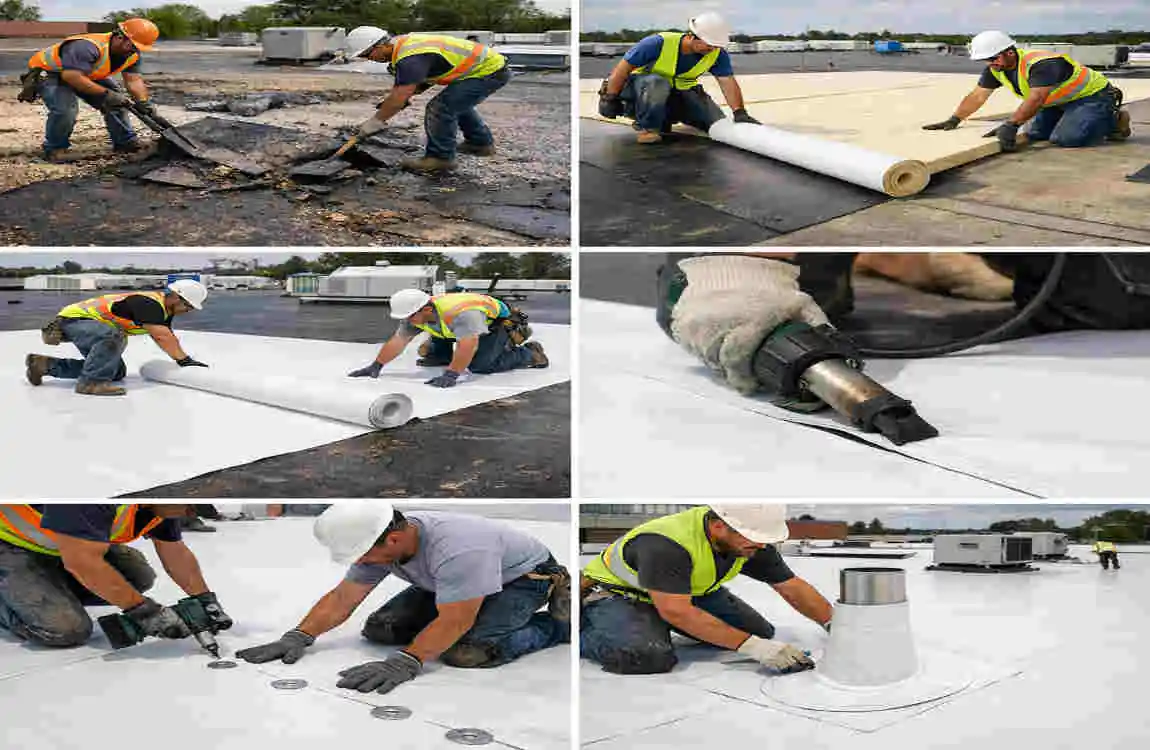
PVC roofing works by creating a continuous waterproof layer across the roof. The membrane is laid over the insulation and securely attached to the roof deck.
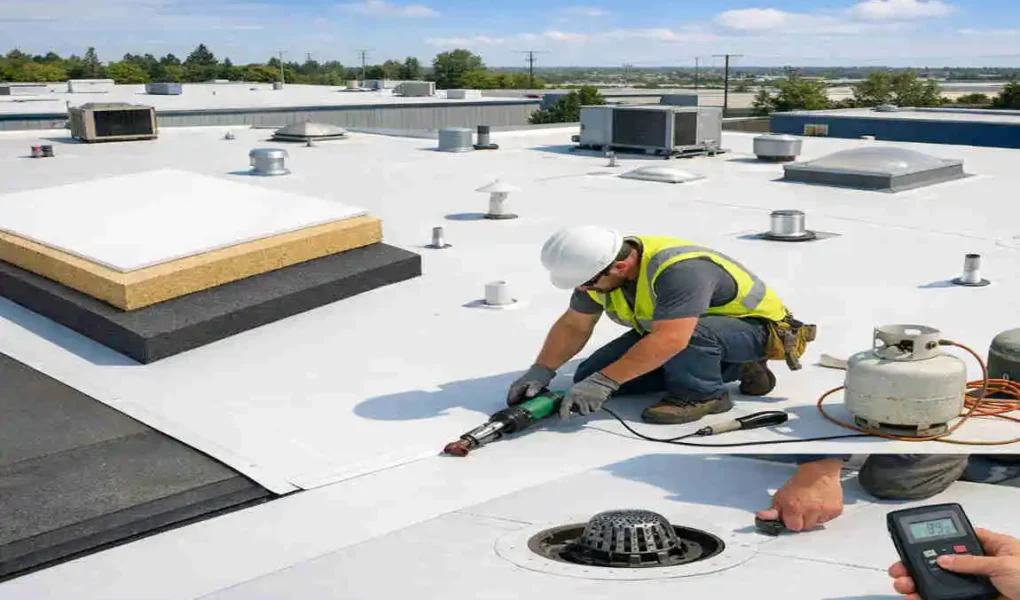
The seams are usually heat-welded, meaning they are fused using special equipment. This creates a strong bond and helps stop water from getting through. When the roof is installed correctly, the system can offer very good protection against leaks.
Key Benefits of Commercial PVC Roofing
Excellent Waterproofing
One of the biggest reasons people choose PVC is its strong water resistance. It helps protect the building from rain, standing water, and moisture damage.
The seams are a major part of this protection. If the welds are well made and the drainage is properly designed, the roof can do a very good job of keeping water out.
Durable and Long-Lasting
PVC roofing is designed to withstand harsh weather conditions. It can withstand sunlight, rain, wind, and normal roof stress.
Of course, the actual lifespan depends on several factors, such as installation quality, climate, maintenance, and product grade. A well-installed roof will usually perform much better than one that was rushed or poorly designed.
Energy Efficiency
Some PVC roofs have reflective surfaces that help bounce heat away from the building. This can lower heat absorption, especially in hot weather.
That can be helpful for businesses that want to reduce cooling load and keep indoor spaces more comfortable. If your building is in a warm climate, this can be a real advantage.
Chemical and Fire Resistance
PVC can be a useful option for certain commercial spaces because it offers resistance to certain chemicals and performs well in demanding environments.
It is still important to choose a product that meets the right building standards. Different roofing products perform differently, so checking the exact specification matters.
Low Maintenance
PVC roofing typically doesn’t require extensive maintenance, but it still needs regular care. Basic inspections, drain cleaning, and small repairs can go a long way.
If damage is caught early, you can often prevent more serious problems later. That helps protect both the roof and the building below it.
Commercial PVC Roofing Installation Process
Roof Inspection and Preparation
Before installation begins, the existing roof surface must be checked carefully. Contractors look for:
- Moisture
- Structural damage
- Weak roof areas
- Old roofing problems
- Debris or dirt
The roof deck must be clean and stable before any membrane goes down. Good preparation is one of the most important steps in the whole process.
Installing Insulation and Membrane
Insulation is added to help control heat flow and improve roof performance. After that, the PVC membrane is placed on top.
The membrane may be installed in different ways, including:
- Mechanically fastened
- Fully adhered
- Other approved systems
The right method depends on the roof structure, weather conditions, and project needs.
Heat-Welding the Seams
This is one of the most important parts of PVC roofing. Specialized tools are used to heat-weld the seams together.
That creates a sealed connection that helps make the roof watertight. Because this step is so important, it should always be done by trained roofing professionals.
Flashing, Edges, and Drainage
The roof does not end at the flat surface. It also includes edges, vents, drains, pipes, and other roof details.
These areas need careful sealing so water cannot enter. Drainage also matters a lot. If water sits on the roof for too long, it can cause stress and shorten the roof’s lifespan.
Commercial PVC Roofing Cost and Maintenance
What Affects PVC Roofing Cost?
The cost of commercial PVC roofing can vary widely. Several factors influence the final price:
- Roof size and shape
- Membrane thickness
- Product quality
- Insulation needs
- Labor costs
- Removal of old roofing
- Existing roof condition
- Roof penetrations and drainage details
A simple roof is usually cheaper than a roof with many pipes, vents, or unusual shapes.
Maintenance Tips
To keep the roof in good shape, follow these simple steps:
- Schedule regular inspections
- Keep drains and gutters clear
- Remove debris carefully
- Check seams and flashing
- Repair damage quickly
- Avoid unnecessary foot traffic
Small problems are easier to fix when they are caught early. Regular care can extend the roof’s useful life.
How Long Can PVC Roofing Last?
There is no single fixed lifespan for every PVC roof. Some last much longer than others because of differences in material quality, installation, weather exposure, and maintenance.
That is why it is smart to read the manufacturer specifications and warranty details instead of assuming every roof will perform the same way.
PVC Roofing vs. Other Commercial Roofing Options
PVC vs. TPO Roofing
PVC and TPO are both common single-ply roofing choices. They can both work well, but they are not identical.
PVC is often known for heat-welded seams and chemical resistance. TPO is also popular and can be cost-effective. The better choice depends on the building, climate, and project goals.
PVC vs. EPDM Roofing
EPDM is a rubber-based roofing membrane. It often uses different seam methods than PVC.
PVC may be a better fit in some commercial settings because of its welded seams and resistance to certain chemicals. EPDM can still be a good choice, depending on the roof and budget.
PVC vs. Modified Bitumen
Modified bitumen is a more traditional multi-layer roofing system. PVC is a single-ply system, which gives it a different installation and performance style.
PVC may offer easier maintenance in some cases, while modified bitumen may suit certain roof designs better. Again, the right choice depends on the building.
How to Choose the Right Commercial Roof
When comparing roof systems, think about:
- Climate
- Roof traffic
- Drainage
- Insulation
- Long-term cost
- Maintenance needs
A roofing professional can help you match the material to the building instead of just choosing the cheapest option.
Is Commercial PVC Roofing Right for Your Building?
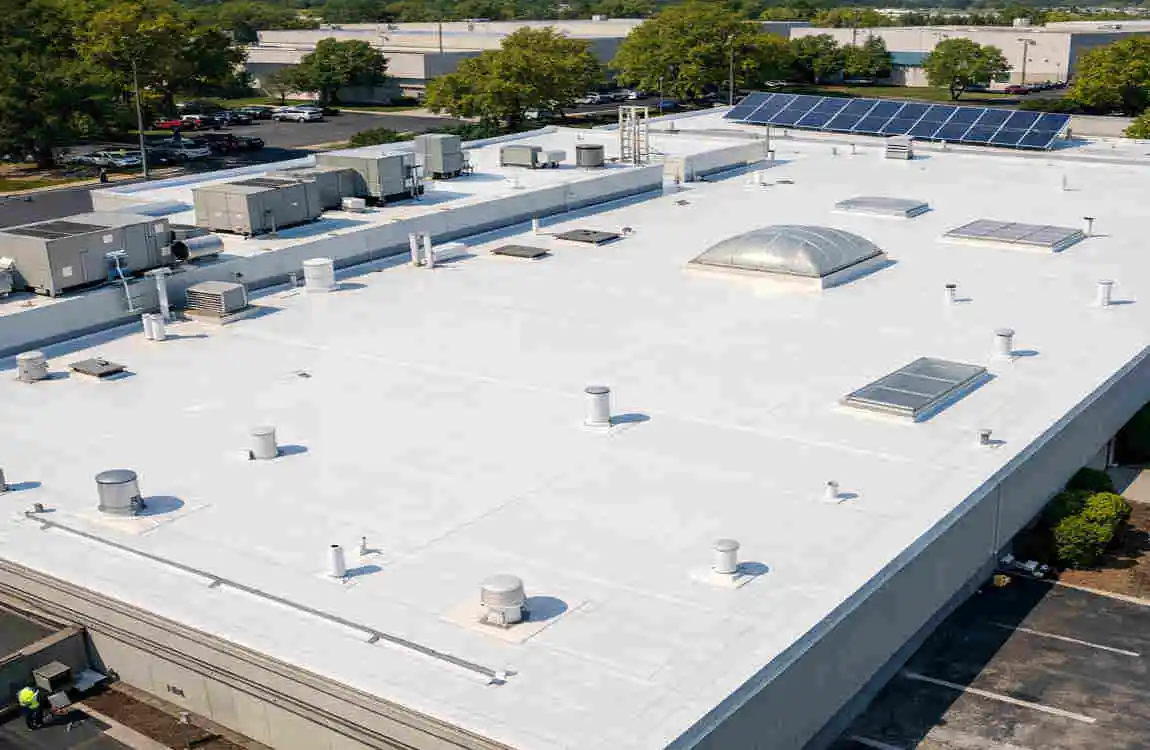
PVC roofing can be a very practical option for flat and low-slope commercial roofs. It is often a good fit when you want strong waterproofing, simple maintenance, and reflective options for energy savings.
It is also a smart choice when the roof will be exposed to regular weather and needs reliable seam strength. Still, the roof should always be evaluated by a qualified professional before you decide.
Remember, upfront price is only one part of the story. Long-term value depends on installation quality, maintenance needs, warranty coverage, and how well the roof fits your building.
Frequently Asked Questions About Commercial PVC Roofing
Is commercial PVC roofing durable?
Yes, it can be very durable. It resists many common roofing stresses, but performance still depends on the product, climate, installation, and maintenance.
How long does a commercial PVC roof last?
The service life varies. Always check the manufacturer’s details, warranty terms, and maintenance history rather than assuming a single standard lifespan.
Is PVC roofing good for flat commercial roofs?
Yes. PVC is commonly used on flat and low-slope roofs because it can provide strong water resistance when installed correctly.
Is PVC roofing waterproof?
PVC is designed to be highly water-resistant. Still, seams, flashing, drains, and roof edges must be installed carefully for full protection.
Which is better, PVC or TPO roofing?
Neither is always better. The right choice depends on your building’s needs, budget, climate, and long-term goals.
How much does commercial PVC roofing cost?
The price changes based on roof size, membrane thickness, insulation, labour, old roof removal, and overall project complexity.
Does commercial PVC roofing require maintenance?
Yes. Regular inspections, cleaning drains, removing debris, and fixing damage early are all important.
| Aspect | Commercial PVC Roofing |
|---|---|
| What It Is | A durable, single-ply roofing membrane made from polyvinyl chloride (PVC). |
| Best For | Commercial buildings, warehouses, offices, retail spaces, and low-slope roofs. |
| Key Benefits | Waterproof, lightweight, durable, and resistant to chemicals and UV exposure. |
| Installation | Usually installed over insulation or a roof deck, with seams heat-welded for a watertight surface. |
| Maintenance | Requires routine inspections, cleaning, and prompt repair of damaged areas. |
| Lifespan | Often lasts several decades when properly installed and maintained. |
| Main Consideration | Professional installation and proper drainage are important for long-term performance. |
Related Posts