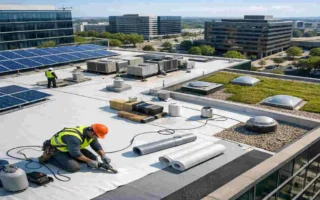
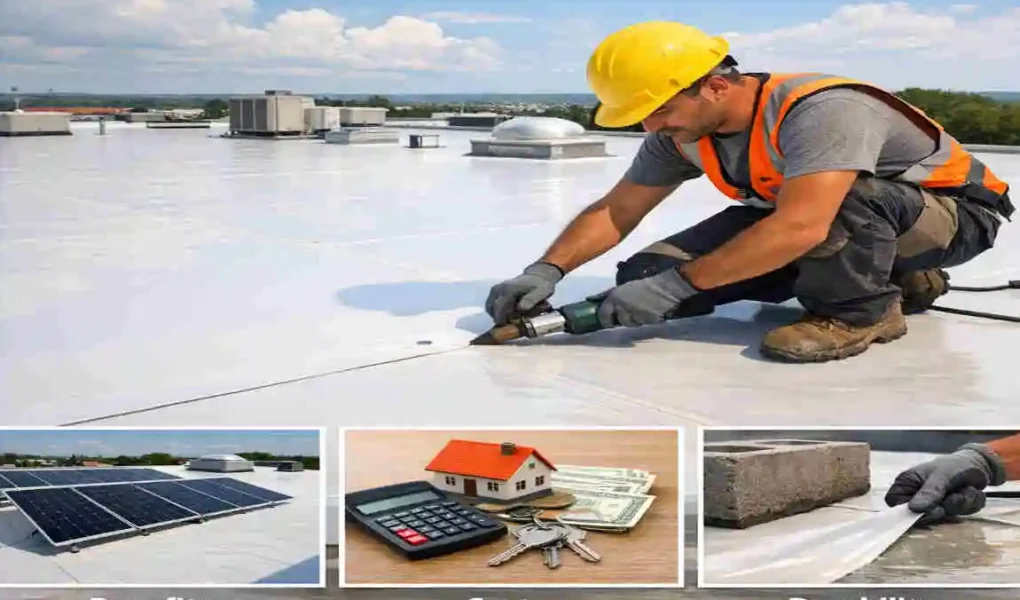
PVC flat roofing systems are a popular choice for both homes and commercial buildings with flat or low-slope roofs. They use a single-ply membrane, which means the roof is made of a single strong sheet rather than several built-up layers.
People often choose PVC because it can offer good waterproofing, strong weather resistance, low maintenance, and solid durability. It is also a practical option for buildings that need a clean, modern roof system.
What Are PVC Flat Roofing Systems?
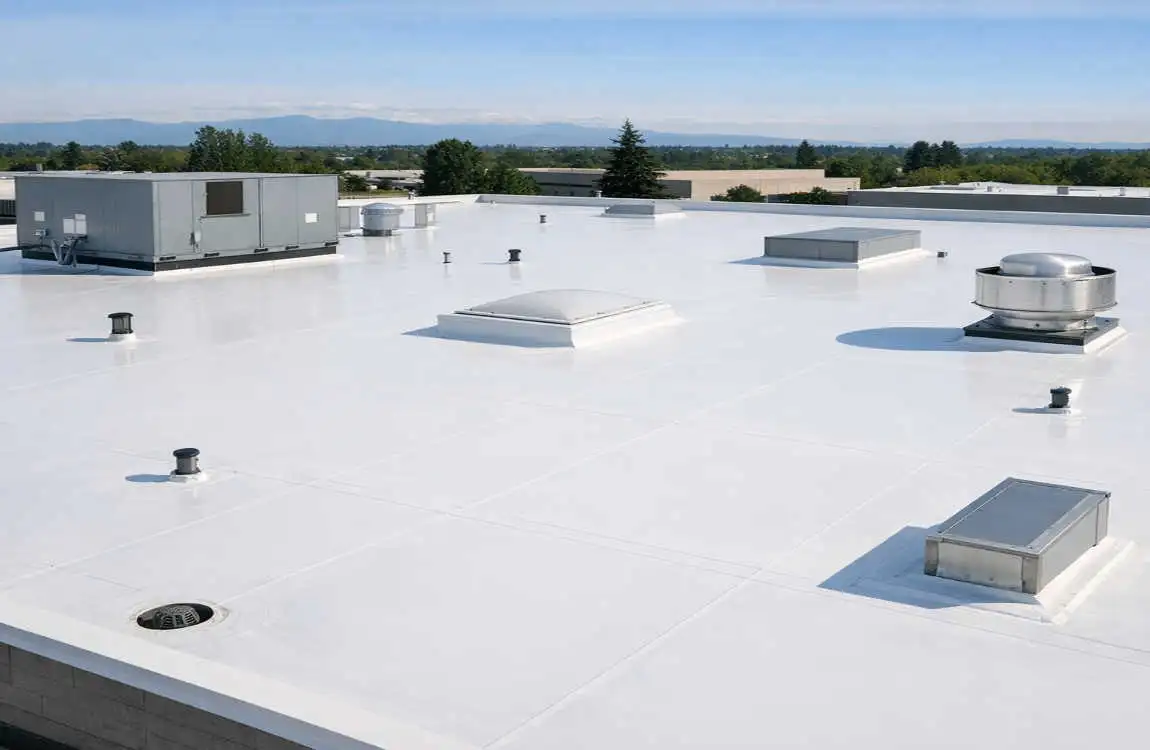
Understanding PVC Roofing Membranes
PVC stands for polyvinyl chloride, a type of plastic used to make a flexible roofing membrane. This membrane is designed to protect the building from rain, moisture, sunlight, and general weather exposure.
Most PVC roofing membranes include additional layers or reinforcements that enhance strength and durability. The result is a roofing sheet that is lightweight, flexible, and designed for flat-roof use.
How PVC Flat Roofing Works
PVC sheets are installed across the roof deck and joined at the seams. These seams are usually heat-welded, meaning they are fused with hot air.
That welded connection is one of the biggest reasons PVC works well on flat roofs. Since flat roofs do not shed water as quickly as steep roofs, the membrane must stay sealed and watertight.
Where PVC Roofing Is Commonly Used
PVC roofing is used in many places, including:
- Residential flat roofs
- Commercial buildings
- Garages and extensions
- Warehouses and industrial properties
It is especially useful where waterproofing, clean appearance, and low upkeep are important.
Key Benefits of PVC Flat Roofing Systems
Excellent Waterproofing
One of the biggest advantages of PVC is its excellent waterproofing. The heat-welded seams form tight joints that help keep water out.
For flat roofs, this matters a lot. Even small weak spots can lead to leaks, so a secure membrane is a major benefit.
Strong Weather Resistance
PVC handles rain, wind, sunlight, and changing temperatures fairly well. That makes it a dependable roofing choice in many climates.
It can also perform well in hot, sunny areas because the membrane is built to withstand long-term outdoor exposure.
Energy Efficiency
Many PVC membranes come in light colors, which can reflect more sunlight. That may help reduce heat absorption and keep the building cooler.
For property owners in warm climates, this can reduce cooling needs during the summer months.
Low Maintenance
PVC roofs usually need routine inspections and basic cleaning, but they do not demand constant upkeep. That is one reason they appeal to busy homeowners and commercial property owners.
Compared with some traditional flat roofing systems, maintenance can be simpler and less frequent.
Chemical and Fire Resistance
PVC is known for its resistance to many chemicals, which makes it useful in some commercial and industrial settings. It also has fire-performance qualities that can be helpful in certain buildings.
Still, local codes and building rules should always be checked before choosing a roof system.
Flexible Design Options
PVC roofing comes in different thicknesses, colors, and installation styles. This makes it easier to match different building needs and design goals.
Whether you want a modern look or a practical commercial solution, PVC can often fit the job.
PVC Flat Roofing Cost
Average PVC Roofing Cost Factors
There is no single price for PVC roofing because the cost depends on many details. Roof size, membrane thickness, labor, and location all matter.
A simple square-foot price can be misleading. A roof inspection is often necessary before providing an accurate estimate.
What Affects Installation Cost?
Several things can raise or lower the price:
- Roof size and shape
- Removal of old roofing
- Roof deck repairs
- Insulation needs
- Flashing and drainage work
- Labor rates
- Building access
A roof that is easy to reach and in good shape will usually cost less than one that needs repairs or difficult installation work.
New Roof vs. Roof Replacement
A new installation may cost less than a replacement because there is no old roofing to remove. Replacement jobs often involve tear-off work, cleanup, and possible structural repairs.
If the roof deck is damaged, that can increase the total project cost as well.
How to Estimate Your Roofing Budget
To estimate your budget, start by measuring the roof area. Then ask for multiple professional quotes.
Make sure each quote includes the full scope of work, such as materials, labor, insulation, flashing, drainage, and warranty details. That way, you can compare offers more fairly.
How Durable Are PVC Flat Roofing Systems?
Expected Lifespan
A quality PVC roof can last many years when properly installed and maintained. The exact lifespan depends on the membrane quality, weather conditions, drainage, and installation skill.
Good maintenance can help the roof reach the higher end of its expected life.
Resistance to UV Exposure
Sunlight is one of the biggest challenges for any roof. Over time, UV exposure can wear down roofing materials.
PVC is built to handle that kind of exposure well, which is one reason it is often used in sunny regions.
Resistance to Wind and Heavy Rain
PVC roofing can perform well during storms if it is properly attached and the seams are welded correctly. Strong seams matter because loose or weak joints can allow water inside.
Good drainage also helps prevent standing water, which is important on flat roofs.
Handling Temperature Changes
Roofs expand and contract as temperatures change. PVC is flexible enough to handle this movement, but the installation must be done carefully.
Poor installation can lead to seam stress or other problems over time.
PVC Roofing vs. Other Flat Roofing Materials
PVC vs. TPO Roofing
PVC and TPO are both popular single-ply systems. PVC is often praised for durability and chemical resistance, while TPO is often chosen for its cost and reflective performance.
The better option depends on your roof needs, climate, and budget.
PVC vs. EPDM Roofing
EPDM is a rubber roofing system that has been used for years. It is known for its flexibility and long-term use, but it may not offer the same welded-seam structure as PVC.
PVC often has stronger seam performance, while EPDM may be attractive for certain budgets or simple roof designs.
PVC vs. Built-Up Roofing
Built-up roofing uses multiple layers rather than a single membrane sheet. It can be durable, but it is usually heavier and can require more maintenance.
PVC is lighter and often easier to install on certain buildings.
PVC Flat Roof Installation Process
Roof Inspection and Preparation
Before installation, the roof deck should be checked for leaks, damage, or drainage problems. Any weak areas should be repaired first.
This step matters because even the best membrane cannot perform well over a damaged base.
Installing Insulation
Insulation improves thermal performance and can make the building more energy-efficient. It also plays a role in roof system design.
The right insulation depends on the building and local climate.
Membrane Installation
The PVC membrane is rolled out, positioned, and secured using the proper method for the roof system. Installation techniques can vary based on the building and the contractor’s approach.
Heat-Welding the Seams
Heat-welding is one of the most important parts of PVC roofing. It bonds the membrane sections together and helps create a watertight seal.
If this step is done poorly, leaks become more likely.
Flashing and Drainage Details
Areas around pipes, edges, skylights, and drains need careful attention. These are common leak points on flat roofs.
Good flashing and drainage design help protect the roof over the long term.
PVC Flat Roof Maintenance Tips
Perform Regular Roof Inspections
Check the roof regularly, especially after storms. Look for punctures, loose seams, blocked drains, or standing water.
Early detection can save money and prevent major damage.
Keep Drains and Gutters Clear
Leaves and debris can block drainage and cause water to pond. Clearing them away helps the roof work properly.
Avoid Unnecessary Roof Traffic
Sharp tools, heavy objects, and frequent walking can damage the membrane. If roof access is needed often, use proper walkways.
Repair Damage Quickly
Small problems should not be ignored. A tiny puncture or seam issue can grow into a bigger leak if left alone.
Common Problems With PVC Flat Roofing
Ponding Water
Standing water often points to drainage or slope problems. If water remains on the roof too long, it should be checked by a professional.
Membrane Punctures
Punctures can happen from tools, debris, or foot traffic. These are usually repairable, but they should be fixed quickly.
Seam Problems
Seams may weaken if they were not welded correctly or if the roof is aging. Regular inspection helps catch these issues early.
Flashing and Penetration Leaks
Roof edges, vents, and pipes are common sources of leaks. These details need close attention during both installation and maintenance.
Pros and Cons of PVC Flat Roofing Systems
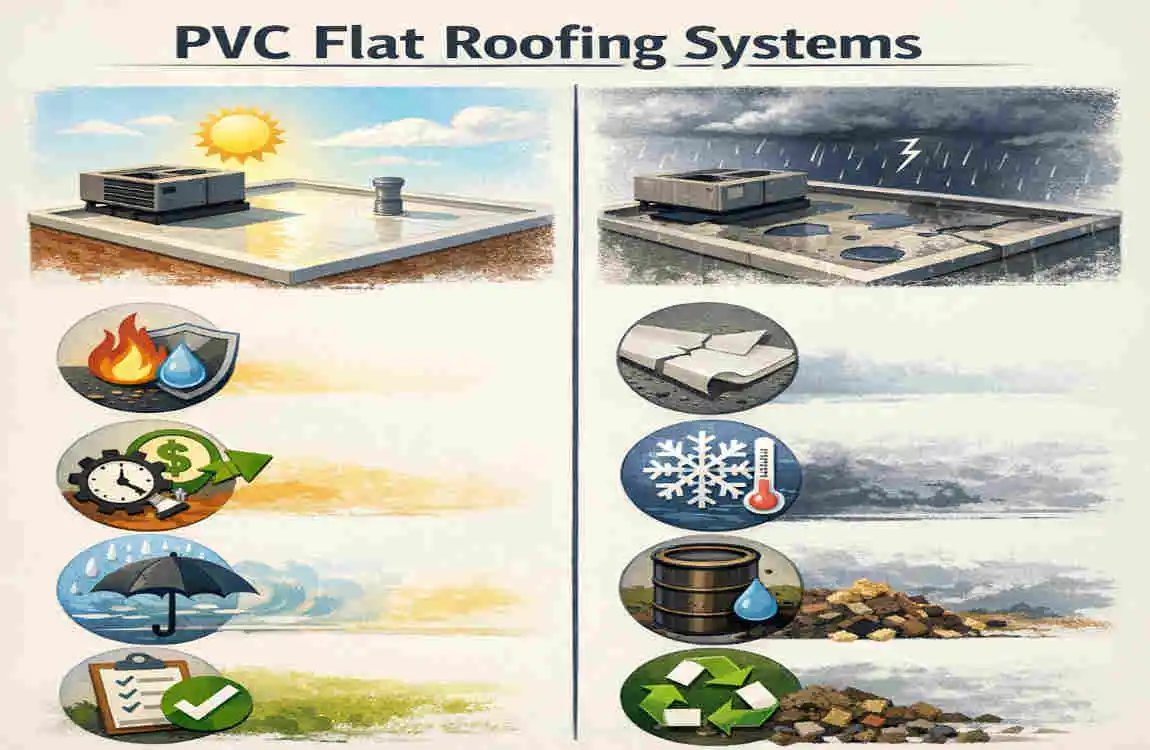
ProsCons
Excellent waterproofing Higher upfront cost than some options
Strong UV and weather resistance Needs skilled installation
Sharp objects Can puncture low maintenance
Reflective energy-saving options Poor drainage can cause problems
Good for many building types Costs vary by location and roof condition
Is PVC Flat Roofing Worth the Investment?
PVC can be a smart choice if you want a roof that offers durability, waterproofing, and low maintenance. It may cost more at the start than some other flat roofing systems, but it can pay off over time through better performance and fewer upkeep needs.
It is especially attractive when installed correctly by an experienced contractor. If the roof is well designed and properly maintained, PVC can be a long-lasting solution.
Still, the best roofing choice depends on your building, climate, and budget. That is why getting a professional inspection and detailed estimate is so important.
FAQ About PVC Flat Roofing Systems
How long do PVC flat roofing systems last?
The lifespan depends on installation quality, weather, membrane quality, drainage, and maintenance. A well-cared-for roof can last many years.
Are PVC flat roofing systems good for residential homes?
Yes, they can work well for homes with flat or low-slope roofs, especially where waterproofing and low maintenance matter.
Are PVC roofs waterproof?
PVC roofing is designed to be waterproof, but the seams and flashing must be installed correctly for full protection.
How much do PVC flat roofing systems cost?
The cost depends on roof size, labor, insulation, old roofing removal, and repair needs. Local estimates are more reliable than general prices.
Is PVC roofing better than TPO?
Neither is always better. PVC may offer stronger seam performance and chemical resistance, while TPO may be more budget-friendly in some cases.
Can PVC roofing be installed over an existing roof?
Sometimes, yes, but it depends on the roof condition, building codes, and manufacturer guidelines. A roof inspection is needed first.
How often should a PVC flat roof be inspected?
It is best to inspect it regularly and after major storms or severe weather.
| Aspect | PVC Flat Roofing Systems |
|---|---|
| What It Is | A single-ply membrane roofing system designed for flat or low-slope roofs. |
| Key Benefits | Lightweight, waterproof, flexible, and relatively easy to maintain. |
| Durability | Typically lasts around 20–30 years with proper installation and maintenance. |
| Cost | Often costs about $5–$12 per sq. ft. installed, depending on location, materials, and roof complexity. |
| Weather Resistance | Performs well against rain, UV exposure, wind, and many common chemicals. |
| Maintenance | Generally low-maintenance, but regular inspections help identify seams, punctures, and drainage issues. |
Related Posts