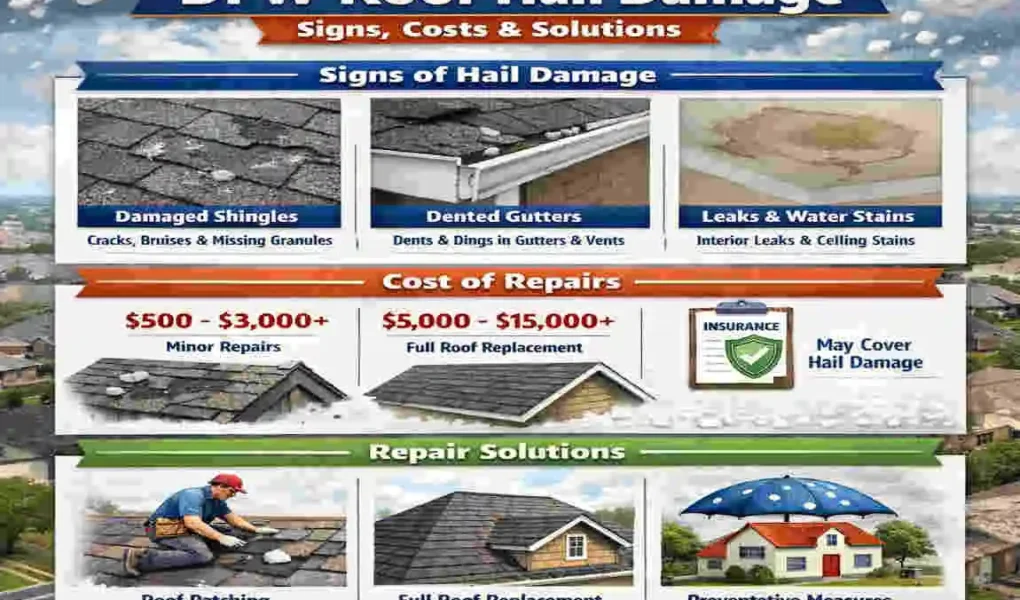
In the Dallas–Fort Worth area, hailstorms are a real concern for homeowners. A storm can pass quickly, but the damage it leaves behind can stay hidden for weeks or even months. That is why DFW roof hail damage is something you should take seriously after any strong hail event.
At first glance, a roof may look fine from the ground. But hail can crack shingles, damage flashing, loosen granules, and create weak spots that later turn into leaks. If you ignore the signs, a small problem can become much bigger and more expensive.
Common Signs of DFW Roof Hail Damage
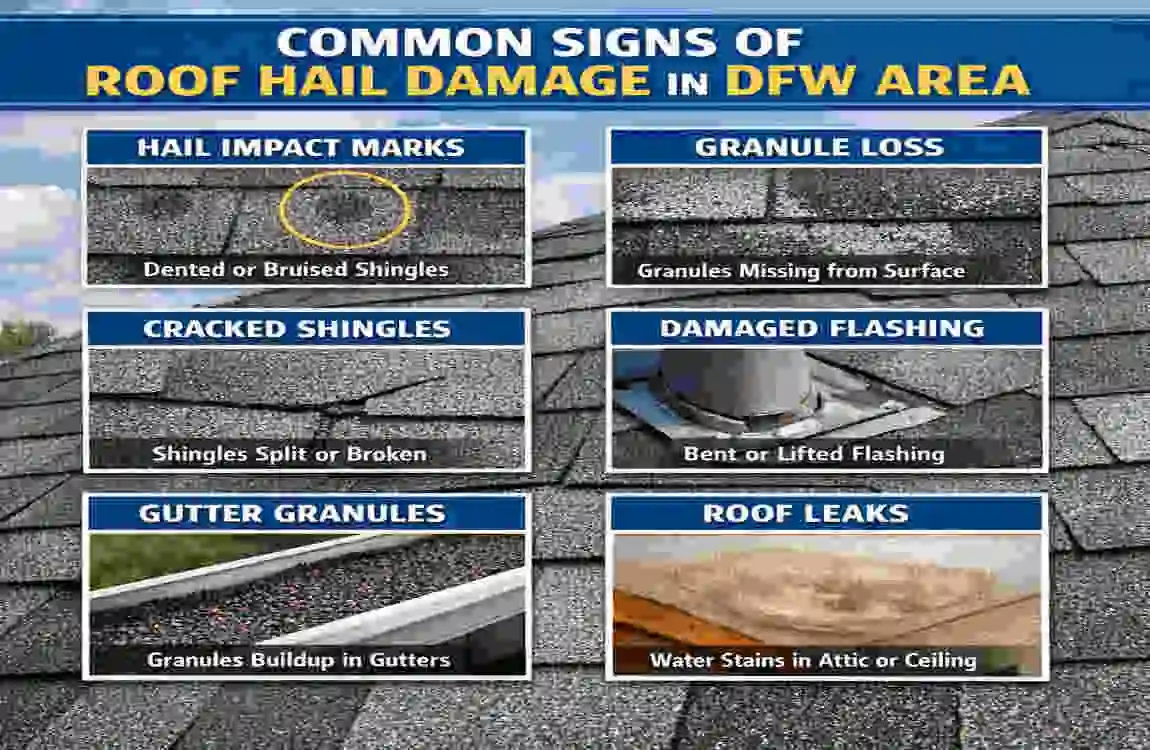
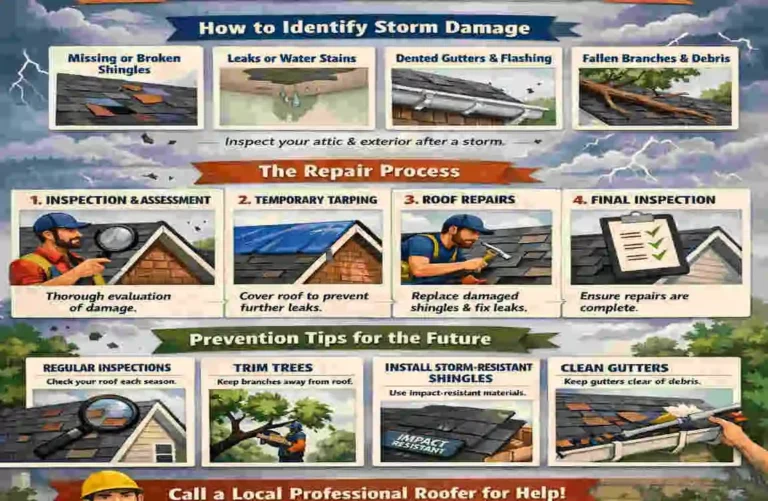
A hail-damaged roof can show different kinds of warning signs. Some are visible from the ground, while others need a closer look.
Hail Damage on Shingles
Shingles often show the first signs of impact. Look for:
- cracked shingles
- bruised spots
- dents
- missing pieces
- granule loss
Granule loss is important because those small protective bits help shield the roof from sun and weather. When they wear away, the shingle becomes more vulnerable.
Damage to Roof Components
Hail does not just hit shingles. It can also damage other parts of the roof, including:
- flashing
- gutters
- vents
- skylights
- metal roof edges
These parts are easy to overlook, but they matter. If they are bent, cracked, or loosened, water can slip in around them.
Interior Warning Signs
Sometimes the first clue is inside the house. Watch for:
- water stains on ceilings
- damp spots on walls
- moisture in the attic
- peeling paint
- unexplained dripping after rain
These signs may show that the roof is already letting water in.
Storm Damage vs. Normal Aging
It helps to know the difference between hail damage and normal wear. Roofs age naturally over time, and shingles can curl, fade, or lose granules as they get older.
But storm damage is usually more sudden and uneven. If the damage appears after a hailstorm and affects several spots at once, that is a strong reason to have it checked.
How Much Does Hail Damage Roof Repair Cost in DFW?
There is no single price for hail damage repair because every roof is different. The cost depends on roof size, the materials used, and how much damage the storm caused.
Main Cost Factors
Cost Factor: How It Affects Price
Roof size Larger roofs usually cost more to repair
Roof slope Steeper roofs can be harder and more dangerous to work on
Roofing material Some materials are more expensive to replace
Damage severity More damage means more labor and materials
Roof age Older roofs may need broader repairs or replacement
Repair type Small patch repairs cost less than full replacement
Repair or Replacement Changes the Cost
A few damaged shingles may only need a simple repair. But if the roof has widespread hail damage, a full replacement may be the better option.
That is why getting more than one estimate is helpful. It gives you a better idea of what is truly needed.
Why Estimates Matter
A professional estimate can help you understand:
- the extent of the damage
- whether repair is enough
- whether replacement makes more sense
- how much labor and material will cost
This is much safer than guessing based on appearance alone.
DFW Roof Hail Damage Inspection: What to Expect

A proper inspection is one of the best ways to understand your roof’s real condition after a storm.
Professional Roof Inspection
During an inspection, a roofing professional typically checks:
- shingles
- flashing
- vents
- gutters
- roof penetrations
- ridge caps
- attic signs of moisture
They may also look for bruising, lifted edges, and broken sealing areas.
Documenting Storm Damage
If you think hail caused damage, document it. Take clear photos of:
- roof dents you can see from the ground
- damaged gutters
- fallen shingle pieces
- water spots inside the home
- yard damage from hail
Keep copies of inspection reports and repair estimates. These records can help you later if you speak with your insurance company.
Why Fast Inspection Matters
The longer you wait, the more likely hidden damage may worsen. A small roof problem can turn into a leak, and a leak can damage insulation, drywall, and framing.
A prompt inspection gives you a better chance to catch problems early.
Should You Repair or Replace a Hail-Damaged Roof?
This is one of the biggest questions homeowners face after a storm. The right answer depends on the roof’s condition, not just what it looks like from the street.
When Repair May Be Enough
Repair may be a good choice if:
- the damage is limited
- the roof is still fairly new
- the shingles can be matched well
- the roof has not had repeated problems
In these cases, a targeted repair may restore protection without a full replacement.
When Replacement Makes More Sense
A full replacement may be better if:
- the roof is old
- hail damage is widespread
- shingles are already weak or worn
- there have been previous repairs
- matching new shingles is difficult
If the roof is near the end of its life, repair may only delay the bigger issue.
Why a Professional Assessment Helps
It is hard to judge roof damage from the ground. A professional can tell you whether the roof still has enough life left or whether replacement is the safer long-term choice.
That kind of assessment can save you money and stress later.
Insurance, Roofing Contractors & Hail Damage Solutions

After a storm, many homeowners feel rushed. The best approach is to stay calm, document the damage, and make careful decisions.
Understand Your Insurance Policy
Before making major repairs, review your insurance coverage. You should understand:
- what storm damage is covered
- what your deductible is
- what documents you may need
- whether you need to report the damage quickly
If you are unsure, read your policy carefully or ask your insurance provider for help.
Choosing a Roofing Contractor
The contractor you choose matters just as much as the repair itself. Look for someone with experience in hail-damage roof inspections and storm-related repairs.
A good contractor should provide:
- a written estimate
- a clear scope of work
- honest feedback about repair vs. replacement
- proper credentials, where required
Be careful with anyone who pressures you into making a fast decision.
Preventing Future Roof Problems
You cannot stop hail, but you can reduce the chance of major damage.
A few useful habits include:
- Schedule roof inspections regularly
- Keep gutters and drainage clear
- Check flashing and roof openings
- Fix small issues early
- Consider impact-resistant materials for future upgrades
Small maintenance steps can make a big difference over time.
FAQ About DFW Roof Hail Damage
What does hail damage look like on a roof?
It may look like cracked shingles, dents, bruised spots, or missing granules. Some damage is hidden and only appears during a full inspection.
How do I know if hail damaged my roof?
The safest way is to schedule a professional inspection. From the ground, you may notice missing shingles, gutter dents, or water stains inside the home.
How much does DFW roof hail damage repair cost?
The cost depends on roof size, material, age, and damage severity. Small repairs cost less, while full replacement costs more.
Does hail damage always require a new roof?
No. Some roofs only need repair. Others need replacement if the damage is widespread or the roof is already old.
How soon should I inspect my roof after a hailstorm?
As soon as possible. Quick action helps prevent hidden damage from becoming a leak or structural issue.
Can hail damage cause roof leaks?
Yes. Hail can crack shingles, damage flashing, and weaken roof seals, which may allow water to enter your home.
Should I contact my insurance company after hail damage?
Yes, if you believe your roof was damaged. Document the issue and understand your coverage before starting major work.
Can hail damage be prevented?
You cannot stop hail, but you can lower risk with regular inspections, good maintenance, and stronger roofing materials.
| Aspect | Key Information |
|---|---|
| Common Signs | Bruised or cracked shingles, missing granules, dents in gutters, damaged vents, and exposed roofing materials |
| Roof Damage | Hail can weaken shingles and reduce their ability to protect against rain and heat |
| Typical Costs | Repair costs vary by damage severity, roof size, materials, and labor; major damage may require replacement |
| DFW Weather Risk | The Dallas–Fort Worth area frequently experiences severe storms and hail, making roof inspections important |
| Best Solution | Schedule a professional roof inspection after a major hailstorm to identify hidden damage |
| Insurance Claims | Document damage with photos and contact your insurance provider promptly if repairs may be covered |
Related Posts