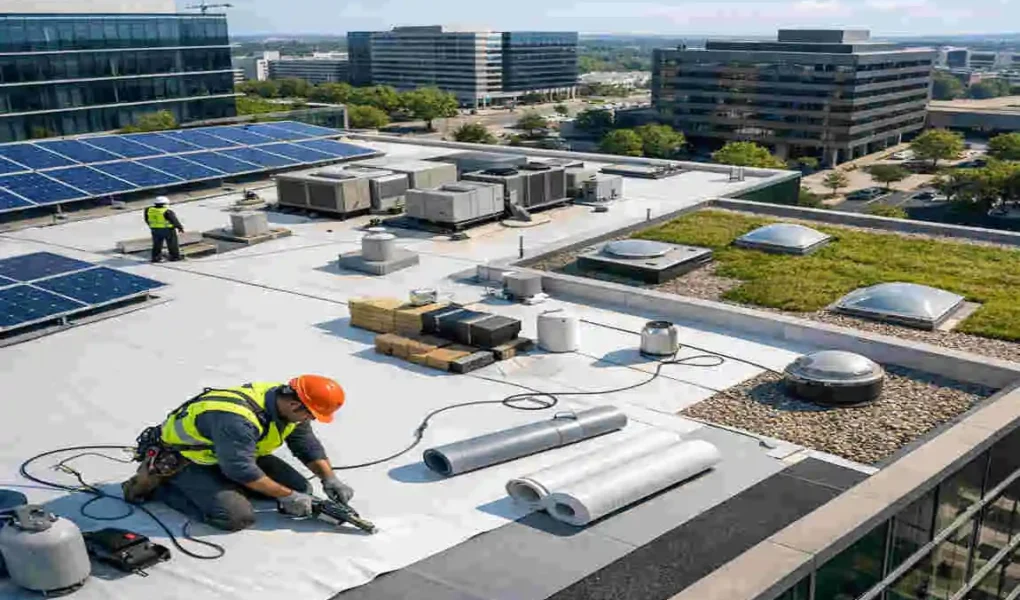
Commercial roofs do a lot of hard work every day. They protect equipment, inventory, staff, and the building itself from heat, rain, wind, and wear. Over time, even the best roof starts to age.
That is where commercial re-roofing becomes important. It gives older or damaged buildings a fresh roofing system without always needing a full rebuild. In the right situation, it can improve protection, reduce energy loss, and help the property look better too.
What Is Commercial Re-Roofing?
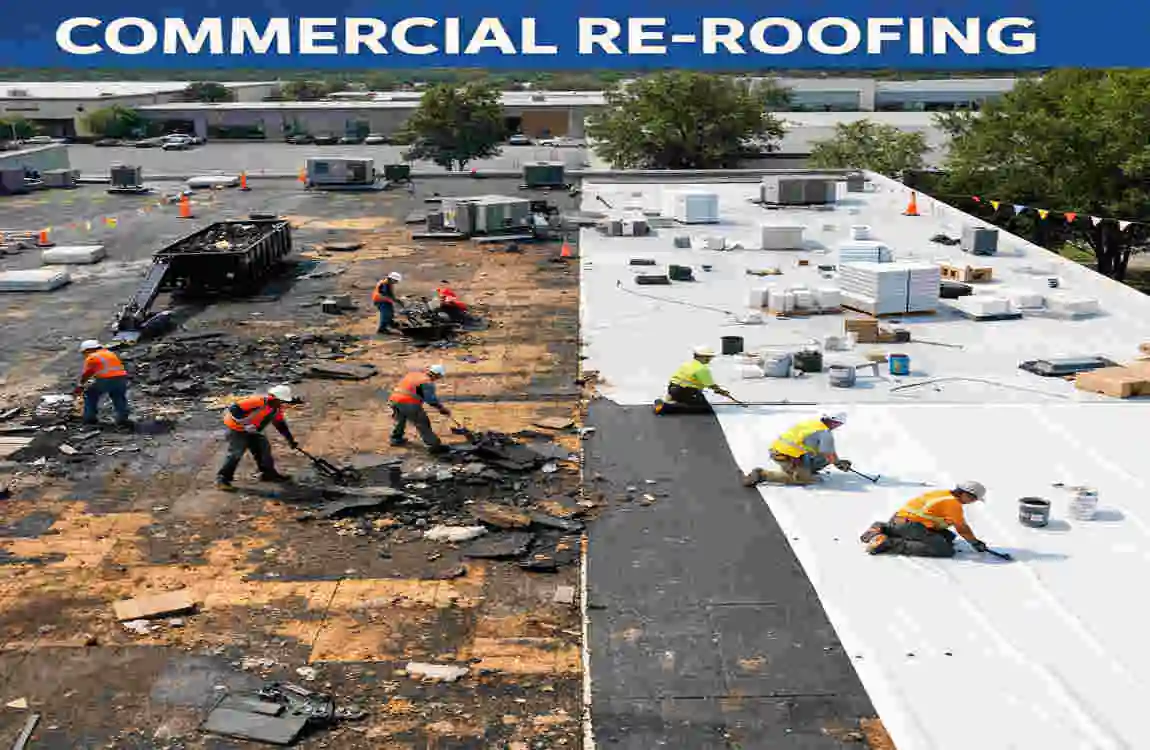
Commercial Re-Roofing Explained
Commercial re-roofing is the process of adding a new roofing system over an existing roof, or preparing the old roof surface so a new system can be installed. In simple terms, it is a way to refresh a worn roof when the structure is still workable.
This is different from a full roof replacement. Re-roofing may use less tear-off work and can sometimes lower labour time and disruption. That makes it a practical choice for some commercial buildings.
Still, it is not the right answer for every roof. The existing roof must be in good enough shape for the new system to work properly.
Signs a Commercial Roof Needs Re-Roofing
A roof usually gives warning signs before it fails. You should pay attention if you notice:
- Frequent leaks or water stains
- Cracked, blistered, or damaged roofing material
- Rising energy bills
- Poor insulation or indoor comfort issues
- A roof that keeps needing repairs
These signs often point to more than a small surface issue. They may show that the roof is nearing the end of its useful life.
If you keep fixing the same problem again and again, re-roofing may be more practical than continuing patch repairs.
Re-Roofing vs Roof Replacement
Re-roofing and replacement are related, but they are not the same.
A re-roofing project works best when the roof structure is still sound, and the damage is limited enough that a new system can be added safely. A full replacement is needed when the roof is too damaged, too old, or too weak for a new layer or system.
This is why a professional roof inspection matters so much. A trained roofer can assess the surface, drainage, insulation, and structure before recommending the right course of action.
Smart Commercial Re-Roofing Solutions for Modern Buildings
Energy-Efficient Roofing Systems
Modern buildings often need more than basic weather protection. They also need better energy control.
Energy-efficient roofing systems can help reduce heat absorption, especially on roofs with high sun exposure. Reflective surfaces and modern roofing membranes can support more stable indoor temperatures.
That can help lower cooling demand during hot weather. For building owners, this is a smart way to improve comfort while also managing long-term operating costs.
Modern Waterproofing and Drainage
Water is one of the biggest threats to any roof. If water remains on the surface for too long, it can lead to leaks, mould, damage, and premature wear.
Good commercial re-roofing should include strong waterproofing details such as:
- Proper flashing
- Sealed seams
- Reliable membranes
- Clear gutters and drains
- Correct roof slope or drainage design
When drainage works well, standing water becomes less of a problem. That helps protect the roof surface and the building below it.
Durable Low-Maintenance Materials
Commercial buildings often require materials that can withstand heavy use without constant repair. That is why durability matters so much.
Common commercial roofing options include TPO, PVC, EPDM, modified bitumen, and metal roofing. Each has its own strengths, but all are used because they handle commercial conditions better than many basic roofing options.
A low-maintenance roof can save time, reduce service calls, and help building owners feel more confident about performance over time.
Sustainable Roofing Options
Sustainability is no longer just a nice extra. For many businesses, it is part of smart property planning.
Some modern roofing systems are made with recyclable materials or support cool-roof technology. Others help reduce energy use by reflecting sunlight rather than trapping heat.
The good part is that sustainability does not have to mean weaker performance. In many cases, you can choose a roof that is both responsible and durable.
How to Choose the Right Commercial Re-Roofing Material
Roofing MaterialKey BenefitBest For
TPO Reflective and energy efficient Many flat commercial roofs
PVC Durable and moisture resistant Buildings needing strong waterproofing
EPDM Flexible and reliable Low-slope roofing applications
Modified Bitumen Multi-layer durability Commercial buildings needing robust protection
Metal Roofing Long service life Sloped or architectural commercial roofs
Consider Building Design
The best roofing material depends partly on the building itself. Roof slope, shape, drainage pattern, and existing structure all matter.
A flat roof needs different support than a sloped one. Some systems work better with certain layouts, while others are better for broader surfaces or special drainage needs.
That is why it helps to match the material to the roof design instead of picking a product based on price alone.
Consider Local Weather Conditions
Your local climate should guide the roofing decision too.
Hot climates may call for reflective materials. Wet regions need stronger waterproofing and drainage. Windy locations may need a system that resists uplift. Areas with changing temperatures may require materials that can expand and contract without damage.
In other words, the roof should fit the weather it will face every day.
Balance Cost and Long-Term Value
It is easy to focus on the lowest bid. But the cheapest roofing material is not always the best choice in the long run.
A slightly more expensive roof may last longer, need fewer repairs, and save energy. That can make it more economical over time.
When you compare options, look at life cycle value, not just the starting price.
Commercial Re-Roofing Process: From Inspection to Completion
Start With a Professional Roof Inspection
A proper project starts with a close look at the existing roof. The inspection should check for leaks, weak spots, drainage problems, insulation issues, and structural concerns.
This step helps determine whether commercial re-roofing is actually suitable. It also helps avoid starting a project that should have been a replacement instead.
Create a Roofing Plan and Budget
Once the roof is assessed, the next step is planning.
A solid plan should cover:
- Project goals
- Material choice
- Labor needs
- Timeline
- Drainage or insulation upgrades
- Extra money for unexpected issues
This is the stage where you can avoid surprises later. A clear budget makes the project easier to manage.
Prepare the Existing Roof
Before the new roofing system goes on, the existing roof must be prepared.
That may include cleaning the surface, making repairs, removing damaged areas, and fixing sections that do not properly support the new material. If this step is skipped, the new roof may not last as long as expected.
Preparation is not the exciting part, but it is one of the most important.
Install the New Roofing System
The installation process depends on the material, but the goal is always the same: to create a roof that is sealed, secure, and properly draining.
Installers must pay attention to seams, flashing, roof edges, and all penetrations around vents, pipes, or HVAC equipment. These are the places where leaks often begin.
Good installation is what turns quality materials into a reliable roof.
Perform Final Inspection
After the new system is installed, a final check should be completed.
This review should confirm that seams are sealed, drainage is working, flashing is secure, and no problem areas were missed. It is also the right time to make sure the roof meets the project plan.
A final inspection helps catch small issues before they become expensive ones.
Benefits of Commercial Re-Roofing for Modern Buildings
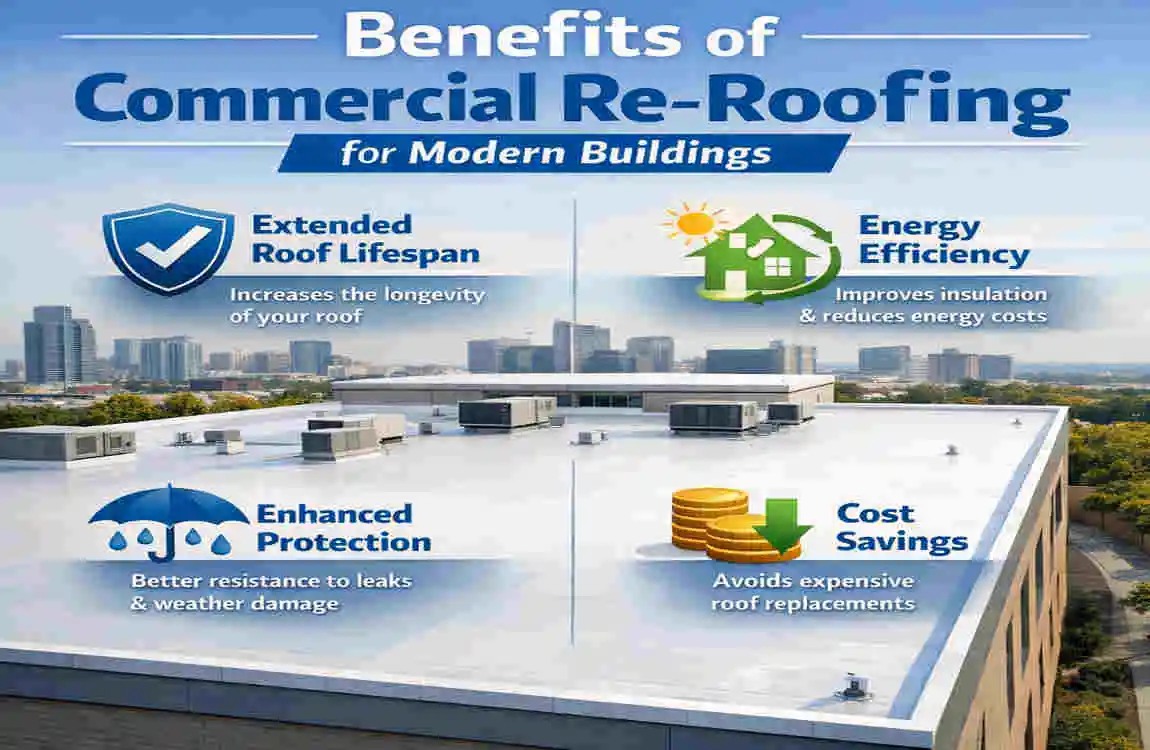
Improved Building Protection
A strong roof protects everything inside the building. That includes inventory, equipment, office spaces, and the people who work there every day.
When water stays out, the whole building stays safer. That is one of the biggest reasons owners choose re-roofing.
Better Energy Performance
Modern roofing systems can help improve thermal performance. In simple terms, they help control heat more effectively.
That may reduce cooling demand in summer and support a more comfortable indoor environment. For many businesses, better energy performance is one of the most practical reasons to upgrade.
Reduced Maintenance Problems
Old roofs often need repeated fixes. Small leaks can turn into ongoing repair requests.
A re-roofing project can reduce those headaches by replacing worn sections with a more dependable system. That means less emergency maintenance and less stress for property managers.
Improved Property Value and Appearance
A clean, updated roof improves the overall look of a commercial building.
That matters more than people think. A roof in good shape can support the property’s image, help attract tenants, and make the building feel better cared for.
Longer-Term Roofing Performance
Temporary repairs can help for a while, but they are not always the best long-term solution.
When you choose quality materials and professional installation, the roof is more likely to perform well for years. That gives you more stability and fewer surprises later.
Commercial Re-Roofing Cost and Maintenance Tips
Factors That Affect Re-Roofing Cost
The cost of commercial re-roofing depends on several things:
- Roof size and complexity
- Existing roof condition
- Material choice
- Labor and installation needs
- Insulation and drainage upgrades
- Accessibility
- Project location
- Permit or code requirements
A simple roof is usually easier and cheaper to work on. A roof with equipment, unusual shapes, or hidden damage will often cost more.
How to Control Roofing Costs
You can manage your budget without cutting corners.
A few smart steps include:
- Comparing several professional estimates
- Fixing only what truly needs attention
- Choosing materials based on lifespan, not just price
- Planning early before damage grows worse
When small issues are handled early, they are often much cheaper to solve.
Commercial Roof Maintenance After Re-Roofing
A new roof still needs care. Even a strong system will last longer with regular attention.
After re-roofing, make sure to:
- Schedule regular inspections
- Keep drains and gutters clear
- Check flashing and seams
- Repair leaks quickly
- Watch rooftop equipment areas
- Keep maintenance records
This simple routine helps keep the roof in better condition and provides a record of what has been done over time.
How to Plan a Successful Commercial Re-Roofing Project
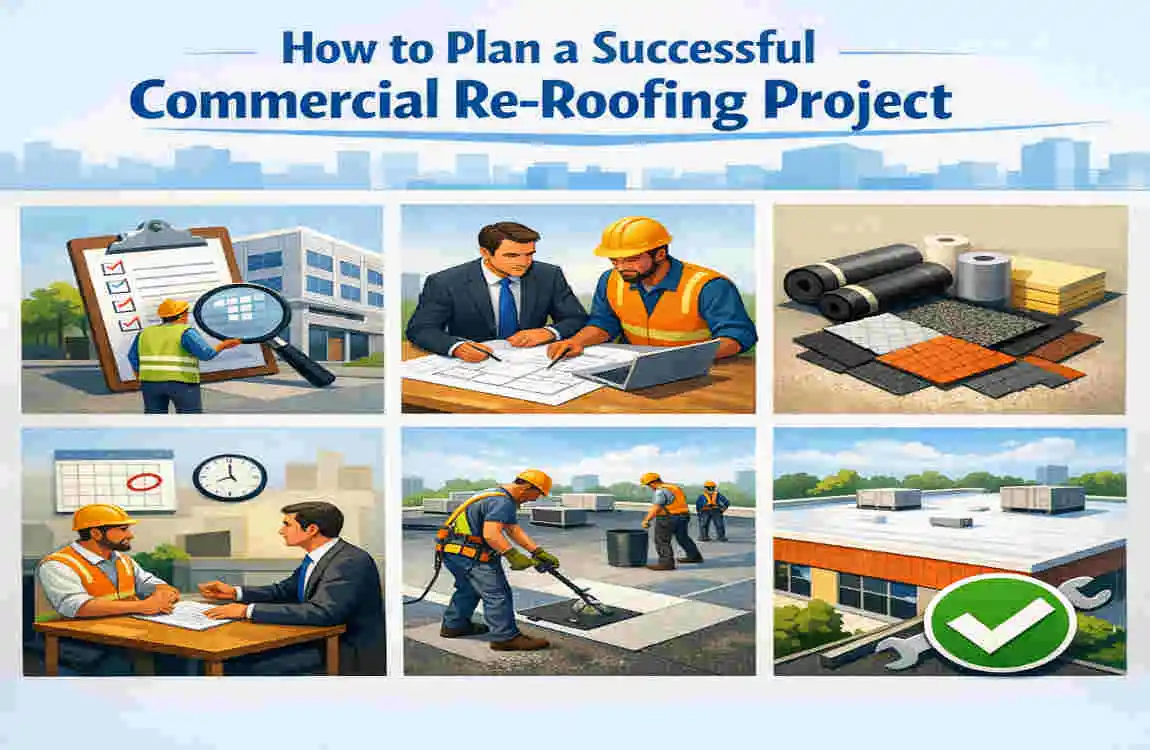
Work With Qualified Roofing Professionals
Commercial roofs are different from residential roofs. They often have more surface area, more drainage challenges, and more equipment on top.
That is why experience matters. Look for roofing professionals who understand commercial systems, carry proper insurance, and can clearly explain their process. References and warranties also matter.
A good contractor should make the project feel organised, not confusing.
Minimise Business Disruption
If the building is active, the project should be planned to minimise disruption.
Think about worker access, customer safety, loading areas, noise, and equipment placement. It helps to schedule the work during a less busy time for the business.
Good planning keeps the roof project from becoming a daily problem.
FAQ: Commercial Re-Roofing
What is commercial re-roofing?
Commercial re-roofing is the process of installing a new roofing system over, or as part of the preparation of, an existing commercial roof when the current system is ageing or damaged but is still suitable for re-roofing.
How do I know if my commercial building needs re-roofing?
Frequent leaks, standing water, visible damage, repeated repairs, and rising energy bills are all warning signs. A professional inspection gives the clearest answer.
Is commercial re-roofing cheaper than roof replacement?
Sometimes yes, especially if the existing roof can support the new system without major tear-off work. But the full cost depends on the roof’s condition, materials, labour, and any needed upgrades.
What roofing materials are commonly used for commercial re-roofing?
Common options include TPO, PVC, EPDM, modified bitumen, and metal roofing. The best one depends on the building and the climate.
How can I make a commercial re-roofing project more energy efficient?
Choose reflective materials, improve insulation, and make sure drainage is working well. A roofing professional can help match the system to the building’s needs.
How often should a commercial roof be inspected?
A commercial roof should be inspected regularly, especially after severe weather. Routine inspections help catch small problems before they turn into major repairs.
| Aspect | Smart Commercial Re-Roofing Solution |
|---|---|
| Roof Inspection | Identify leaks, damage, and weak areas before work begins. |
| Energy Efficiency | Use reflective roofing materials to reduce heat gain and cooling costs. |
| Modern Materials | Consider TPO, PVC, EPDM, or metal roofing for durability. |
| Water Protection | Improve drainage, flashing, and waterproofing to prevent leaks. |
| Minimal Disruption | Plan phased work to keep commercial operations running. |
| Long-Term Value | Choose durable systems that reduce maintenance and replacement costs. |
Related Posts