Metal roofing has become a popular choice for many homeowners, and it is easy to see why. It looks clean, lasts a long time, and can handle tough weather better than many other roofing types. If you are thinking about a roof replacement or a new build, one of the first things you will likely ask is how much metal roofing costs per square foot.
That question matters because roofing is a major home project. You want a number that feels realistic, not just a guess. But the truth is that metal roof pricing is not one-size-fits-all. The final cost depends on the type of metal, the size of the roof, the shape of the home, labour rates, and whether old roofing has to be removed.
Understanding Metal Roofing Costs
Why metal roofing is so popular
Metal roofing is known for being strong, modern, and long-lasting. Many homeowners like it because it can withstand rain, wind, heat, and snow better than some other materials.
It also comes in many styles. Some metal roofs look sleek and contemporary, while others look more traditional. That flexibility makes metal roofing a good fit for many types of homes.
The basic cost question
When people ask how much metal roofing costs per square foot, they are usually referring to the combined cost of materials and installation. That is where the answer becomes more detailed.
You may see one price for the roofing panels alone and another price for a fully installed roof. These two numbers are not the same, and the installed cost is usually much higher because it includes labour and extra materials.
Material-only cost vs installed cost
Material-only cost refers to the price of the metal panels, fasteners, and other roof components. Installed cost includes all of that, plus labour, preparation, underlayment, flashing, and often the removal of the old roof.
This is why two homeowners can choose metal roofs and still pay very different amounts. A simple roof on a small home may cost much less than a large, steep roof with chimneys and skylights.
How Much Does Metal Roofing Cost Per Square Foot?
General price range
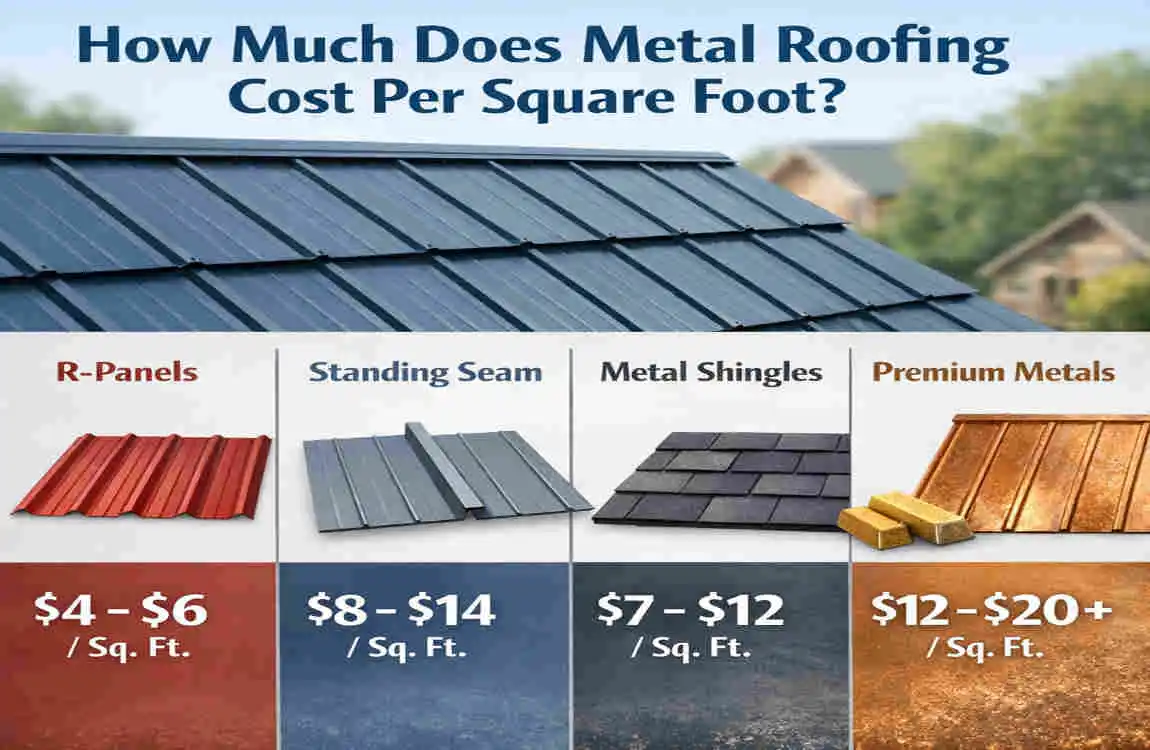
A metal roof can cost anywhere from budget-friendly to premium, depending on the material and design. Basic options may be less expensive, while high-end systems can cost much more.
If you are comparing metal roof price per square foot, remember that a low starting price does not always mean the cheapest finished project. Labour, roof shape, and prep work can quickly change the final amount.
What “per square foot” means
This phrase is used a lot, but it is easy to misunderstand. A square foot is a small area measurement, while a roofing square is a roofing term that means 100 square feet.
That means if a contractor gives you a price per roofing square, you need to divide it by 100 to compare it with a price per square foot. This small detail matters because it can make a quote look cheaper or more expensive than it really is.
Why prices vary so much
Metal roof prices can change from project to project because no two roofs are exactly alike. A simple roof with easy access will cost less than a roof with many angles, vents, valleys, and steep slopes.
Location also matters. Labour in one area may be much higher than in another. Material prices can also shift depending on supply, demand, and the grade of metal chosen.
Metal Roofing Cost by Material Type
Steel roofing
Steel is one of the most common metal roofing materials. It is popular because it offers a good balance between cost and strength.
Why homeowners choose steel
Steel roofing is often chosen for its durability and solid performance. It can handle everyday weather conditions well and is available in many styles.
How it affects price
Steel is usually more affordable than premium metals like copper or zinc. If you are trying to keep the project within budget, steel may be one of the most practical choices.
Aluminum roofing
Aluminium is lightweight and highly corrosion-resistant. That makes it a strong choice for homes in coastal or humid areas.
Why people like it
It does not rust the way some other metals do, so it performs well in environments with moisture or salty air.
How it affects price
Aluminium usually costs more than basic steel. But the added cost can be worth it if your climate is rough on roofs.
Zinc roofing
Zinc is a premium option with a long life span. It can develop a protective surface over time, which helps it age gracefully.
Why it stands out
Zinc is often chosen for high-end homes or unique architectural projects. It has a refined look and excellent durability.
How it affects price
It is not a budget material. Zinc usually sits in the premium range, so the initial cost is higher.
Copper roofing
Copper is one of the most expensive roofing materials, but it is also one of the most distinctive. It offers a beautiful appearance that changes over time as it develops a natural finish.
Why people choose copper
Homeowners often choose copper for visual impact and long-term performance. It can make a home look elegant and unique.
How it affects price
Copper is usually at the top of the price range. If appearance and longevity are your priorities, it may be worth the cost.
Galvanised vs. Galvalume steel
These are two common types of steel used in roofing.
Galvanized steel
Galvanised steel is coated with zinc to help prevent rust. It is widely used and often more affordable.
Galvalume steel
Galvalume uses a coating that combines aluminium and zinc. Many homeowners like it because it offers strong corrosion resistance and solid value.
Material choice matters
Your answer to how much metal roofing costs per square foot varies widely based on material choice alone. A basic corrugated steel roof may cost much less than a standing seam aluminium or copper roof.
That is why it helps to compare more than one option before making a decision.
What Factors Affect Metal Roof Cost?
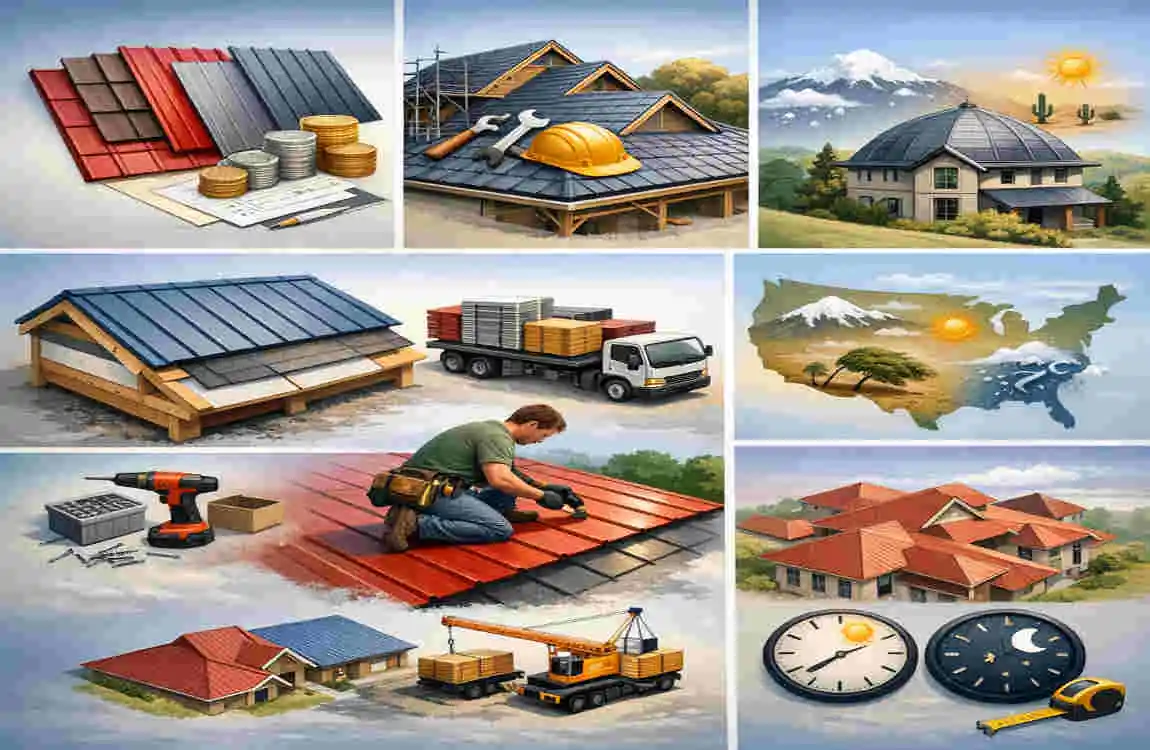
Roof size
A larger roof requires more material and labour. That part is simple, but it is also one of the biggest cost drivers.
Even a small change in square footage can make a noticeable difference in the total price. Bigger roofs also often take longer to install.
Roof pitch
Pitch refers to how steep the roof is. A steep roof can be harder and slower to work on, which usually increases labour costs.
A low-slope roof may be easier to install, but it still needs the right materials and proper drainage planning.
Roof shape
A simple roof shape is usually less expensive to cover than a complex one. Roofs with multiple valleys, dormers, peaks, and angles take more cutting and more flashing.
The more complicated the shape, the more the project may cost.
Labor rates
Labour rates can vary widely by location. A contractor in one city may charge far more than one in another area.
This is why two roofs with the same material can still end up with very different total prices.
Old roof removal
Sometimes an old roof must be removed before the new one goes on. That adds labour, disposal, and cleanup costs.
In some situations, a metal roof can be installed over an existing roof, but that depends on the condition of the old roof, local codes, and the specific installation method.
Underlayment and insulation
Underlayment is the layer below the metal panels. It helps protect against moisture and improves roof performance. Insulation may also be added depending on the home and climate.
These materials improve the roof system, but they also increase the budget.
Flashing and trim
Flashing is used around edges, valleys, vents, chimneys, and other roof openings. Trim helps finish the roof and protect key areas.
These parts may seem small, but they are essential. Without them, the roof would not be sealed properly.
Roof penetrations
Chimneys, skylights, vent pipes, and other roof features create extra work. Every opening needs careful fitting and sealing.
More roof penetrations usually mean more labour and higher cost.
Accessibility and location
If the home is hard to reach, the project may cost more. A roof that is tricky to access may require extra time, equipment, or safety steps.
Homes in remote or high-cost areas may also see higher installation rates.
Metal Roof Installation Cost vs. Material Cost
What material cost includes
Material cost usually covers the roof panels or shingles, fasteners, trim, and some basic parts needed for the roof system.
The quality of these materials matters. Better coatings, stronger metal, and thicker panels usually raise the price.
What installation cost includes
Professional installation is more than just placing panels on the roof. It can include measuring, cutting, fastening, sealing, flashing, and finishing.
It may also include:
- Old roof removal
- Underlayment installation
- Repairs to the roof deck
- Cleanup and disposal
Why installation matters so much
Even great materials can fail if they are installed badly. A metal roof needs proper fitting, secure fastening, and attention to detail.
That is why skilled installation often pays off in the long run.
Can metal roofing go over shingles?
In some cases, yes. A metal roof may sometimes be installed over shingles if the roof structure, local codes, and existing roof condition allow it.
But this is not always the best choice. If the roof deck is damaged or the old shingles are in poor shape, removal may be the smarter option.
Simple budget example
Here is a simple way to think about the math:
- Measure the roof area in square feet
- Add waste for cutting and overlap
- Multiply by material cost
- Add labor
- Add underlayment, flashing, trim, and disposal
This gives you a more realistic total than looking at material price alone.
Why estimates matter
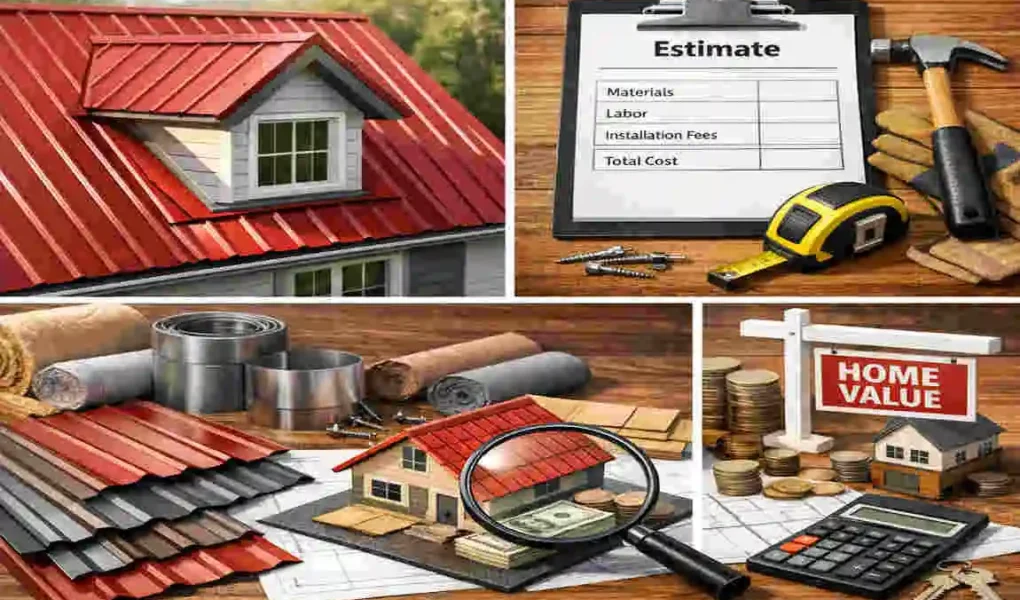
A written estimate from a contractor is usually more reliable than a general price range online. It should show exactly what is included so you can compare quotes fairly.
Is a Metal Roof Worth the Cost?
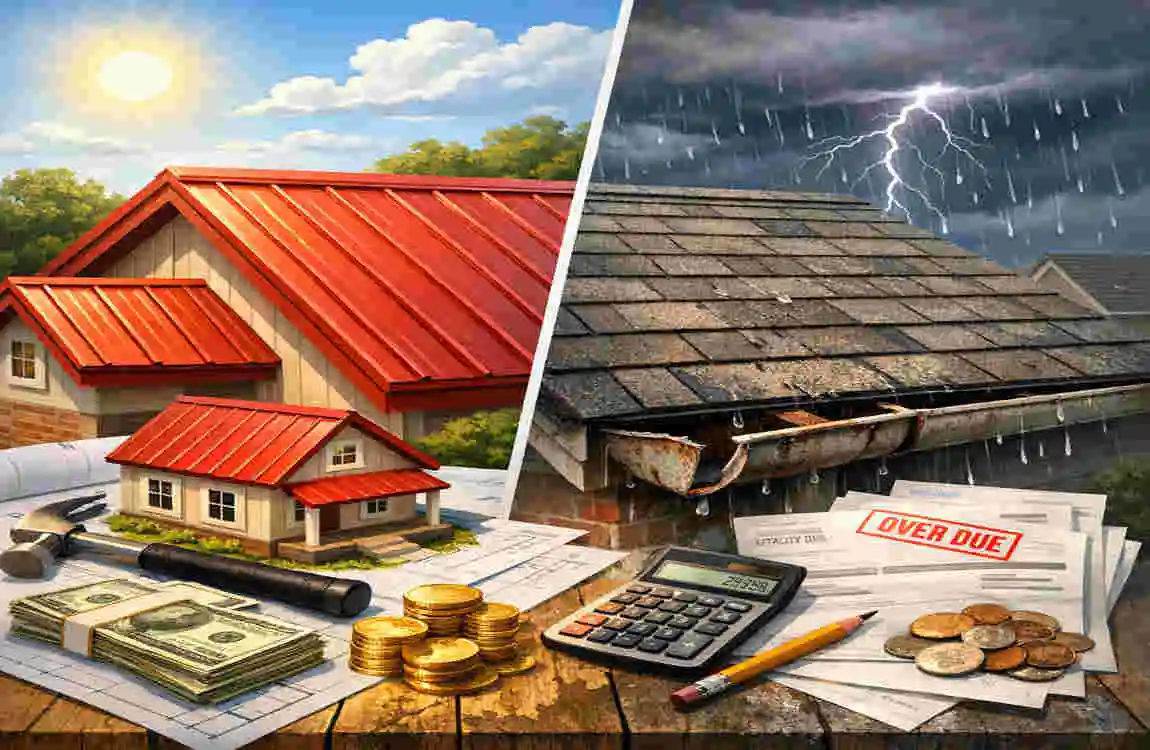
Main advantages of metal roofing
A metal roof often costs more upfront than some other roofing options, but it can offer strong long-term value.
Benefits include:
- Long service life
- Low maintenance
- Strong weather resistance
- Possible energy savings
- Modern appearance
Long-term value vs upfront price
A cheaper roof may save money at first, but it may not last as long. A metal roof can often outlast lower-cost roofing materials, which may make it a better value over time.
That does not mean metal is always the right choice. It does mean the price should be judged over the roof’s full life, not just on day one.
Metal roofing vs asphalt shingles
Asphalt shingles usually cost less to install initially. That is why many homeowners choose them.
Metal roofing often costs more upfront, but it can last longer and may need less frequent replacement. For some homes, that makes metal roofing the smarter long-term investment.
Maintenance and repairs
Metal roofs are often low maintenance, but they are not maintenance-free. You may still need occasional inspections, cleaning, and small repairs over time.
If the roof is installed well and kept in good shape, it can perform very well for many years.
How to keep the project within budget
Here are a few practical ways to manage cost:
- Compare multiple estimates
- Choose the right metal type for your budget
- Avoid unnecessary upgrades
- Ask exactly what the estimate includes
- Check warranty details before signing
These steps can help you avoid surprises and make a better buying decision.
FAQs About Metal Roofing Cost Per Square Foot
How much does metal roofing cost per square foot?
It depends on the type of metal, roof size, labour, and project complexity. Material-only pricing is lower than installed pricing.
Is metal roofing more expensive than shingles?
Usually yes at first. But metal roofing may last longer and provide better long-term value.
How much does a 1,500-square-foot metal roof cost?
You can estimate it by multiplying the roof area by the installed cost per square foot, then adding any extra costs for removal or preparation.
What is the cheapest type of metal roofing?
Corrugated steel is often one of the most budget-friendly options.
Does metal roofing increase home value?
It can, but the exact effect depends on the home, the local market, and the roof’s quality.
How long does a metal roof last?
Many metal roofs last for decades, but lifespan depends on the material, climate, and installation quality.
Does metal roofing require a lot of maintenance?
No, but it still needs occasional inspections, cleaning, and small repairs.
Can metal roofing be installed over shingles?
Sometimes it can, but the roof condition, local rules, and installation method must all be checked first.
What is the difference between cost per square foot and per roofing square?
A roofing square equals 100 square feet. That is why you need to be careful when comparing quotes.
| Metal Roofing Type | Approx. Cost per Sq. Ft. | Key Benefit |
|---|---|---|
| Corrugated Metal | $4–$8 | Budget-friendly and durable |
| Standing Seam | $8–$16 | Modern look and excellent durability |
| Metal Shingles | $7–$14 | Mimics traditional shingles |
| Aluminum Roofing | $9–$16 | Lightweight and rust-resistant |
| Copper Roofing | $15–$30+ | Premium appearance and longevity |
| Installation Labor | $3–$7 | Depends on roof complexity |
| Typical Total | $7–$23+ | Materials + installation |
Related Posts