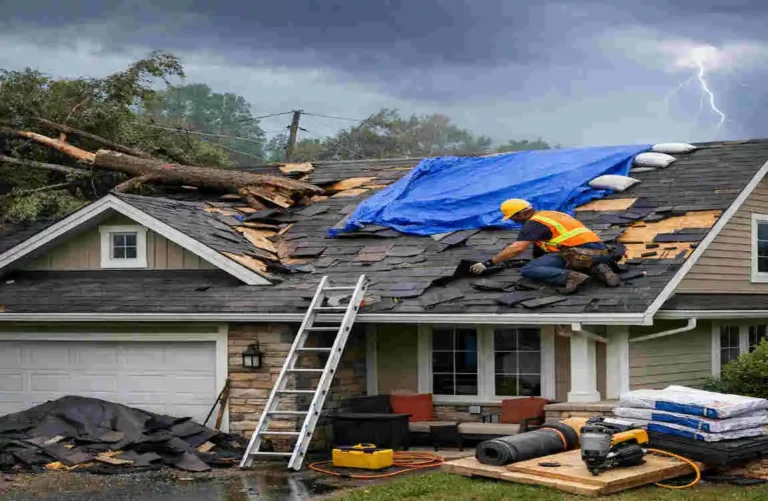
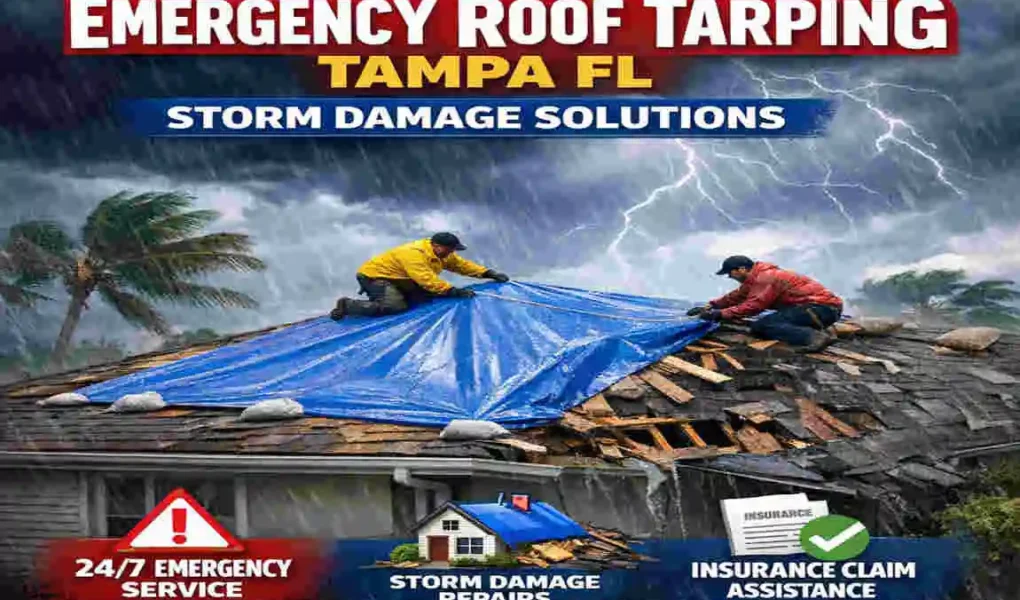
When a storm hits Tampa, FL, roof damage can happen fast. Strong winds, heavy rain, flying debris, and hurricanes can leave your home exposed in minutes. In that moment, you do not always have time for a full roof repair. What you need first is temporary protection.
That is where emergency roof tarping Tampa, FL services become so important. A roof tarp helps cover damaged areas quickly and reduces the chance of more water getting inside your home. It gives you time to plan the permanent repair without letting the problem get worse.
Emergency Roof Tarping Tampa FL: Storm Damage Solutions
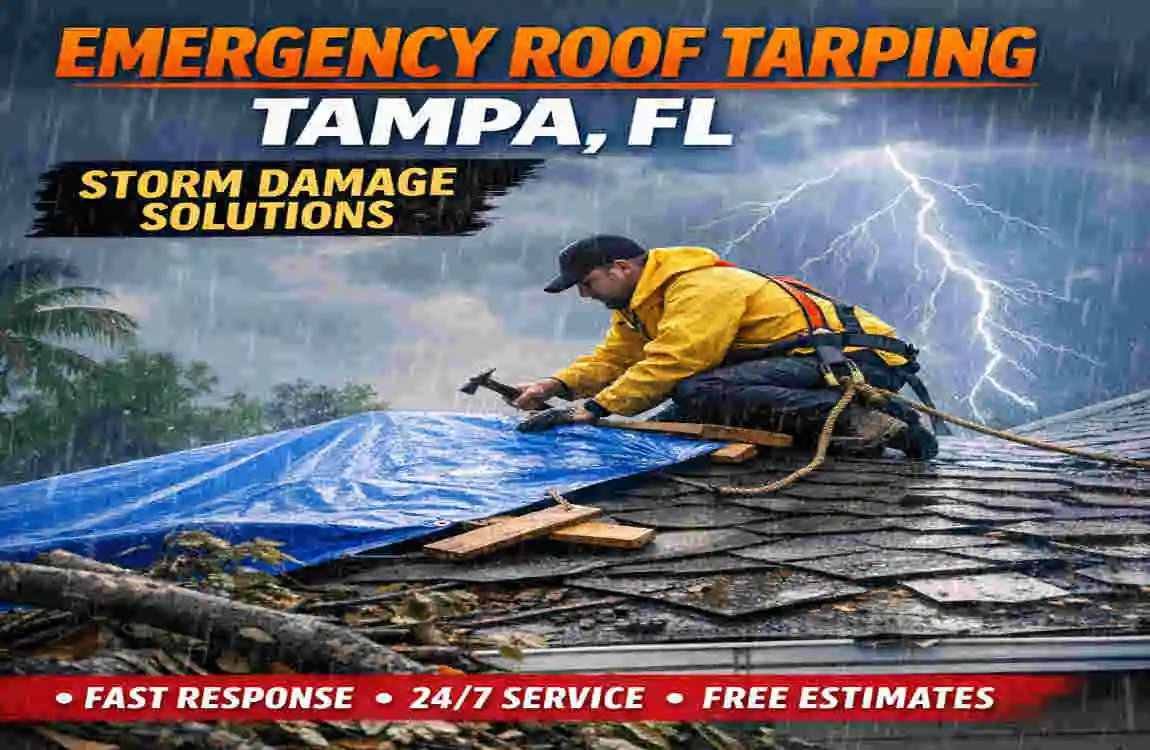
Emergency roof tarping is one of the first steps homeowners can take after a storm. It doesn’t fix the roof permanently, but it can protect your home from further damage right away.
This matters a lot in Tampa because weather can change quickly. A roof that looks only slightly damaged can start leaking badly after the next round of rain. A temporary roof tarp helps stop that chain reaction.
If you are dealing with Tampa storm roof damage, this guide will help you understand your next steps clearly and safely.
What readers will learn
By the end of this article, you will know:
- What emergency roof tarping is
- When you may need it
- How it helps after storms and hurricanes
- What the process looks like
- What affects cost
- What to do before and after tarp installation
What Is Emergency Roof Tarping?
Emergency roof tarping is the process of placing a strong protective tarp over a damaged part of the roof. The tarp helps block rain, wind, and debris from entering the home until a permanent repair can be made.
How roof tarps provide temporary protection
A tarp works like a shield. It covers holes, missing shingles, punctures, or open roof sections. When installed correctly, it helps reduce water intrusion and protects the inside of the home.
Remember, a tarp is temporary protection, not a permanent solution. It buys time while you arrange repairs.
When tarping is appropriate
A roof tarp may be needed after:
- Missing shingles
- Roof punctures
- Fallen branches
- Wind damage
- Water leaks
If the damage exposes the underlayment or roof deck, tarping is often a smart first step.
Temporary protection vs. permanent repair
A temporary roof tarp helps reduce immediate harm. A permanent repair or replacement fixes the actual damage.
Think of tarping as the emergency step and roof repair as the long-term solution.
Why Tampa FL Homes May Need Emergency Roof Tarping
Tampa weather can be rough on roofs. Homes in the area deal with heavy rain, strong winds, tropical storms, and hurricane-season threats.
Hurricanes and tropical storms
Hurricanes and tropical storms can tear shingles, damage flashing, and leave parts of the roof exposed. Even if the storm does not make direct landfall, strong outer bands can still cause major damage.
Heavy rain and strong winds
Rain becomes a bigger problem when the roof has already been weakened. Strong winds can lift shingles or force water under the roof surface. Once that happens, leaks can spread quickly.
Falling trees and branches
Storms often bring down tree limbs. A branch may puncture the roof or crack roofing materials. If so, cover the damaged area as soon as possible.
Hail and flying debris
Hail may not always seem severe at first, but it can damage shingles and create weak spots. Flying debris can also tear roof surfaces or break flashing.
Why delay makes the problem worse
If the damaged area stays open, water can enter the attic, insulation, walls, and ceilings. That can turn a roof issue into a bigger interior repair problem.
The longer you wait, the more expensive the storm damage can become.
How Emergency Roof Tarping Tampa FL Works
Handle the tarping process carefully. A professional will usually inspect the roof first, then install the tarp to protect the exposed area.
Initial roof damage assessment
The first step is to look at the damage from a safe position. The contractor checks where the roof is open, where leaks are coming from, and whether any part of the roof is unsafe to walk on.
Identifying unsafe or exposed areas
The contractor will look for:
- Missing shingles
- Torn roofing materials
- Broken flashing
- Exposed decking
- Active leaks
- Structural damage
This helps determine the best way to cover the roof.
Selecting the right tarp size and material
Not every tarp is the same. The right tarp depends on the size of the damaged area and how much weather protection is needed.
A tarp must be large enough to overlap the damaged section properly. It also needs to be strong enough for storm conditions in Tampa.
Preparing the damaged roof
Before the tarp goes up, the contractor may remove loose debris if it is safe to do so. The contractor may also clear away unstable pieces that could make the tarp less effective.
Securing the tarp correctly
This is one of the most important parts of the job. The tarp must be secured so wind doesn’t lift it and rain doesn’t slip underneath.
If the tarp is not fastened well, it may fail during the next storm.
Final inspection
After installing the tarp, the contractor checks the edges, coverage, and attachment points. This helps make sure the temporary cover is doing its job.
What homeowners should expect
Expect the process to be quick but careful. The goal is to protect the home fast without making the damage worse.
Safety precautions
Homeowners should stay off the roof and away from damaged areas. Wet roofing surfaces can be very slippery and unsafe.
Benefits and Costs of Emergency Roof Tarping
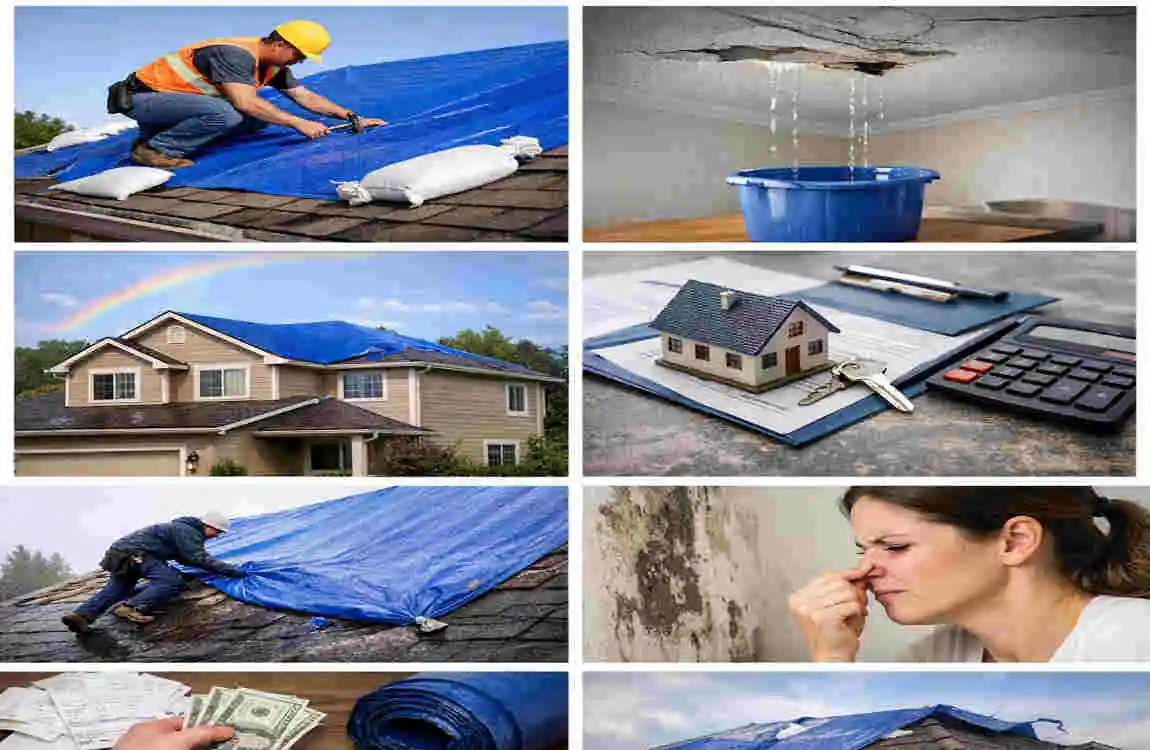
Emergency tarping gives homeowners time and protection when they need it most. It can prevent larger problems later.
Main benefits
A properly installed tarp can:
- Reduce additional water intrusion
- Protect ceilings and walls
- Help save insulation and belongings
- Give you time for permanent repairs
- Support insurance documentation
Why it helps with insurance
Taking quick action may help show that you tried to prevent further damage. Keeping receipts, photos, and service records can also support your claim.
Factors that affect roof tarping costs
Cost factorWhy it matters
Roof size Bigger roofs need more material and labor
Damage severity Larger damage areas take more work
Roof pitch Steeper roofs are harder to work on
Accessibility Hard-to-reach roofs may cost more
Tarp size and material Stronger, larger tarps cost more
Emergency service After-hours or storm response may raise price
Temporary tarping vs. permanent roof repair costs
A tarp is much less expensive than a full roof repair or replacement. But it should never be seen as a replacement for real repair work.
Think of tarping as a short-term protection step that helps prevent more serious damage.
Questions to ask before hiring a tarping service
Before you hire someone, ask:
- How quickly can you respond?
- What kind of tarp will you use?
- Is the tarp temporary or weather-rated?
- Will you inspect the damage first?
- Do you provide documentation for insurance?
These questions help you understand the service before work begins.
What to Do After a Tampa Storm Damages Your Roof
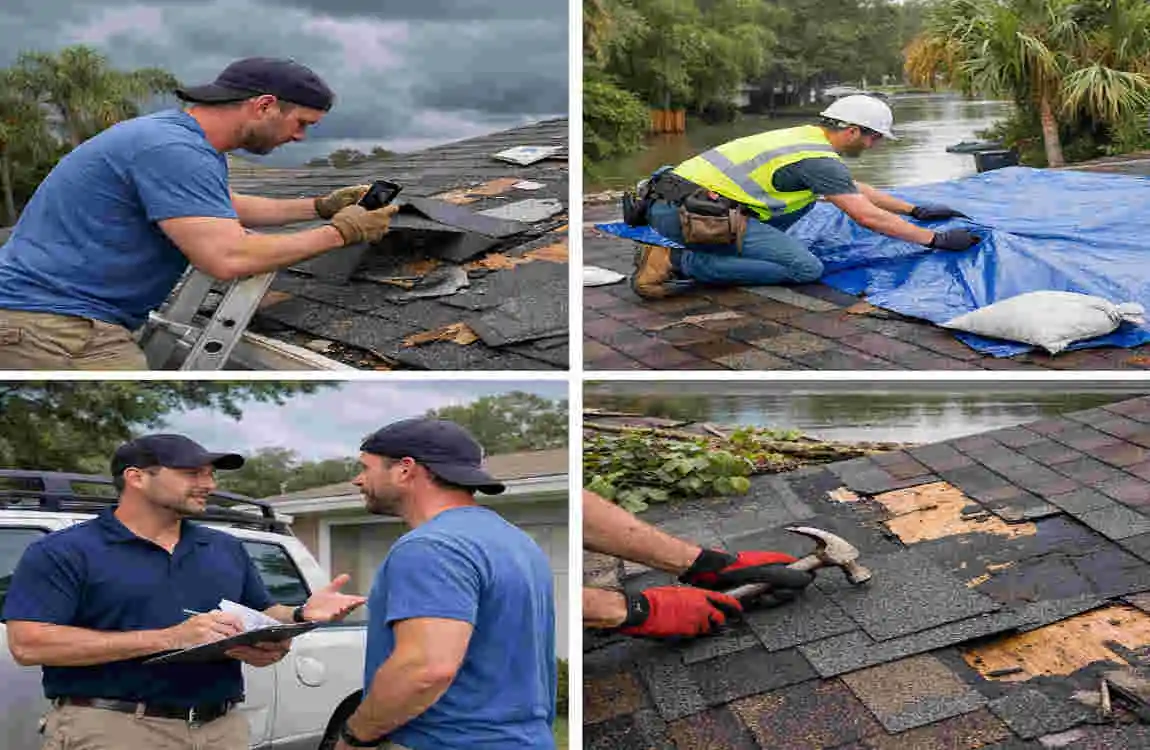
The hours after a storm matter. What you do next can reduce the damage and help keep your family safe.
Prioritize personal safety
If your roof is damaged, don’t climb up to inspect it yourself. A wet, broken roof can be dangerous.
Stay inside if the weather is still bad and wait until conditions are safe.
Check for interior leaks safely.
From inside the home, look for signs of water stains, dripping, or moisture. If water is coming in, move quickly but carefully.
Protect your belongings
Move furniture, electronics, and valuables away from wet areas. Use buckets or containers to catch water if needed.
Take photos and videos.
Document the damage from safe locations. Photos can help with insurance and give your contractor a better idea of the situation.
Contact your insurance provider.
If your policy may cover the damage, report it as soon as possible. Ask what documentation they need.
Arrange emergency roof tarping.
Don’t wait to protect the damaged area. Fast tarp installation can help prevent more leaks and interior damage.
Keep records
Save:
- Photos
- Videos
- Receipts
- Inspection notes
- Contractor documents
This can help later if you need to file or follow up on a claim.
Schedule a permanent inspection.
The tarp is only the first step. A full roof inspection will show whether you need a repair or a replacement.
Common mistakes to avoid
- Climbing on a wet roof
- Waiting too long to tarp
- Ignoring small leaks
- Throwing away damage records
- Hiring without checking experience
Emergency Roof Tarping Tampa FL: FAQs
What is emergency roof tarping Tampa FL?
It is a temporary roof protection service that covers storm-damaged areas with a tarp to prevent more water and weather damage.
How quickly should a damaged roof be tarped?
As soon as possible after it is safe to do so. The faster you tarp, the less chance there is for more interior damage.
How long can a roof tarp stay in place?
A tarp is only temporary. It should stay up just long enough to arrange permanent repairs.
Can I tarp my roof myself?
It is not recommended if the roof is damaged, wet, or high off the ground. Roof work can be dangerous, so professional help is usually safer.
How much does emergency roof tarping cost in Tampa?
Cost depends on roof size, damage level, access, tarp material, and whether the service is after hours.
Does homeowners insurance cover emergency roof tarping?
Sometimes, yes. It depends on the policy and the cause of the damage. Keep records and ask your insurer for guidance.
Can a tarp stop all roof leaks?
A tarp can reduce leaks, but it may not stop every drop if the damage is severe or the tarp isn’t installed correctly.
What should I do if my roof is damaged during a hurricane?
Stay safe first, then contact emergency help once conditions improve. Do not go onto the roof during the storm.
| Aspect | Short Information |
|---|---|
| Purpose | Temporary protection for storm-damaged roofs |
| Common Causes | Hurricanes, heavy rain, high winds, fallen trees, and hail |
| Best Time to Use | Immediately after roof damage when permanent repair cannot start |
| Main Benefit | Helps reduce water intrusion and further interior damage |
| Materials | Heavy-duty waterproof tarp, boards, fasteners, and protective coverings |
| Safety | Roof access can be dangerous; professional installation is recommended |
| Tampa Weather Concern | Tropical storms and hurricanes can create sudden roof emergencies |
| Next Step | Inspect the damage and arrange permanent roof repair or replacement |
Related Posts