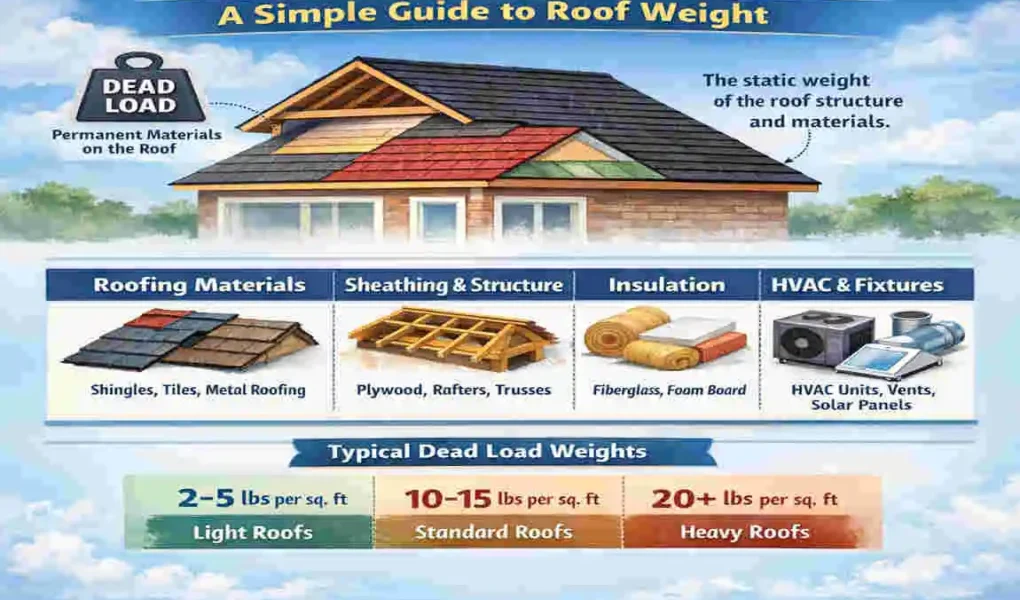
If you are learning about roof dead load, the basic idea is simple: it is the permanent weight of everything that makes up the roof system.
This includes the roofing material itself, the roof deck, the framing, insulation, drywall, and other fixed parts that stay in place. It does not include temporary things like people, snow, or wind pressure.
Understanding roof weight matters because a roof must be strong enough to support itself safely. If the load is too heavy for the structure, problems can happen over time. That is why builders, homeowners, and engineers all pay close attention to roof loads.
What Is Dead Load for a Roof?
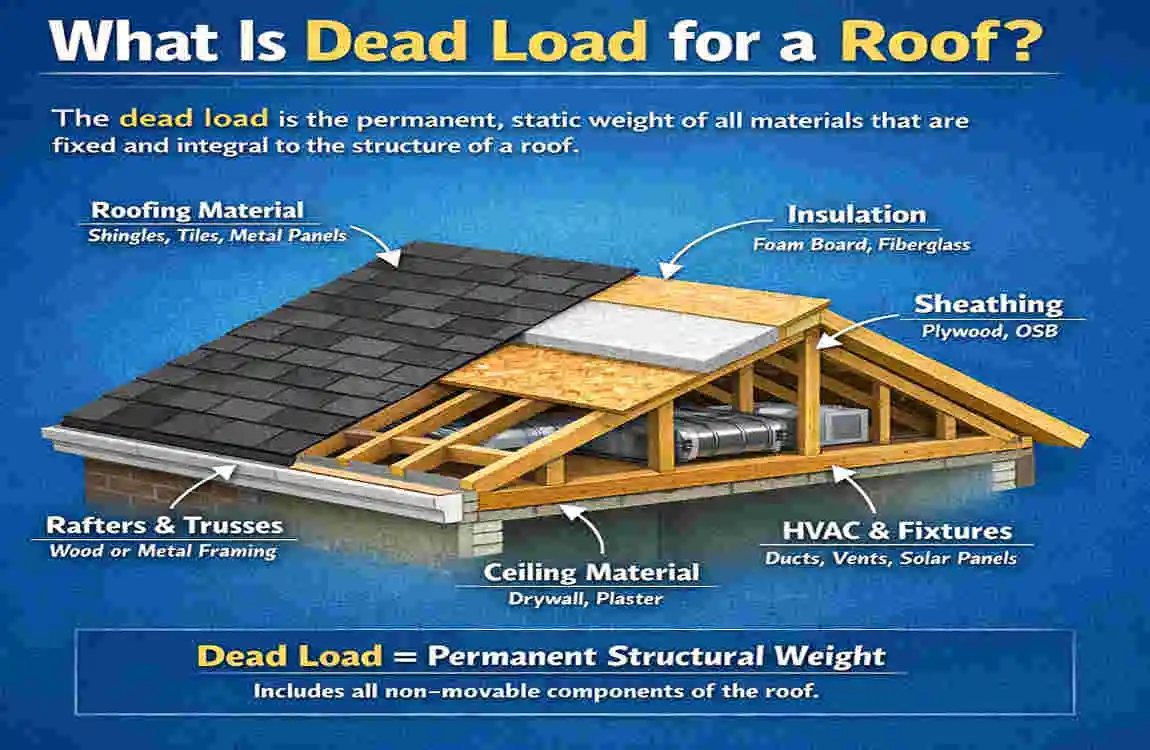
Simple Definition
Dead load means the weight of all permanent parts of the roof. Think of it as the roof’s “always there” weight.
It stays on the structure every day, year-round. Once the roof is built, this load doesn’t move around much, and it doesn’t come and go like snow or people.
Dead Load vs Live Load
This is one of the most important differences to understand.
- Dead load = permanent weight
- Live load = temporary or movable weight
For a roof, dead load includes the roof materials and fixed parts. Live load may include people working on the roof, tools, or temporary maintenance materials.
Why It Matters
A roof structure must safely carry its own weight before it can handle anything extra. If the dead load is too high, rafters, trusses, beams, and even walls may be stressed more than they should be.
That is why you should never guess roof weight without thinking it through.
What Components Make Up a Roof’s Dead Load?
A roof is not just shingles or metal panels. Several layers and structural parts all add weight.
Roofing Material
This is the outer layer you actually see from outside.
Common roofing materials include:
- Asphalt shingles
- Metal roofing
- Clay tile
- Concrete tile
- Slate
- Wood shingles or shakes
Each of these has a different weight. For example, asphalt shingles are usually lighter than clay or concrete tiles.
Roof Deck and Sheathing
Under the outer roof covering is the roof deck or sheathing. This is often made from plywood or OSB.
These sheets support the roofing material and help hold the roof together. Even though they are hidden, they count as dead load because they stay in place permanently.
Structural Framing
The framing is the skeleton of the roof.
This may include:
- Rafters
- Trusses
- Beams
- Purlins
- Other permanent structural members
These pieces can add significant weight, especially on larger roofs.
Insulation and Ceiling Materials
Some roof systems also include:
- Insulation
- Drywall
- Ceiling boards
- Vapor barriers
- Fixed vents or equipment
These items may not seem heavy on their own, but together they add to the roof’s total dead load.
The Full Picture Matters
It is easy to look at only the roofing material and forget the rest. But that would give you an incomplete answer.
A roof’s dead load should include all permanent materials, not just the visible covering.
How Is Roof Dead Load Calculated?
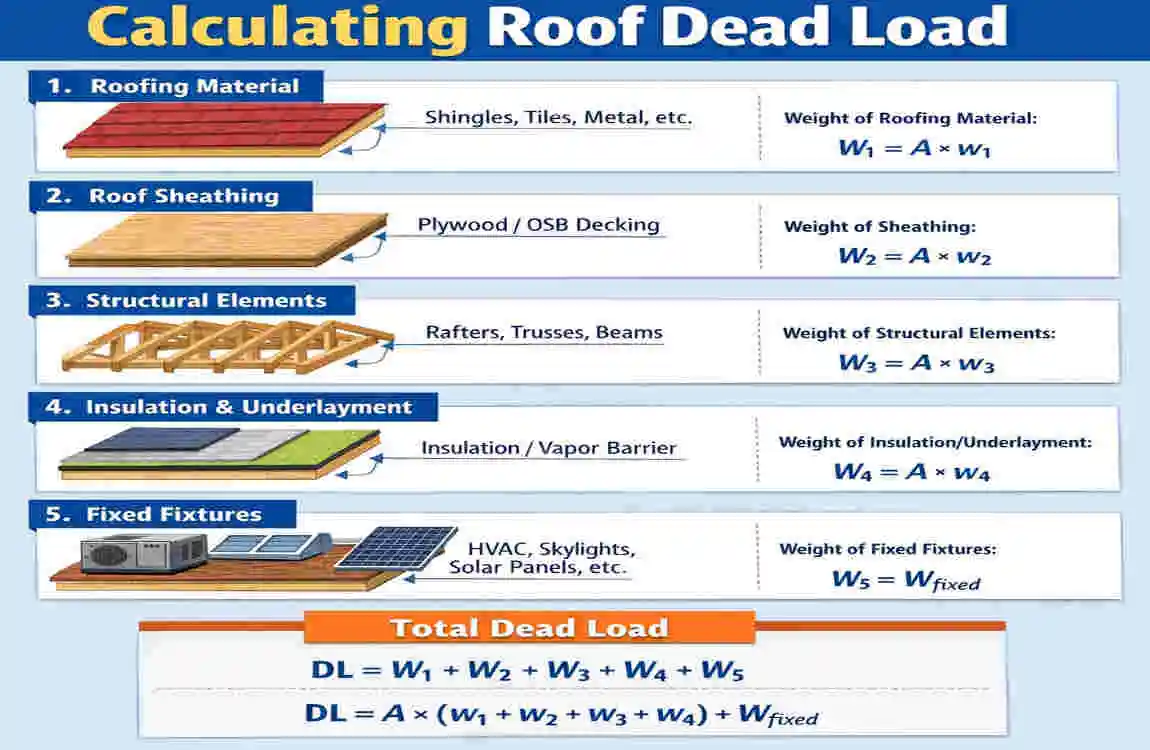
Basic Formula
The simple idea is:
Dead Load = Weight of Permanent Roof Components per Unit Area
This means you add up the weight of all permanent roof materials and divide it by the roof area.
Common Units Used
Roof loads are usually measured in:
- Pounds per square foot (psf)
- Kilograms per square meter (kg/m²)
These units help builders compare different roof systems consistently.
Simple Example
Let’s say a roof has these layers:
- Roofing material
- Sheathing
- Framing
- Insulation
- Ceiling finish
Each layer has a weight. You add them together to get the total dead load per square foot or per square meter.
This gives a much better estimate than looking at just one layer.
Total Weight vs Distributed Load
There is also an important difference between:
- Total roof weight
- Distributed load
The total roof weight is the full weight of the roof system. Distributed load tells you how that weight spreads across the roof area.
That spread matters because a roof structure does not carry weight at only one point. It carries weight across the whole system.
Why Roof Slope and Construction Type Matter
Roof shape affects the calculation too.
A steep roof may use more material than a low-slope roof. Thicker materials also weigh more. Different construction methods can also change how the load transfers through the structure.
Final Design Should Follow Professional Specs
For real building work, structural engineers often use:
- Manufacturer data
- Product specifications
- Building code requirements
That is because exact calculations matter. A rough estimate is helpful, but a final design needs accurate information.
Typical Dead Load of Common Roofing Materials
Roofing materials vary a lot in weight. Some are light and easy on the structure. Others are much heavier and may need stronger framing.
What This Means in Practice
A roof with asphalt shingles usually places less stress on the structure than one with tile or slate. That doesn’t mean lighter is always better, but it does mean the structure must match the material.
Material Weight Is Not the Whole Dead Load
This is an important point.
The roofing material alone does not equal the full dead load for the roof. You still have to include the deck, framing, insulation, and other permanent parts.
So even a “light” roof covering can add up to a meaningful total weight once you count all layers.
Dead Load vs Live Load vs Snow Load
These terms often get mixed up, but they mean different things.
Dead Load
This is the permanent weight of the roof system itself.
Live Load
This includes temporary or movable weight, such as:
- Workers on the roof
- Tools and equipment
- Maintenance materials
Snow Load
Snow and ice can add significant weight, especially in colder climates. This is not permanent, so it is not part of dead load, but it is very important in roof design.
Wind Load
Wind does not usually add downward weight in the same way, but it creates pressure and uplift forces. That means it can pull on the roof and affect the whole structure.
Why They Are Separated
Each load type affects the roof differently. That is why designers calculate them separately.
A roof may be strong enough for its own weight but still fail if designers don’t account for snow or wind loads correctly.
Local Codes Matter
Building codes often set the required load values for a specific location. These values can vary by climate, elevation, and region.
Why Dead Load Matters for Roof Design and Safety
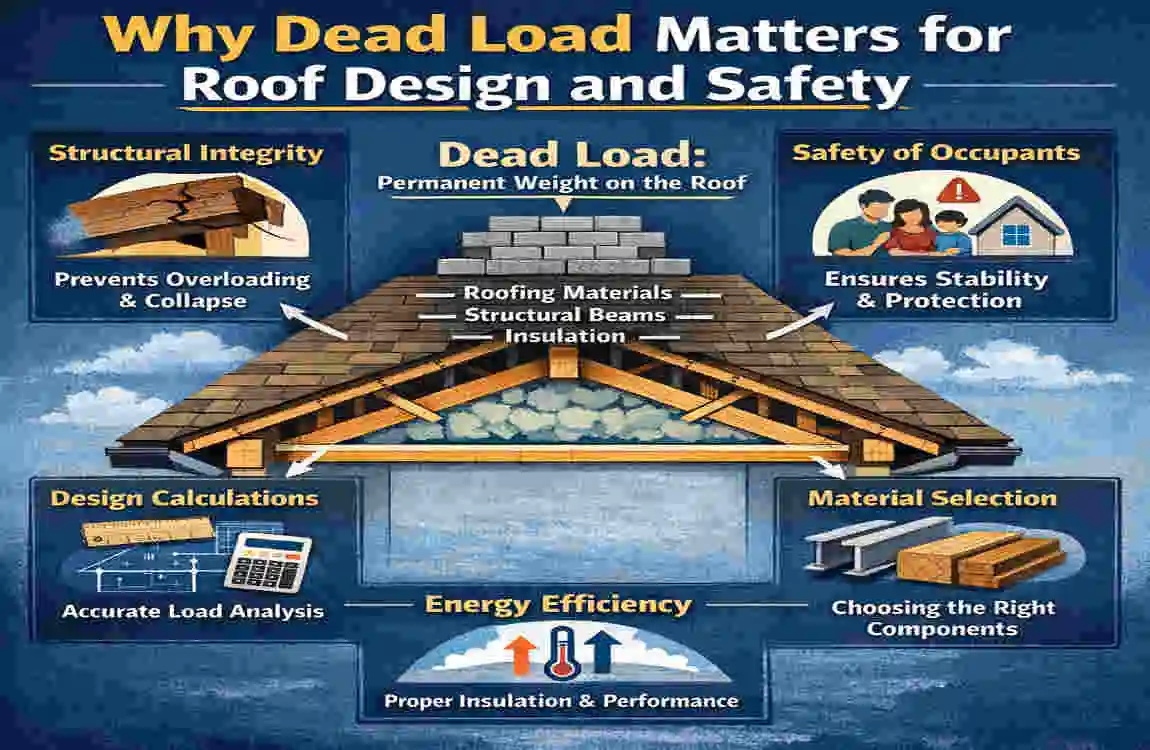
It Affects the Whole Structure
Roof dead load affects more than the roof covering. It also affects:
- Rafters
- Trusses
- Beams
- Walls
- Foundation systems
If the roof is too heavy, the strain can travel down through the entire building.
Heavy Materials Can Cause Problems
If a homeowner replaces a lightweight roof with a much heavier one, the existing framing may not be designed for that extra weight.
For example, switching from asphalt shingles to concrete tile can significantly change the load. That is why you should check material upgrades before installation.
Renovations Can Change the Original Design
A home may have been built for a specific roof material. If you change the roofing system later, the dead load changes too.
This is especially important in older homes, where the original framing may not match modern materials.
When to Ask a Professional
You should speak with a qualified structural professional if:
- You are changing roofing material
- The roof has visible sagging
- The home is older
- You are unsure about framing capacity
- You are adding a roof deck or fixed equipment
Practical Tip for Homeowners
If you are planning a roof change, gather the product specifications first. Then compare the new roof weight to the old one. That simple step can help you spot potential issues early.
FAQ About Dead Load for Roof
What is considered a dead load on a roof?
Anything permanent that stays part of the roof system, such as roofing material, sheathing, framing, insulation, and ceiling finishes, is usually considered dead load.
How do you calculate roof dead load?
Add up the weight of all permanent roof components and divide the total by the roof area. The result is usually shown in psf or kg/m².
Is roofing material part of dead load?
Yes. The roof covering is one of the main parts of the dead load.
What is the difference between dead load and live load?
Dead load is permanent. Live load is temporary or movable, such as people, tools, or maintenance equipment.
Does roof replacement change dead load?
Yes. A new roof may be lighter or heavier than the old one, which can change the total dead load.
Are concrete and clay tiles considered heavy roofing?
Yes. They are usually much heavier than asphalt shingles or metal roofing and may require stronger support.
Can I calculate my roof’s dead load myself?
You can make a basic estimate using product specifications, but a qualified professional should check final structural decisions.
Why is dead load important in roof construction?
Because the roof must safely carry its own permanent weight before it can handle snow, wind, or temporary loads.
| Roof Component | Typical Dead Load |
|---|---|
| Asphalt shingles | 2–4 psf |
| Metal roofing | 1–3 psf |
| Clay or concrete tiles | 8–15 psf |
| Wood shingles | 3–5 psf |
| Roof decking | 2–3 psf |
| Insulation | 1–3 psf |
| Ceiling materials | 2–5 psf |
| Typical total roof dead load | 10–20+ psf |
Related Posts