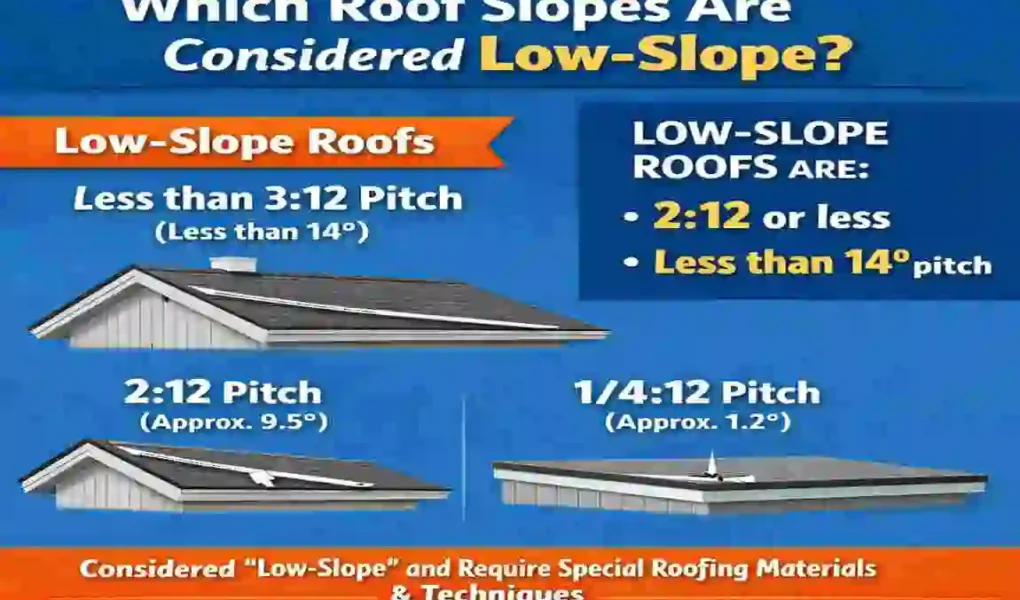
Wondering which of the following roof slopes is a low-slope: 2:12, 4:12, or 6:12? If so, you’re not alone! Understanding roof slopes is essential for homeowners, business owners, and construction professionals alike. The term “low-slope roof” refers to roofs with a pitch of 3:12 or less, meaning the roof rises 3 inches or less for every 12 inches of horizontal distance. This classification makes low-slope roofs distinct from steeper, more traditional roof designs.
But why does this matter? The slope of a roof impacts drainage, material selection, and overall costs. Low-slope roofs are common in commercial buildings and modern residential designs, offering unique advantages and challenges. For instance, they require specialized materials to prevent water pooling and ensure durability.
Defining Low-Slope Roofs
Core Definition
A low-slope roof is defined as having a pitch of 3:12 or less per the International Building Code (IBC). This means the roof rises no more than 3 inches for every 12 inches of horizontal run. While often confused with flat roofs, low-slope roofs are distinct. Flat roofs typically have a pitch of 0:12 to 2:12, while low-slope roofs range from 2:12 to 3:12.
To put this into perspective, a pitch of 3:12 translates to an angle of approximately 14 degrees. This slight incline is enough to facilitate drainage. Still, it requires careful design to avoid water pooling, which can lead to leaks and structural damage.
Pitch Notation Explained
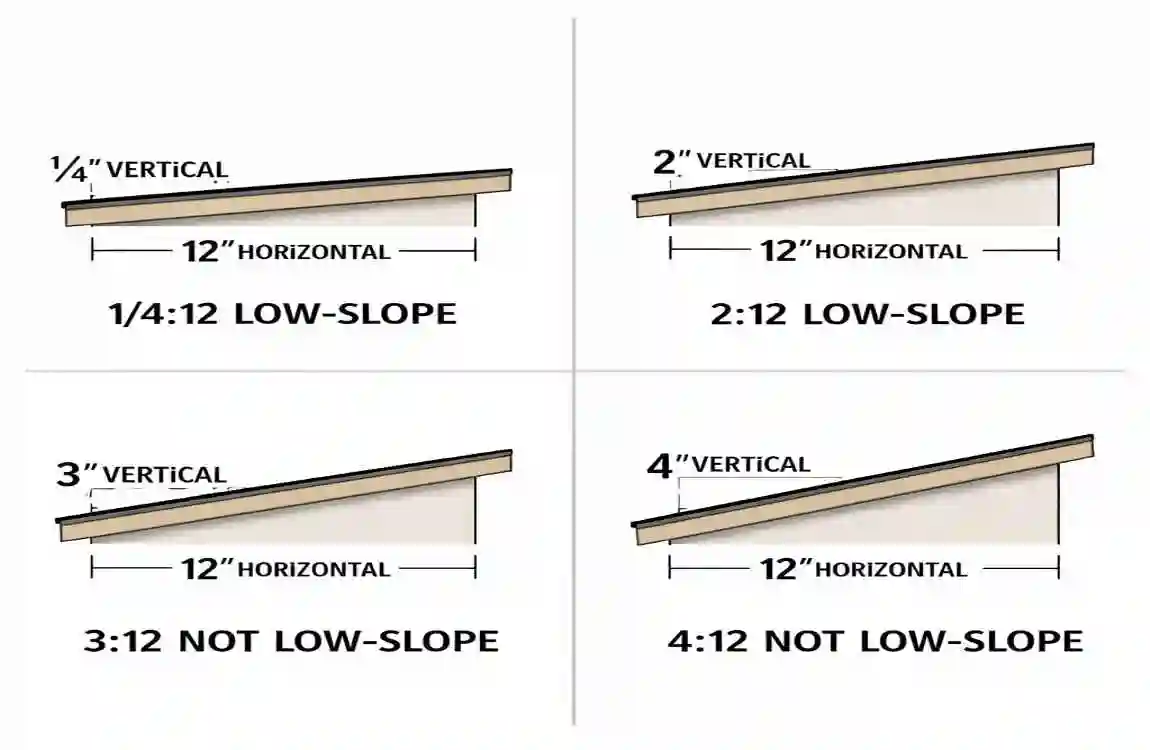
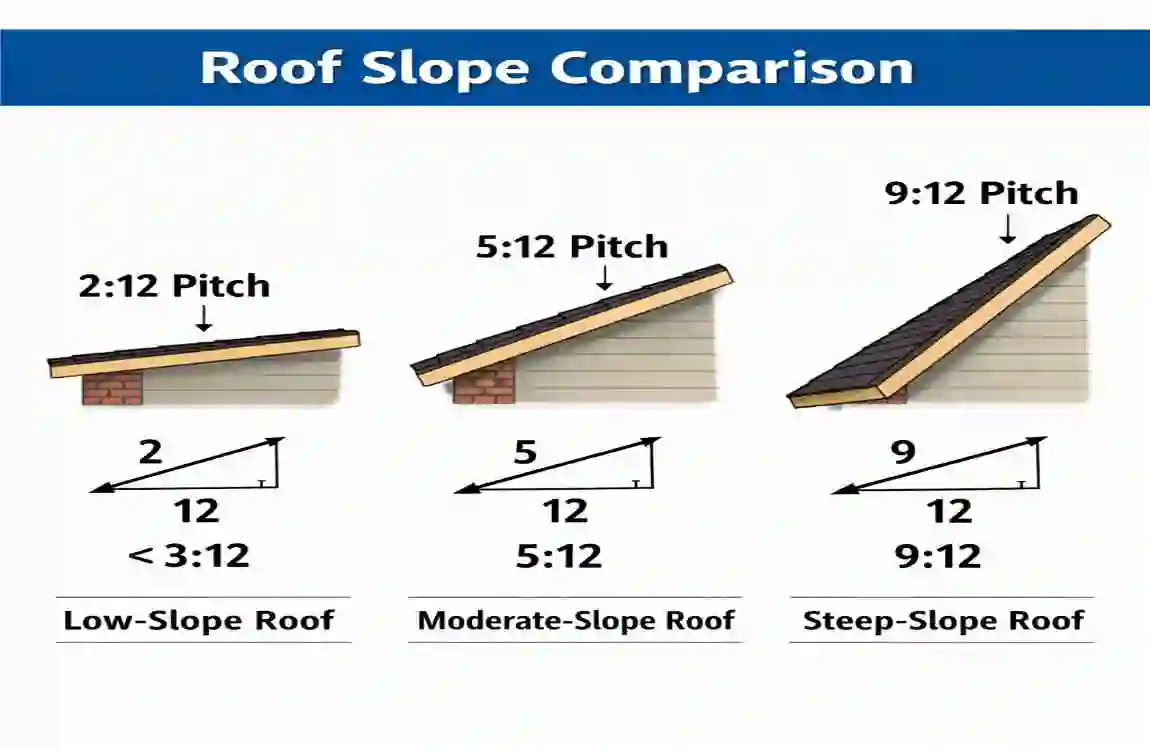
Roof pitch is expressed as a ratio of vertical rise to horizontal run. For example, a 3:12 pitch means the roof rises 3 inches for every 12 inches of horizontal distance. Here’s a breakdown of common pitch classifications:
Pitch RatioAngle (Degrees)Classification
0:12 – 2:12 0° – 9.5° Flat
2:12 – 3:12 9.5° – 14° Low-Slope
4:12+ 18°+ Steep-Slope
This table highlights the boundary between low-slope and steep-slope roofs. Visual aids, such as diagrams, can further clarify these distinctions, making it easier to identify roof types at a glance.
Building Code Standards
Key Codes (IBC/IRC)
Building codes play a crucial role in defining and regulating low-slope roofs. According to the International Building Code (IBC), a low-slope roof is any roof with a pitch of 3:12 or less. Additionally, the IBC mandates a minimum slope of 0.25:12 (¼ inch per foot) to ensure proper drainage. This is especially important in areas with heavy rainfall or snow.
However, regional variations exist. For example, wetter climates may require stricter drainage standards to prevent water accumulation. Compliance with these codes is essential for both safety and durability, so always consult local regulations when planning a roofing project.
Quiz-Style: Which Qualifies?
Let’s test your knowledge! Which of the following roof slopes is a low-slope?
- A) 1:12
- B) 5:12
- C) 7:12
Answer: A) 1:12. Roofs with a pitch of 3:12 or less are classified as low-slope.
Types of Low-Slope Roofs
Sub-Categories
Low-slope roofs can be further divided into sub-categories based on their pitch:
- Nearly Flat (0.25:12 – 1:12):
- These roofs are almost flat and typically use membrane systems like TPO or PVC for waterproofing.
- Moderate Low-Slope (2:12 – 3:12):
- These roofs have a slightly steeper slope and often use materials such as modified bitumen or built-up roofing (BUR).
Here’s a comparison of common roofing materials for low-slope roofs:
TypeIdeal PitchProsCons
TPO/PVC 0.5:12 – 3:12 Waterproof, reflective Seams need care
Built-Up Roofing 0.5:12 – 2:12 Durable , heavy, costly
Modified Bitumen 1:12 – 3:12 Flexible, easy to install , Shorter lifespan
Each material has its strengths and weaknesses, so choosing the right one depends on your specific needs and budget.
Pros and Cons of Low-Slope Roofs
Pros
- Cost-Effective: Low-slope roofs are generally more affordable to install, especially for large commercial buildings.
- Modern Aesthetics: Their sleek design complements contemporary architecture.
- Easier Installation: The gentle slope simplifies the installation process compared to steep roofs.
Cons
- Ponding Risk: Without proper drainage, water can pool on the surface, leading to leaks.
- Specialized Materials: Low-slope roofs require specific materials, such as membranes or coatings, to ensure waterproofing.
- Maintenance Needs: Regular inspections are crucial to prevent issues like ponding or seam failures.
Comparison: Low-Slope vs. Other Roof Types
Here’s how low-slope roofs stack up against steep-slope and flat roofs:
FeatureLow-Slope (≤3:12)Steep-Slope (≥4:12)Flat (≤0.25:12)
Drainage Moderate Excellent Poor w/o drains
Materials Membranes Shingles Built-Up
Cost per Sq Ft Lower Higher Lowest
This table underscores the unique characteristics of each roof type, helping you make informed decisions based on your priorities.
Installation and Maintenance
Installation Steps
- Measure the Pitch: Use a level and tape measure to determine the roof’s slope.
- Choose Materials: Select materials suited for low-slope roofs, such as TPO or modified bitumen.
- Ensure Drainage: install proper drainage systems to prevent water pooling.
Maintenance Tips
- Annual Inspections: Check for signs of wear, such as cracks or pooling water.
- Clean debris: Remove leaves and dirt to maintain proper drainage.
- Repair Seams: Address any issues with seams or flashing promptly.
FAQ Section
Which of the following roof slopes is a low-slope?
A roof with a pitch of 3:12 or less qualifies as a low-slope.
Can shingles be used on low-slope roofs?
No, shingles are not recommended for pitches below 3:12 due to drainage issues.
What materials are best for low-slope roofs?
TPO, PVC, and modified bitumen are popular choices for their durability and waterproofing properties.
Related Posts