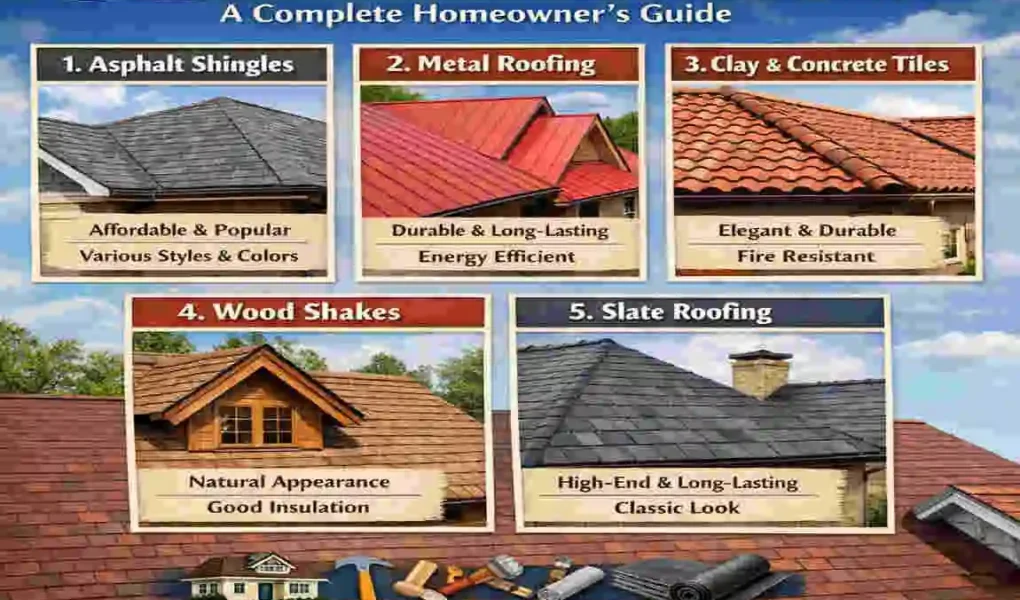
Are you looking up at your ceiling right now, worrying about that newly formed water stain? Or perhaps you are walking up your driveway, noticing that your house lacks the curb appeal it used to have. If you are preparing for a home renovation, you are likely asking yourself a very important question: What are the top 5 roofing materials available on the market today?
You are definitely not alone in this journey. Every single day, homeowners face the daunting task of replacing their roofs. It is a massive decision. Your roof is your family’s primary shield against the elements. It protects your loved ones, your belongings, and the structural integrity of your entire house. Depending on the material you select, your new roof can last anywhere from 20 years to well over a century! That is a decision that will significantly impact your home’s long-term value.
Did you know that asphalt shingles currently cover roughly 75% to 80% of all residential homes in the United States? They are a massive staple in the industry. However, they are far from your only option. As we move deeper into 2026, exciting advancements in building technology have made alternative materials more accessible, beautiful, and energy-efficient than ever before.
By the end of this guide, you will fully understand the cost per square foot, the expected roofing lifespan, and the vital pros and cons of each material. We are going to explore how your roof impacts your daily energy efficiency, your home’s aesthetic, and your wallet.
Are you ready to transform the top of your house into a durable, beautiful masterpiece? Let’s dive into the details. And remember, if you ever feel overwhelmed, you can always reach out to our roofing experts for a free, no-obligation quote!
| Material | Lifespan | Cost per sq ft (installed) | Key Pros | Best For | |
|---|---|---|---|---|---|
| Asphalt Shingles | 20-30 years | $4–$8 | Affordable, versatile | Budget homes | |
| Metal Roofing | 40-70 years | $10–$18 | Durable, energy-efficient | Hot climates | |
| Clay/Concrete Tile | 50-100 years | $12–$20 | Heat-resistant, stylish | Villas, monsoons | |
| Slate | 75-150 years | $18–$30+ | Lifetime durability | Luxury homes | |
| Wood Shakes | 30-50 years | $8–$15 | Natural aesthetic | Rustic styles |
The Top Roofing Materials Ranked
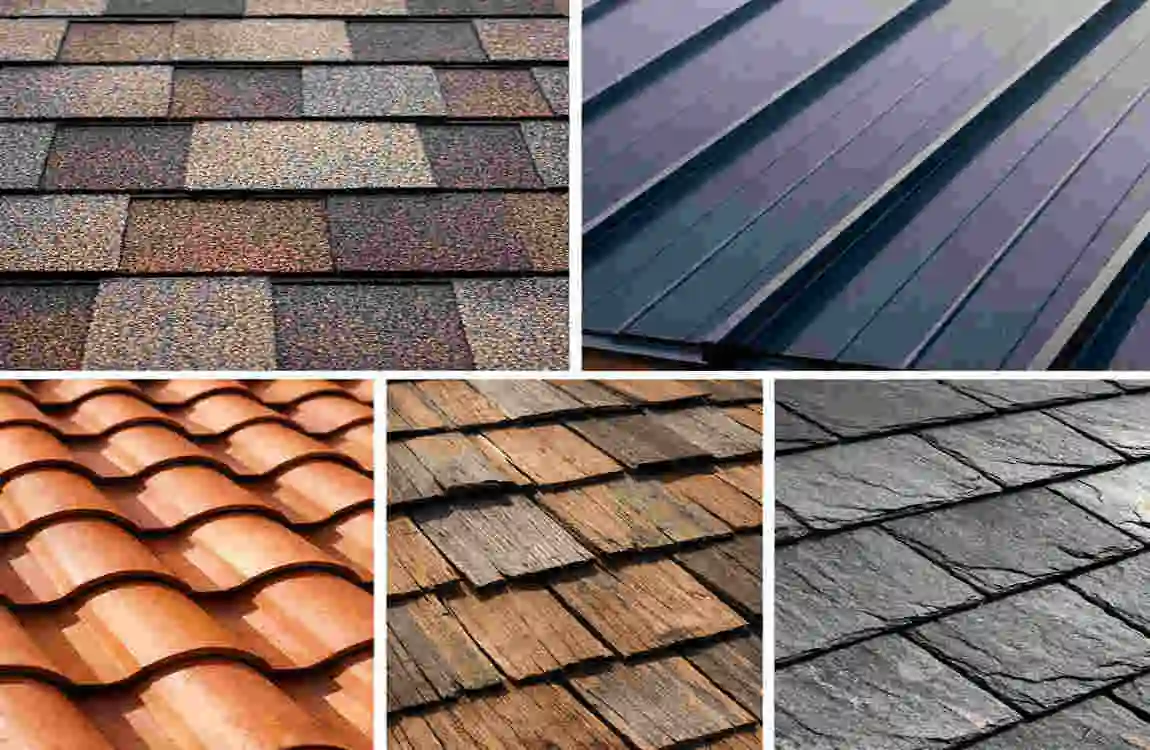
Before we dive into the deep details of each specific material, let’s look at the big picture. When contractors and architects talk about the best roofing materials for houses, they generally rank them based on overall consumer popularity, market demand, and accessibility.
Here is a quick, scannable breakdown of the top 5 materials dominating the residential market in 2026. This table will give you a bird’s-eye view of what to expect regarding lifespan, pricing, and safety.
Rank Roofing Material Average Lifespan Cost/sq ft (Installed)Fire Rating Best Fit For
Asphalt Shingles 20 – 30 years $4 – $8 Class A Budget homes, wide style variety
Metal Roofing 40 – 70+ years $10 – $18 Class A Maximum longevity, energy savings
Clay / Concrete Tile 50 – 100 years $12 – $20 Class A Hot climates, Mediterranean curb appeal
Natural Slate 75 – 150+ years $18 – $30+ Class A Luxury estates, historic properties
Wood Shakes 30 – 50 years $8 – $15 Class B / C Rustic aesthetics, eco-friendly builds
As you can see, there is a massive range in both price and performance. The “best” material isn’t necessarily the most expensive; it’s the one that perfectly aligns with your local climate, architectural style, and personal budget. Let’s break down exactly what makes each of these materials so popular.
Asphalt Shingles: The Undisputed Popularity Champion
If you step outside your front door and look down your street, there is a massive chance that almost every home you see is sporting an asphalt roof. Holding a staggering 75% market share, asphalt shingles are the undisputed kings of the residential roofing industry. But why are they so incredibly popular? It all comes down to their unbeatable blend of affordability, reliability, and visual versatility.
Types of Asphalt Shingles
When you shop for asphalt, you generally have two main choices.
The first is the 3-tab shingle. This is your basic, entry-level roofing material. These shingles lie completely flat against the roof, offering a clean, simple, and traditional look. They are the most affordable option, but they also have the shortest lifespan, typically maxing out around 20 years.
The second, and wildly popular option in 2026, is the architectural shingle (also known as a dimensional shingle). These are physically thicker and heavily layered. This layering creates beautiful depth and shadow lines on your roof, mimicking the look of expensive wood or slate. Because they are thicker, they boast a longer lifespan, easily pushing 30 years or more with proper care.
The Pros and Cons
The Pros: The biggest advantage is the price tag. They are incredibly affordable. Furthermore, because they are so common, any roofing contractor knows exactly how to install and repair them quickly. They are lightweight, meaning they don’t require expensive structural supports, and they come in over 100 different colors and styles to match any home’s exterior perfectly.
The Cons: Asphalt is not invincible. They have a shorter lifespan compared to premium materials, especially in areas with extreme, blistering heat or heavy, pounding hail. The intense sun can dry them out over time, causing the edges to curl. Additionally, because they are petroleum-based products, they are not the most eco-friendly option on the market.
Understanding the Cost Breakdown
In the roofing world, contractors measure roofs in “squares.” One roofing square equals exactly 100 square feet.
For asphalt, the raw materials typically cost between $1 to $3 per square foot. When you factor in the professional labor (which usually runs $3 to $5 per square foot), you are looking at a total installed cost of roughly $4 to $8 per square foot. Replacing a standard roof will cost you roughly $400 to $800 per square. It is the most budget-friendly way to protect your home.
Best Fit for Your Home
Asphalt shingles are an absolutely fantastic choice if you are dealing with variable weather, such as the shifting seasons or the American Midwest. They are the perfect fit for homeowners tackling budget renovations or preparing a house for a quick real estate sale.
Maintenance Tip: To get the most out of your asphalt roof, schedule an annual inspection. Make sure your gutters are clean, and gently trim back any tree branches that might be physically scraping the protective granules off the top of your shingles!
Metal Roofing: The Modern, Energy-Efficient Marvel
Taking the strong number two spot on our list of the top 5 roofing materials is metal roofing. If you still think metal roofs belong exclusively on old barns or commercial warehouses, it is time to update your thinking! Metal is the fastest-growing residential roofing trend for 2026, offering unmatched durability and sleek, modern aesthetics.
Types of Metal Roofing
The absolute premium choice in this category is a standing-seam metal roof. This beautiful design features long, continuous metal panels that run vertically from the top of your roof to the gutters. The panels interlock with raised seams that cleverly hide all the installation screws. Because there are no exposed screws, there is virtually no chance of water leaking through!
You can also find corrugated metal panels with a classic wavy look, and they are slightly more budget-friendly. Furthermore, manufacturers now produce stamped and painted metal shingles that perfectly imitate the look of traditional asphalt, clay tiles, or even wood shakes!
The Pros and Cons
The Pros: Longevity is the name of the game here. A quality metal roof will easily last 40 to 70+ years. You might never have to replace your roof again! They boast a Class 4 impact rating, making them practically immune to massive hail, and they can withstand hurricane-force winds.
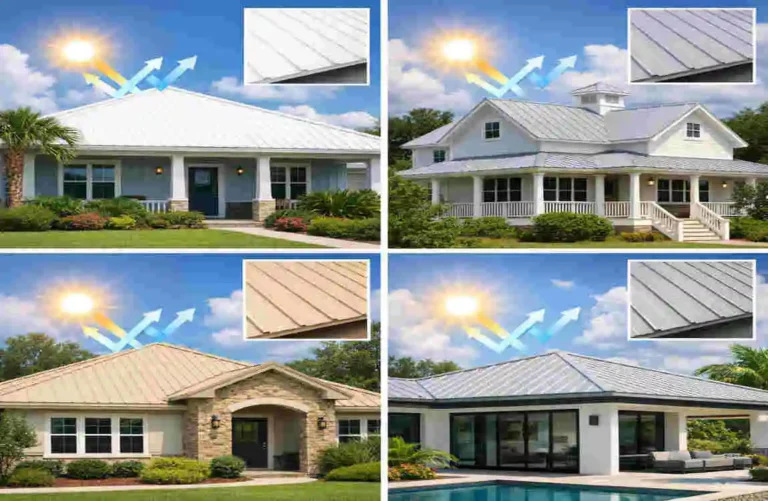
Even better, they utilize advanced “cool roof” technology. The metal is coated with specialized, highly reflective paints that bounce the sun’s radiant heat away from your house. This can save you 20% to 30% on your summer cooling bills. Finally, they are incredibly lightweight and eco-friendly, often made from highly recyclable materials.
The Cons: The primary drawback is the higher upfront cost. You have to be willing to invest more money on day one. Also, a common myth is that metal roofs are incredibly noisy during a rainstorm. While this can be true if installed directly over open framing, a properly installed metal roof over a solid wooden deck with good attic insulation is actually just as quiet as an asphalt roof. You do, however, need to hire highly specialized crews to install them, as the metal expands and contracts in the heat and must be fastened correctly to accommodate that movement.
Understanding the Cost Breakdown
Because of the premium materials and specialized artisan labor required, metal roofing comes with a higher price tag. You can expect to pay between $10 and $18 per square foot, fully installed.
While that number is higher than asphalt, you have to consider the Return on Investment (ROI) via its extreme longevity. Over 60 years, you might have to buy and install three separate asphalt roofs, but you would only ever need to buy one metal roof!
Best Fit for Your Home
Metal is an absolutely stellar choice for sleek, modern homes. It is incredibly beneficial in areas that face heavy monsoons or intense summer sun, making it a highly requested upgrade for modern homes. As a 2026 trend, we are also seeing seamless integration between standing seam metal roofs and modern solar panels, making them the ultimate choice for eco-conscious homeowners.
Clay or Concrete Tiles: The Mediterranean Masterpiece
When you close your eyes and picture a breathtaking, luxurious villa basking in the hot sun, you are almost certainly picturing a home crowned with a beautiful clay or concrete tile roof. This material dominates the luxury market in hot climates, offering a distinctive South Asian and Mediterranean aesthetic that no other material can replicate.
Types of Tile Roofing
Tile roofs generally fall into two distinct manufacturing categories.
Traditional Clay Tiles are literally made from the earth. Natural terracotta clay is molded into iconic sweeping “S” shapes and baked in massive kilns at incredibly high temperatures. This baking process locks in those gorgeous, rich, burnt orange and deep red earth tones that naturally resist fading in the sun.
Concrete Tiles offer a very similar aesthetic but at a slightly lower price point. They are molded from a heavy-duty mixture of cement, sand, and water. While they lack the natural rustic charm of baked clay, they can be artificially dyed into virtually any color you can imagine.
The Pros and Cons
The Pros: Tile roofs are built to outlast you. They boast an incredible lifespan of 50 to 100 years. Because they are made from earth and stone, they are completely fireproof (Class A rating) and entirely immune to rotting or insect damage.
Their biggest advantage, however, is their excellent heat and UV resistance. The curved tiles’ shape creates large air pockets between the roof deck and the hot sun. This natural ventilation barrier prevents blistering heat from ever entering your attic, drastically cooling your home and significantly boosting your property’s resale value.
The Cons: Weight is the massive elephant in the room here. Clay and concrete are staggeringly heavy. You cannot simply rip off an old asphalt roof and throw heavy tiles up there. You will likely need to hire a structural engineer and pay for expensive structural reinforcement to ensure your house doesn’t collapse under its own weight. Additionally, while they handle heat beautifully, the tiles can become brittle and crack if subjected to extreme, freezing winter temperatures (though this is rarely an issue in hot climates like ). Lastly, the installation is slow, highly specialized, and costly.
Understanding the Cost Breakdown
Because of the heavy materials and the intense labor required to lay each tile perfectly, the costs are high. You can expect to pay between $12 to $20 per square foot for a complete installation. If you opt for premium, imported terracotta clay, you will be looking at the higher end of that price spectrum.
Best Fit for Your Home
Tile roofing is the ultimate choice for sprawling luxury villas, Spanish-style architectures, and homes located in intense, baking climates. They are champions of energy efficiency in the heat. Eco-Note for 2026: If you love the look but want to be kinder to the planet, many manufacturers are now producing gorgeous concrete tiles with high recycled content!
Natural Slate Roofing: The Ultimate Luxury Benchmark
If you are asking what the top 5 roofing materials are with the absolute highest level of luxury and prestige in mind, the conversation begins and ends with natural slate. It is the ultimate luxury benchmark. Slate is not just a building material; it is a lifetime legacy that you leave on your home.
Types of Slate Roofing
True natural slate is not manufactured in a factory. It is a dense, natural stone quarried from the earth, hand-split by expert artisans into thin, durable slabs, and individually hung on your roof. Because it is created by nature, every single tile is unique, offering subtle variations in grays, greens, blacks, and purples.
In recent years, the market has also introduced synthetic slate. These are highly engineered tiles made from recycled plastics and strong rubbers, designed to mimic the look of natural stone perfectly. They are significantly cheaper and drastically lighter than the real thing.
The Pros and Cons
The Pros: Slate has no equal. It offers an astonishing lifespan of 75 to 150+ years. Many historic castles and churches in Europe are still protected by their original slate roofs! It features unmatched durability against the elements. It is solid stone, meaning it has a natural Class A fire rating, it will never absorb water, and it requires virtually zero day-to-day maintenance. Over the decades, it has developed an incredibly elegant, natural patina that only looks better with age.
The Cons: As you might expect, perfection comes at a massive price. It is the most expensive material on the market. Just like clay tiles, natural stone is exceptionally heavy, guaranteeing that you will need expensive structural reinforcements added to your home’s framing. You must also hire highly specialized, old-world artisans to install it, as the stone can easily crack if walked on incorrectly. It is also quite slippery when wet, making any future chimney repairs a dangerous task for standard handypersons.
Understanding the Cost Breakdown
You are paying for natural stone pulled from the earth and installed by masters of their craft. Prices reflect this prestige. Expect to pay between $18 to $30+ per square foot.
If you have a 2,000-square-foot roof, a natural slate installation could cost $60,000 or more. It is not a standard home repair; it is a massive financial investment.
Best Fit for Your Home
Slate is reserved almost exclusively for high-end properties, luxury custom builds, and the careful restoration of historic heritage homes. If you want a roof that will outlive your grandchildren and look breathtakingly beautiful every single day, slate is your answer.
Wood Shakes and Shingles: Classic, Natural Appeal
Rounding out our list of the top 5 roofing materials is the absolute warmest, most organic option available: natural wood. If you want your home to look like it grew organically out of the surrounding forest, wood shakes and shingles offer a classic, natural appeal that artificial materials cannot match.
Types of Wood Roofing
While the terms are often used interchangeably, there is a distinct difference between a wood shake and a wood shingle.
Wood Shingles are precisely sawn by huge machines on both sides. This creates a relatively smooth, clean, and highly uniform look that lies very flat against the roof deck.
Wood shavings, on the other hand, are traditionally hand-split from the wooden block. This splitting process creates a highly textured, thick, and rugged surface. Shakes create deep, dramatic shadow lines on your roof, offering a much more rustic, cabin-like aesthetic. Both are most commonly milled from premium cedar or redwood due to their natural resistance to rot.
The Pros and Cons
The Pros: A properly installed and maintained wood roof will comfortably last 30 to 50 years. Because wood is naturally porous, it acts as an excellent insulator, helping keep your attic warm in winter and cool in summer. It is highly eco-friendly because it comes from a 100% renewable resource. Finally, the aging process is beautiful; fresh cedar starts as a warm golden-brown and gracefully weathers into a distinguished, silvery-gray color over the years.
The Cons: Wood requires work. If you do not maintain it, it will fail. Without regular chemical treatments, wood is highly susceptible to the growth of green moss, mold in the rain, and the attraction of wood-boring insects. Furthermore, wood is inherently fire-prone. Unless heavily pressure-treated with advanced fire-retardant chemicals at the factory, wood roofs carry only a Class B or C fire rating, making them a risky choice in areas prone to dry wildfires.
Understanding the Cost Breakdown
Wood sits comfortably in the middle of the pricing pack. You can expect to pay between $8 to $15 per square foot for the materials and labor. However, if you live in a strict residential zone, you must pay extra to have the wood chemically treated with fire retardants, which can easily add an extra 20% to your total bill.
Best Fit for Your Home
Wood is the absolute perfect choice for cozy cottages, craftsman-style architectures, and homes located in mild, temperate climates. If you plan to install a wood roof in a highly humid environment, you must commit to a rigorous schedule of anti-fungal treatments to keep the rot at bay!
Comparison and Buying Guide: How to Choose
We have covered a massive amount of information. To make your decision easier, we need to compare these materials side by side.
Choosing the right material isn’t just about picking the prettiest color; it is a complex balancing act between your local weather, your bank account, and your home’s structural limits.
Here is a comprehensive Key Factors Table to help you instantly compare the top 5 roofing materials:
Decision Factor: Asphalt Shingles, Metal Roofing, Clay/Concrete Tile, Natural Slate, Wood Shakes
Overall Durability Medium High High Highest Medium
Upfront Cost Low Medium-High High Very High Medium
Climate Fit (Hot/Humid) Good Excellent Excellent Good Fair (Requires treatment)
Eco-Friendliness Fair High Medium High High
Maintenance and Longevity Tips
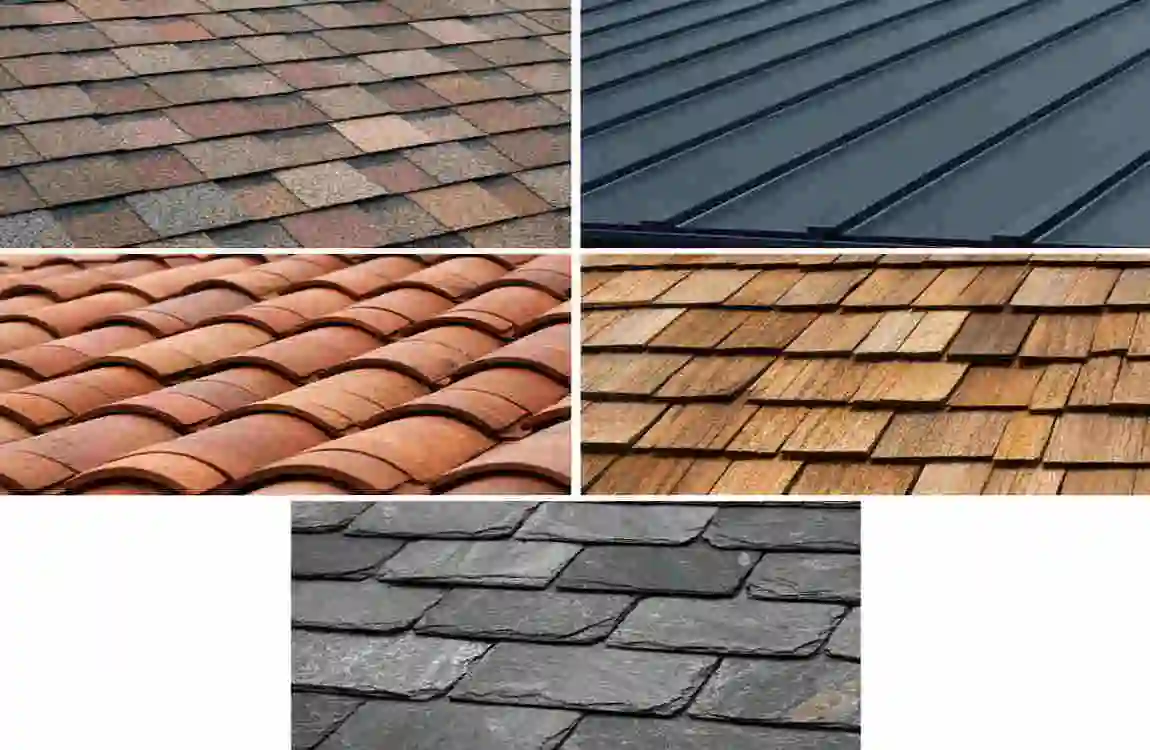
Choosing the right material is only half the battle. To ensure your new roof reaches its maximum expected lifespan, you have to take care of it. A roof is not a “set it and forget it” purchase.
Perform Annual Checks
Make it a habit to visually inspect your roof at least once a year, preferably in late autumn. You don’t even need a ladder; grab a good pair of binoculars and scan the roof from your lawn.
You are looking for obvious damage. Are there any cracked tiles? Are any asphalt shingles missing? Most importantly, take a close look at the flashing. Flashing refers to the thin metal strips installed around your chimney, skylights, and air vents. If this metal pulls away or rusts, water will immediately pour into your attic. Always keep your gutters completely clear of dead leaves to ensure water can drain away from the roofline quickly.
Extend the Life of Your Roof
If you have an older asphalt roof that is starting to look dry and brittle, you don’t necessarily have to replace it immediately. In 2026, you can utilize advanced rejuvenation treatments like RoofMaxx. Professionals spray a specialized, plant-based oil over your entire roof. The dry asphalt absorbs these oils, restoring their flexibility and waterproofing capabilities, potentially adding 5 to 10 extra years of life to your aging roof!
Knowing When to Replace
How do you know when it is finally time to pull the plug? If your roof is constantly springing leaks in multiple rooms, the underlying waterproof barrier has failed. For asphalt roofs, if you look in your gutters and see piles of sandy granules, it means the shingles have lost their sun protection (usually around 80% of the granules have been lost). When the granules are gone, the roof is dead.
A Hidden Financial Perk: If you decide to upgrade your failing roof to a premium material like metal or slate, call your home insurance provider immediately! Because these materials feature Class A fire ratings and Class 4 impact ratings, insurance companies heavily reward you. You could see a massive drop in your monthly insurance premiums simply because your home is now mathematically safer!
Frequently Asked Questions (FAQ)
To wrap up our ultimate homeowner guide, let’s quickly answer some of the most common questions people ask when exploring the roofing market.
What are the top 5 roofing materials? The top 5 most popular and reliable materials used for residential homes today are asphalt shingles, metal roofing, clay and concrete tiles, natural slate stone, and natural wood shakes.
What is the absolute cheapest roofing material I can buy? Asphalt shingles are overwhelmingly the cheapest option. Because they are mass-produced and can be installed quickly, they offer the lowest upfront cost for materials and professional labor.
Which roofing material is considered the most durable? Natural slate is the most durable roofing material on earth. Because it is solid, natural stone, a properly installed slate roof can easily last between 75 and 150+ years, surviving fire, hail, and extreme weather with ease.
Are metal roofs incredibly loud when it rains? No, this is a very common myth! When a metal roof is properly installed over a solid wooden roof deck and combined with standard attic insulation, it is no louder inside the house than a standard asphalt roof during a rainstorm.
Can I install a new roof over my old one? In some local municipalities, building codes allow you to install a lightweight metal or asphalt roof directly over a single layer of existing asphalt shingles. However, this is never recommended for heavy materials like clay or slate, and doing a full “tear-off” is always the safest route to inspect the wood deck underneath.
What does a “Class A” fire rating actually mean? A Class A fire rating is the highest safety rating a material can receive. It means the roofing material is highly resistant to catching fire, even if severe, burning embers from a nearby wildfire land directly on top of your house. Materials such as metal, tile, and slate naturally earn this top-tier rating.
Related Posts