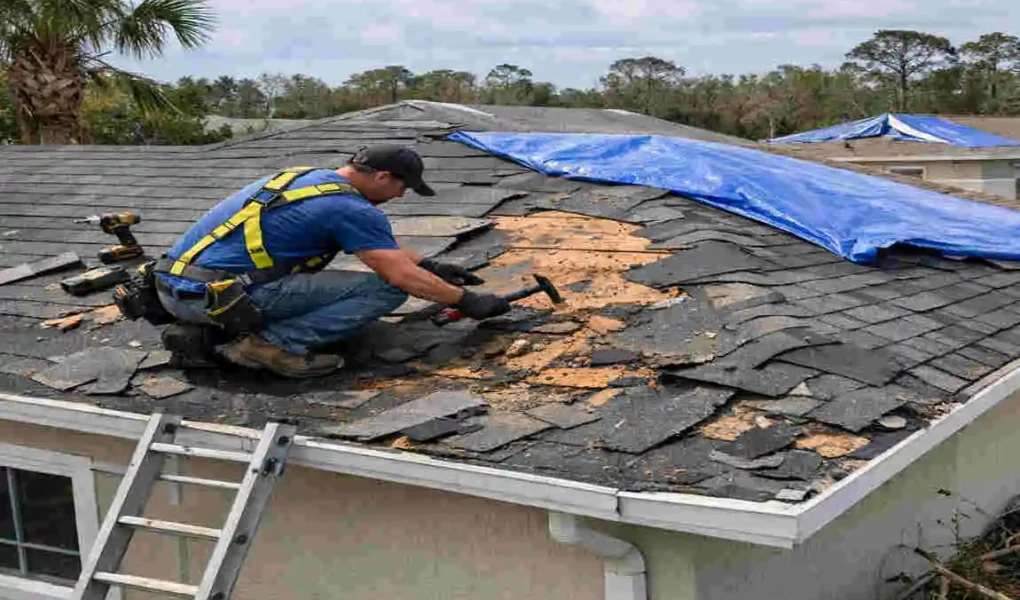
When a storm hits, your roof is often the first part of the home to take damage. In Port Charlotte, strong winds, heavy rain, and flying debris can quickly create problems. Even a roof that looks fine from the ground may have hidden damage.
If you are dealing with storm damage roofing in Port Charlotte, the most important thing is to act quickly but safely. A small issue can turn into a bigger one if water gets inside your home. That is why fast inspection, temporary protection, and the right repair plan matter so much.
Understanding Storm Damage Roofing in Port Charlotte
What storm damage roofing means
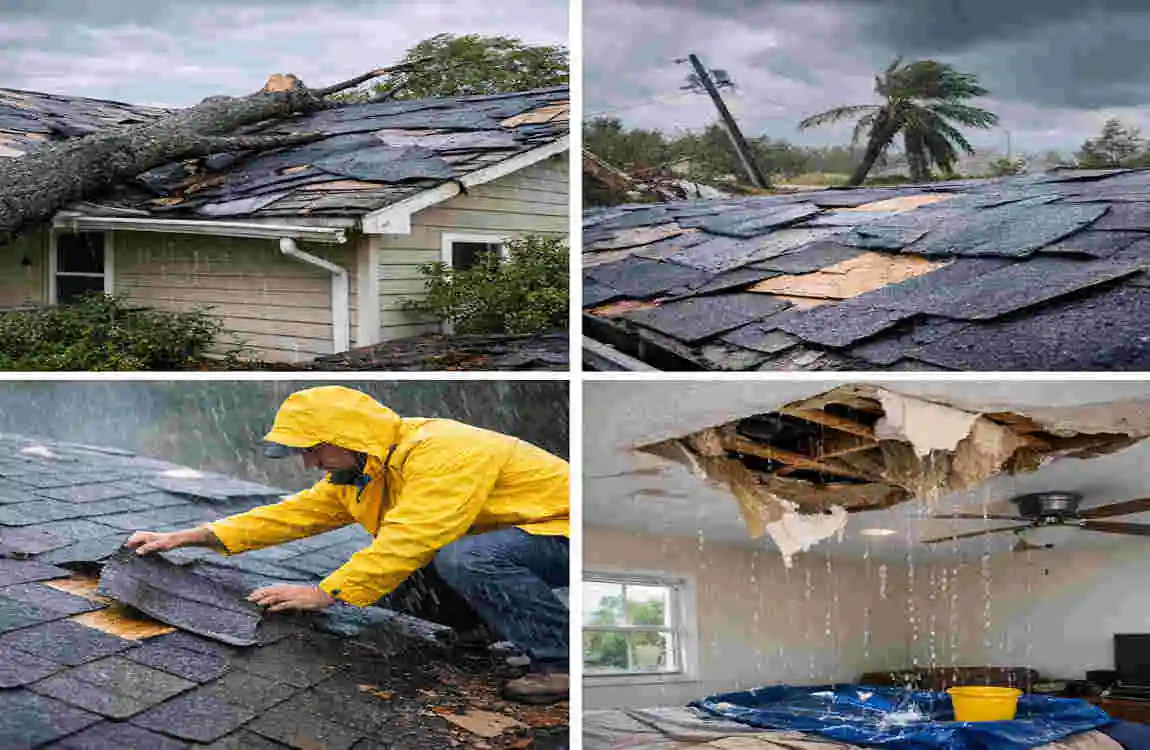
Storm damage roofing means damage caused by a weather event such as strong wind, heavy rain, hail, or falling objects. The roof may lose shingles, crack tiles, bend flashing, or start leaking.
In many cases, the damage is not obvious right away. You might only notice a stain on the ceiling, water in the attic, or a few loose pieces on the ground. That is why a careful check after every storm matters.
Common storms that affect Port Charlotte roofs
Port Charlotte weather can be tough on roofs. The biggest threats usually include:
- Hurricanes
- Tropical storms
- Severe thunderstorms
- Strong wind gusts
- Heavy rain
- Falling tree limbs and debris
Each storm type can damage roofing differently. Wind can lift materials, rain can slip into weak spots, and debris can break the surface.
How storms damage roofing
Storms damage roofs in a few common ways. Strong wind can loosen shingles or tiles. Heavy rain can push water into cracks or under lifted edges. Flying debris can hit the roof and cause direct impact damage.
Once the outer layer is damaged, water can move into the underlayment, attic, and ceilings. That is when a small roofing issue becomes a much larger home repair problem.
Why quick inspections matter
The sooner you inspect your roof, the sooner you can stop more damage. Even if the roof looks fine from the street, hidden damage may still be present.
A quick check helps you:
- Catch leaks early
- Prevent interior water damage
- Protect insulation and wood framing
- Support insurance claims
- Avoid bigger repair costs later
Minor vs. major roof damage
Minor damage may include a few missing shingles, small flashing problems, or debris impact with no leak. These repairs are often straightforward if caught early.
Major damage is more serious. It may involve large roof openings, widespread leaks, structural issues, or large sections of missing roofing. In those cases, you usually need emergency help.
Common Types of Storm Roof Damage
Missing or loose shingles
Shingles can lift, crack, or blow off during a storm. If they are missing, the roof underneath is exposed to water.
Loose shingles are also a warning sign because they may fall off later or allow moisture inside.
Cracked or damaged tiles
Tile roofs can chip, crack, or break from wind and debris. Even one damaged tile can create a path for water.
If you notice broken pieces on the ground, check the roof area above them.
Lifted roofing materials
Sometimes the roof material is still there, but it has been lifted away from the surface. This can happen with shingles, tiles, or metal sections.
Lifted areas are dangerous because wind and rain can easily get underneath them.
Damaged flashing
Flashing is the metal material around roof edges, chimneys, vents, and valleys. Storms can loosen it or bend it out of place.
When flashing fails, leaks often follow.
Roof leaks and water intrusion
A leak may show up as dripping water, ceiling stains, or attic moisture. Water can travel far from the actual roof opening, so the leak spot inside the house may not match the roof damage above it.
Gutter and downspout damage
Strong storms can knock gutters loose or fill them with debris. If gutters are damaged, water may not drain properly and can overflow near the roof edge.
That can lead to further roof and fascia problems.
Fallen branches and debris
Large branches can crack roof surfaces or damage vents and flashing. Even smaller debris can scrape away protective layers.
Always remove debris carefully to avoid causing more damage.
How to Inspect Your Roof After a Storm
Safe steps homeowners can take from the ground
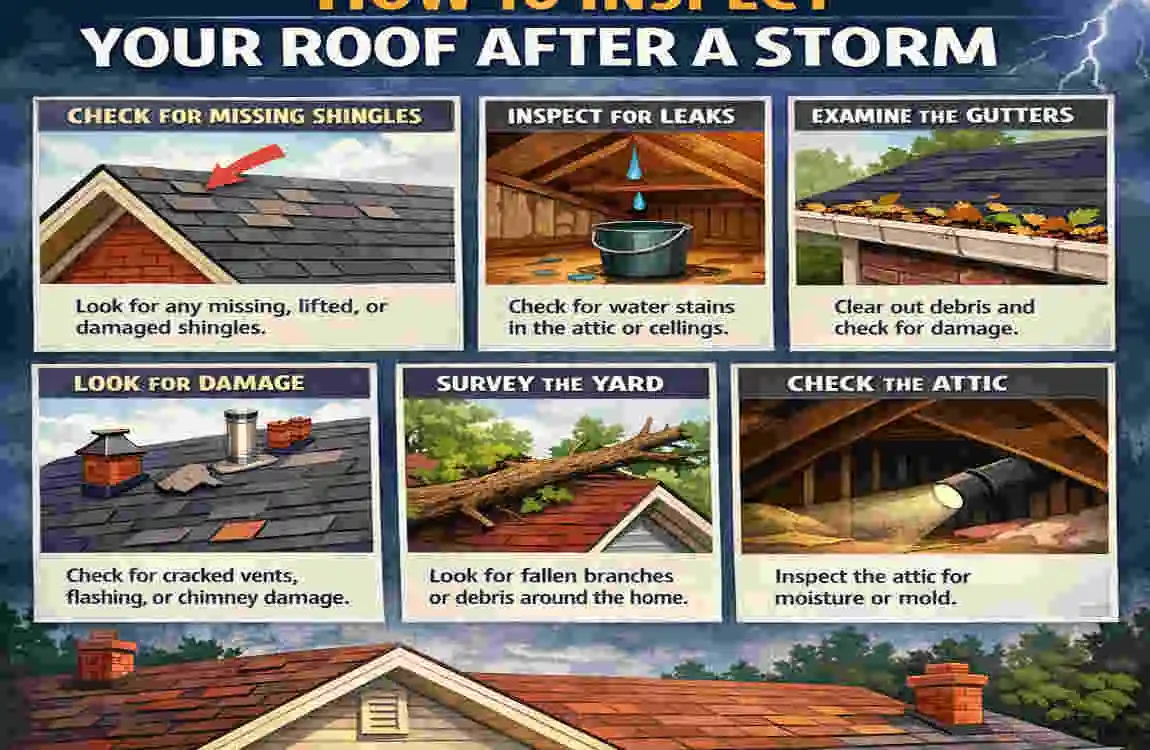
Never climb onto a damaged roof unless a professional tells you it is safe. Instead, start from the ground.
Walk around the home and look for:
- Missing shingles or tiles
- Debris on the roof
- Bent gutters
- Detached flashing
- Ceiling stains inside the house
- Water near windows or walls
Use binoculars if needed, but keep your feet on the ground.
Checking ceilings and attic areas for leaks
Inside the home, look at ceilings, upper walls, and the attic. Water stains, damp insulation, or a musty smell can all point to roof damage.
If you can safely access the attic, check for daylight coming through the roof boards. That can help you find an opening.
Why you should avoid climbing a damaged roof
Storm-damaged roofs can be slippery, weak, and unstable. Loose materials may shift underfoot.
It is much safer to let a trained roofer do the close inspection. They have the right equipment and know how to spot hidden issues.
When to schedule a professional inspection
Call a roofing professional if you see visible damage, hear dripping, or notice water stains inside the home. Also schedule an inspection after a major storm, even if the damage seems small.
Sometimes the biggest problem is the one you cannot see.
Storm Damage Roofing Inspection Checklist
Use this simple checklist after a storm.
Area to Check | What to Look For
Roof surface Missing, lifted, cracked, or broken materials
Shingles or tiles Gaps, loose pieces, or impact marks
Flashing Bent, lifted, or detached metal
Vents Cracks, movement, or openings
Gutters Denting, clogging, or pulling away from the roof
Soffits and fascia Water damage, cracks, or loose boards
Attic moisture Damp insulation, stains, or leaks
Interior water stains Ceiling marks or wall discoloration
Quick Repairs for Storm Damage Roofing in Port Charlotte
Temporary protection after roof damage
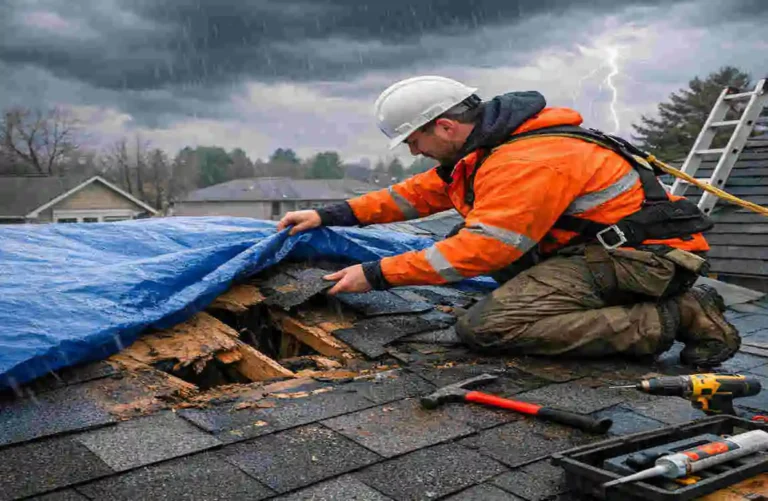
If the roof is leaking, temporary protection can help until full repairs begin. This doesn’t solve the problem completely, but it can limit further water damage.
Using a tarp to prevent water intrusion
A tarp is often used to cover damaged areas. It helps block rain from entering through openings or missing sections.
If you use a tarp, secure it properly. A loose tarp can blow away or cause more problems.
Removing dangerous loose debris
If branches or loose materials are sitting on the roof or near the home, remove them carefully from the ground if it is safe to do so.
Do not drag heavy debris across the roofing surface. That can cause additional damage.
Emergency leak-control steps
If water is coming inside, use buckets, towels, or containers to catch it. Move furniture and valuables away from the area.
You can also place plastic sheeting under active drips indoors to help reduce mess.
When temporary repairs are appropriate
Temporary repairs are useful when:
- Rain is still expected
- The roof has an open hole
- A contractor cannot arrive right away
- You need to reduce immediate interior damage
They are not a final fix. A permanent repair should follow as soon as possible.
Why permanent repairs should follow inspection
Once the roof has been inspected, the real repair can begin. That may include replacing shingles, sealing flashing, fixing tiles, or patching damaged underlayment.
A proper repair is the only way to restore long-term protection.
Emergency Roof Repair Situations
Emergency Issue What It Usually Means
Large roof openings Water can enter quickly and cause major damage
Active leaks The roof is no longer keeping water out
Missing roof sections Storm forces may have removed a large area
Structural damage The roof may be unsafe or weakened
Fallen trees or large branches Heavy impact may have damaged the roof frame
Damaged roof vents Openings may allow water and debris inside
If you see any of these problems, treat the situation as urgent.
Choosing a Storm Damage Roofing Contractor
What to look for in a contractor
You want a contractor who is local, experienced, licensed, and insured. Local experience matters because roofers in Port Charlotte understand common storm patterns and local roofing needs.
Questions to ask before hiring
Before you choose someone, ask clear questions about the damage, the repair plan, and the timeline. You should also ask whether they offer emergency service.
This helps you understand what is included and what to expect.
Checking licensing and insurance
Always confirm that the contractor is properly licensed and insured. This protects you if problems come up during the job.
It is a simple step, but an important one.
Getting a written estimate
Ask for a written inspection report and repair estimate. This should explain the damage, the recommended fix, and the expected cost.
Written details make it easier to compare contractors fairly.
Warning signs of unreliable roofing services
Be careful if a contractor:
- Pressures you to decide quickly
- Will not provide written details
- Avoids questions
- Gives a very vague estimate
- Has no local contact information
- Cannot show insurance or licensing
A trustworthy roofer will be clear and professional.
Questions to Ask a Roofing Professional
- What type of storm damage is present?
- Can the roof be repaired, or does it need replacement?
- What materials will you use?
- How long will the repair take?
- What temporary protection is needed now?
- Does a warranty cover the work?
These questions help you stay informed and avoid surprises.
Roof Insurance Claims After Storm Damage
Document the damage
Take clear photos and videos of the roof, gutters, ceilings, attic, and any fallen debris. Save these records before repairs begin if possible.
Good documentation can support your insurance claim.
Keep all repair paperwork.
Hold on to inspection reports, repair estimates, invoices, and receipts. These papers may be important later.
Contact your insurance company.
Report the damage as soon as possible. Your insurer may ask for photos, dates, a description of the storm, and a repair estimate.
Temporary repairs still matter.
If you need to protect the home before the claim is settled, make only temporary repairs first. Save the receipts for materials and emergency work.
Common claim mistakes to avoid
- Waiting too long to report damage
- Failing to take photos
- Starting major repairs too soon
- Ignoring hidden water damage
- Accepting an estimate without reading it carefully
A little organization can save a lot of stress.
Preventing Future Storm Damage to Your Roof
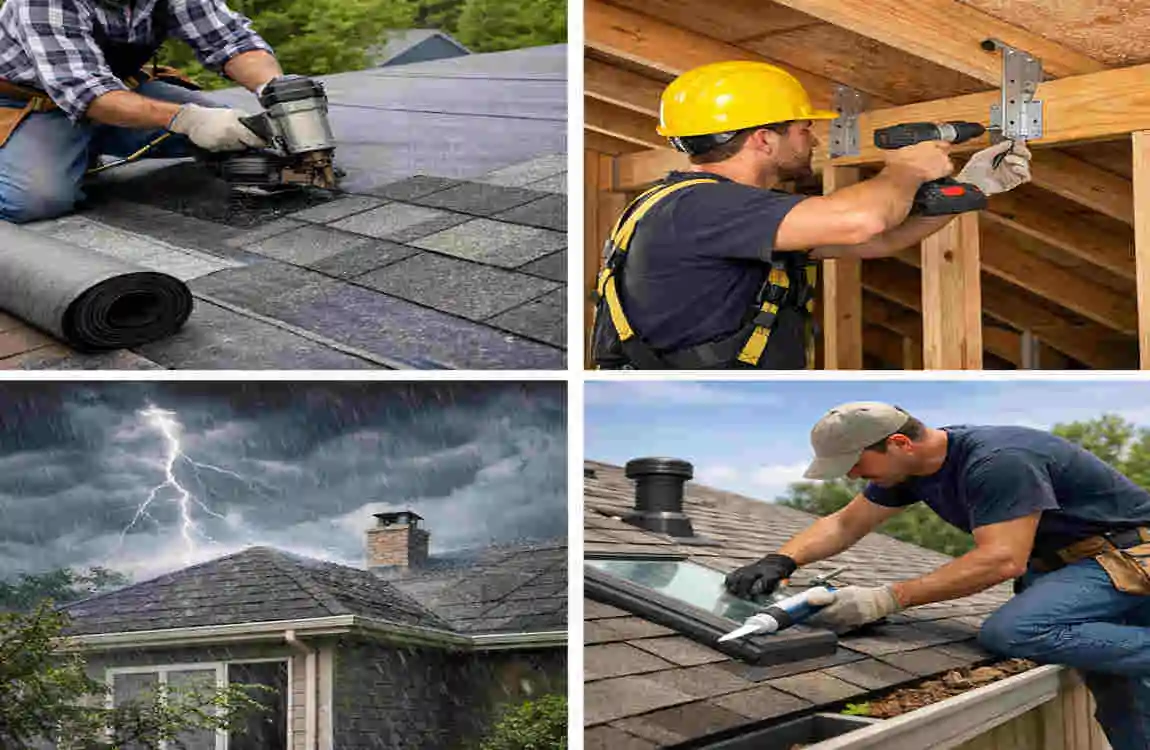
Regular roof inspections
Inspect your roof at least once or twice a year, and always after major storms. This helps you catch weak spots early.
Maintain gutters and drainage.
Clean gutters so water drains properly. Blocked gutters can overflow and damage the roof edge.
Trim nearby trees
Branches near the roof can break off in strong wind. Trimming them reduces the risk of impact damage.
Secure outdoor items
Loose patio furniture, yard tools, and decorations can become flying debris during storms. Put them away before bad weather arrives.
Check flashing and roof vents.
These are common weak points. If they become loose, leaks can start fast.
Prepare before storm season.
A little preparation goes a long way. Before storm season, check the roof, clean the gutters, and schedule maintenance if needed.
FAQ About Storm Damage Roofing in Port Charlotte
How do I know if my roof has storm damage?
Look for missing shingles, leaks, damaged flashing, debris, or water stains inside the home. If you are unsure, get a professional inspection.
What should I do immediately after a storm damages my roof?
Stay safe, inspect from the ground, document the damage, and arrange temporary protection if needed. Then call a roofer.
How much does storm damage roofing in Port Charlotte cost?
The cost depends on the size of the damage, the roofing material, labor, and whether any structural repairs are needed.
Can a damaged roof be repaired instead of replaced?
Yes, many storm-damaged roofs can be repaired if the damage is limited. A professional inspection will help decide.
How quickly should storm damage be repaired?
As soon as possible. Delaying repairs can lead to leaks, mold, and more expensive damage.
Does homeowners insurance cover storm-damaged roofs?
It often depends on the policy and the type of damage. Review your coverage and contact your insurer quickly.
| Topic | Short Information |
|---|---|
| Storm Damage Roofing | Strong winds, heavy rain, and flying debris can damage shingles, flashing, and roof structures. |
| Common Damage | Missing shingles, leaks, cracked tiles, damaged flashing, and clogged gutters. |
| Quick Inspection | Check visible roof areas, ceilings, attic spaces, and gutters for signs of damage. |
| Emergency Protection | Use a temporary tarp to help prevent additional water entry until repairs are completed. |
| Professional Repair | A qualified roofing contractor can inspect the roof and determine the required repairs. |
| Water Damage | Fast action can help reduce moisture damage to insulation, ceilings, walls, and interior finishes. |
Related Posts