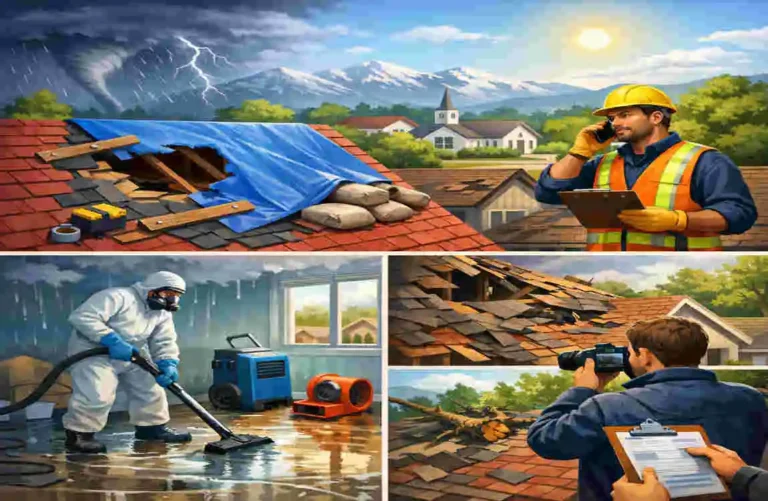
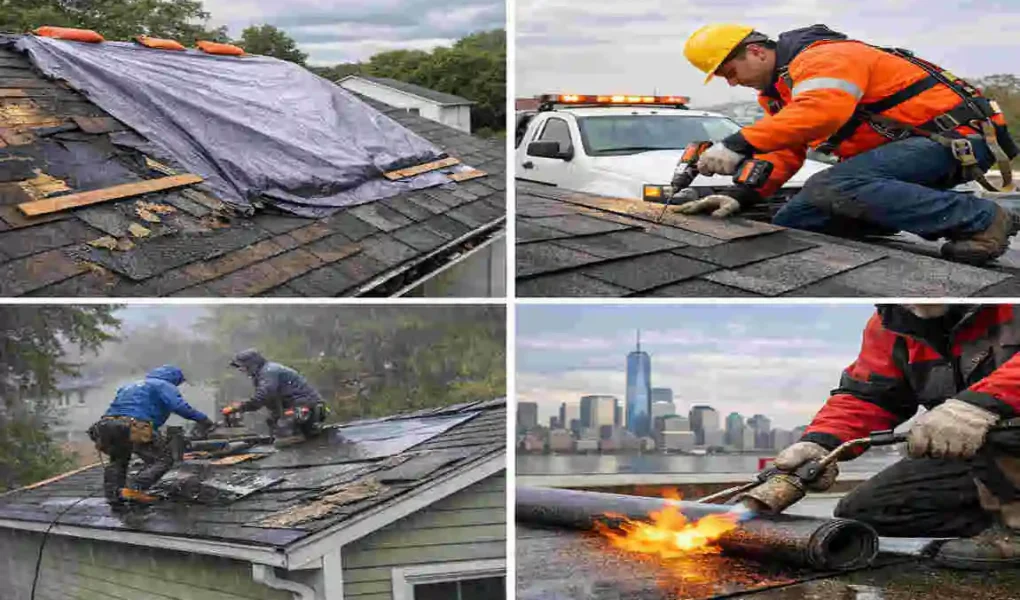
When people search for emergency roofing New Jersey, they usually need help fast. A roofing emergency is any roof problem that puts your home at risk right away. It may be a leak that is spreading water inside, storm damage that exposed the roof, or a tree branch that punched through the surface.
Treat a roof issue as urgent when it can quickly lead to water damage, mould, electrical problems, or structural issues. Even a small leak can become a much bigger repair if you wait too long.
Common Causes of Emergency Roof Damage in New Jersey
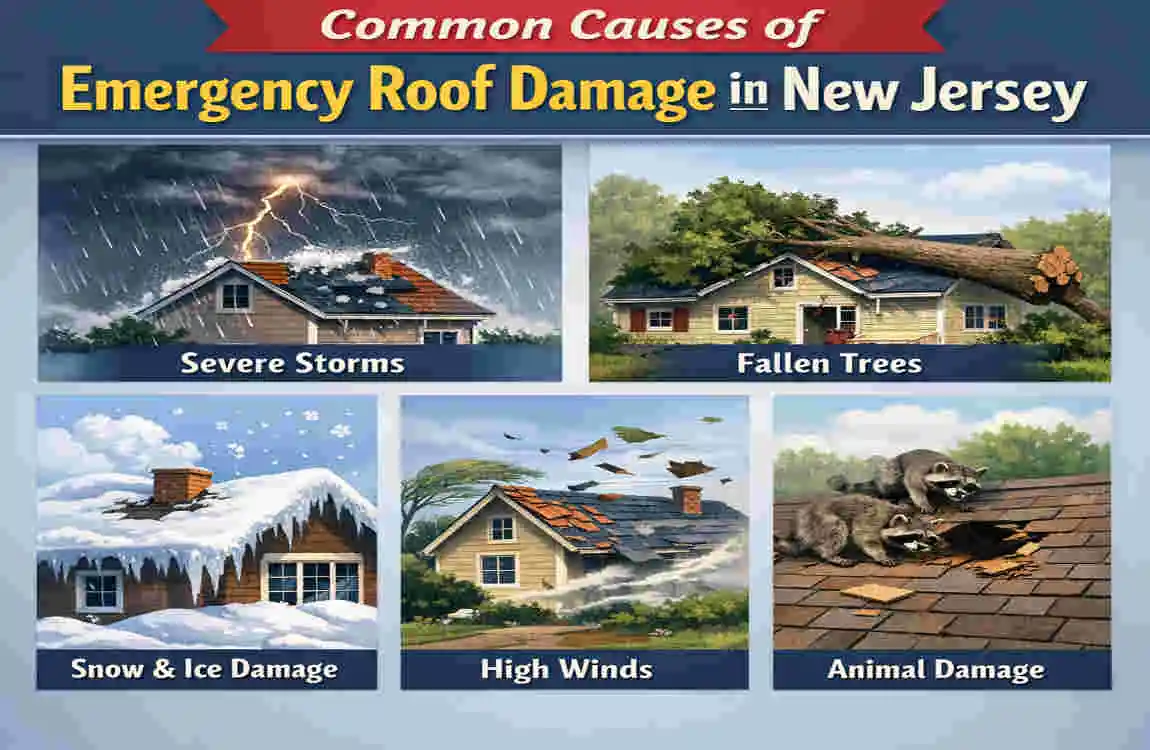
New Jersey weather can be rough on roofs. Storms, wind, snow, and ice all create real problems for homeowners.
Severe rain and thunderstorms
Heavy rain can force water into weak spots in the roof. If flashing is damaged or shingles are loose, leaks can start quickly.
High winds and missing shingles
Strong winds can lift or tear shingles away. Once that happens, the roof underneath is exposed to rain and moisture.
Snow, ice, and winter damage
In winter, snow and ice can put extra weight on the roof and create ice dams. These can trap water and push it under the roofing material.
Fallen branches and trees
Storms often knock branches onto roofs. In serious cases, an entire tree can fall and damage the roof deck.
Ageing materials and poor installation
Older roofs are more likely to fail during bad weather. Poor installation can also create weak points that lead to emergency repair calls later.
What to Do Immediately After Roof Damage
Put safety first
Your first job is to keep everyone safe. If you see major damage, stay out of the area and do not climb onto the roof.
Control indoor leaks
If water is coming inside, move furniture, electronics, and valuables away from the leak. Place buckets or containers under dripping water to help protect your floors.
Document the damage
Take photos and short videos from a safe place. This can help if you need to file an insurance claim later.
Use temporary protection if possible.
If it is safe to do so, you may cover a damaged area with a tarp or temporary barrier. But don’t attempt risky repairs during bad weather or on a steep roof.
Avoid common mistakes
Do not:
- Walk on a damaged roof
- Ignore small leaks
- Use random materials as a long-term fix
- Wait too long to call a roofer
If the damage is serious, contact an emergency roofing contractor right away.
How Emergency Roof Repair Works
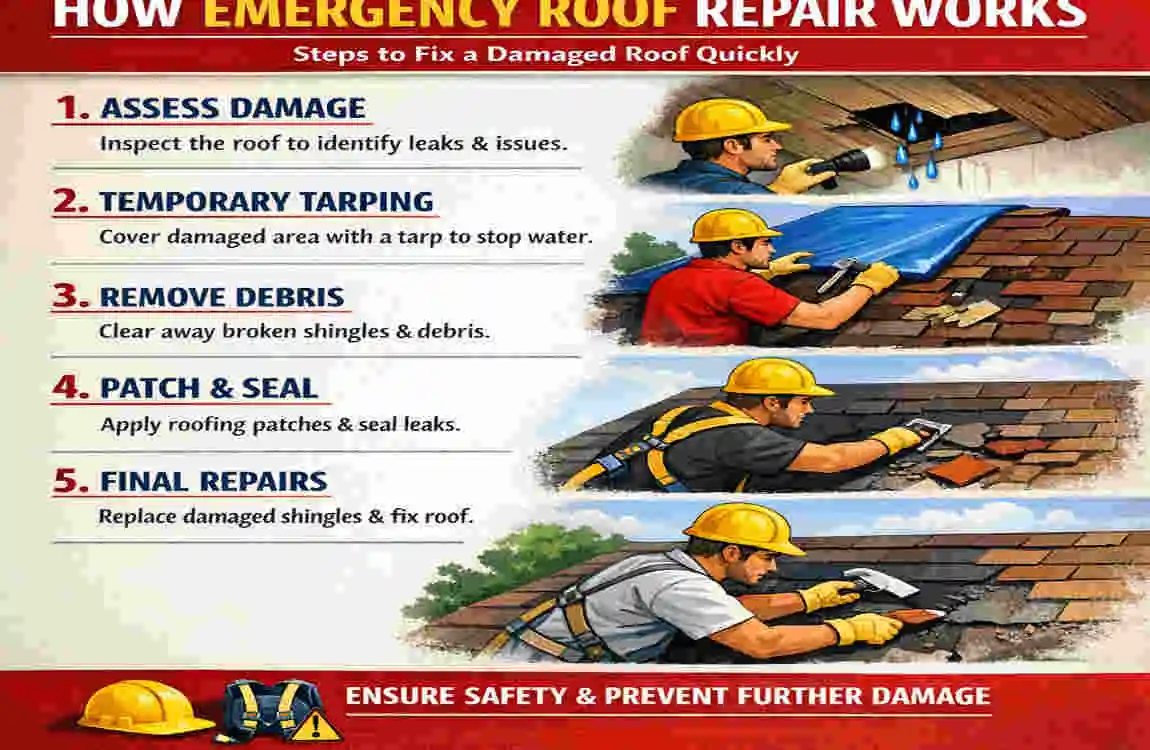
Initial inspection
A roofer usually starts by checking the visible damage and looking for the source of the leak. The water entry point is not always where the stain appears inside the house.
Temporary repair or tarping
If the roof cannot be fully repaired right away, the contractor may install a tarp or make a short-term patch. This helps stop more water from entering the home.
Permanent repair work
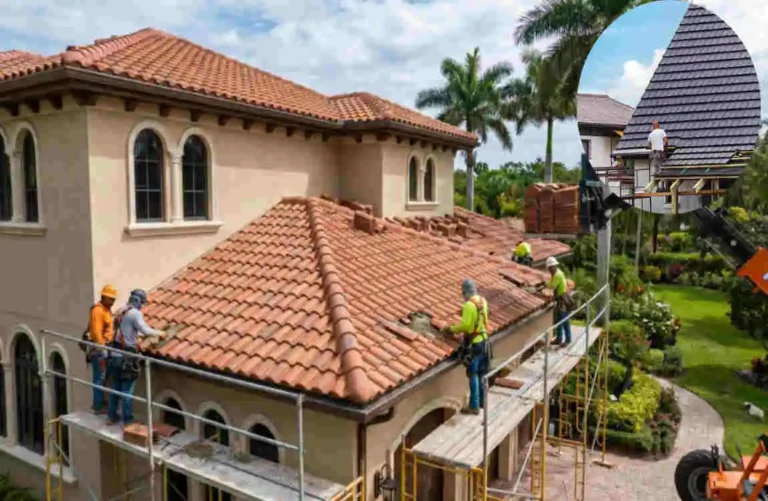
Once the area is safe and dry, the roofer may replace shingles, repair flashing, fix vents, or seal roof penetrations. If the damage is widespread, a full roof replacement may be the better choice.
Repair vs. replacement
A small, isolated problem may only need repair. But if the roof is old, worn out, or damaged in several places, replacement can save money over time.
Quick comparison table
SituationBest OptionWhy It Matters
Small leak Repair Faster and less expensive
Missing shingles Repair Prevents more water damage
Storm puncture Temporary + permanent repair Stops active exposure
Old roof with major damage Replacement Better long-term value
How to Choose an Emergency Roofing Contractor in New Jersey
What to look for
Choose a roofer who offers fast response, local experience, and clear communication. In an emergency, speed matters, but quality still matters too.
Questions to ask
Before hiring, ask:
- Do you handle emergency roof repairs?
- How soon can you come out?
- Are you licensed and insured?
- Will you give a written estimate?
- Is the repair temporary or permanent?
Warning signs
Be careful if a contractor:
- Gives vague answers
- Refuses to show credentials
- Pressures you to decide immediately
- Will not explain the repair plan
- Offers a price that seems too low
A good emergency roofer should be clear, calm, and professional.
Emergency Roofing Costs, Insurance, and Prevention
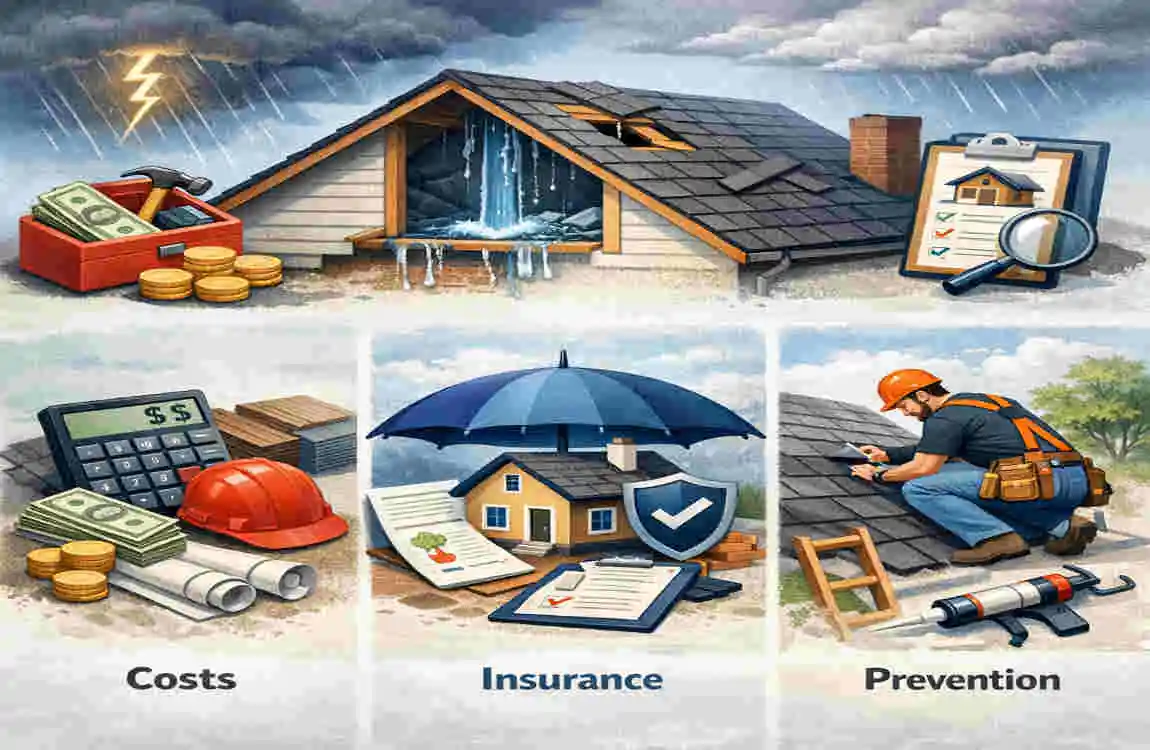
What affects repair cost?
The price depends on:
- Damage severity
- Roof size
- Materials needed
- How easy the roof is to access
- Whether the repair is temporary or permanent
A small emergency patch costs less than major storm repair or full replacement.
Insurance coverage
Homeowners insurance may cover storm-related roof damage, depending on your policy. That is why documentation matters. Save photos, notes, and any contractor reports.
How to reduce future emergencies
Regular roof care can lower the chance of sudden problems. Simple steps help a lot:
- Inspect the roof after storms
- Clean gutters
- Replace damaged shingles quickly
- Check flashing and vents
- Schedule seasonal roof maintenance
New Jersey seasonal tips
Before winter, make sure your roof is ready for snow and ice. After strong summer storms, check for wind damage and missing shingles. These small checks can help you avoid bigger emergencies later.
Emergency Roofing New Jersey: FAQ
What is considered a roofing emergency?
A roofing emergency is any problem that lets water in, exposes the roof, or creates immediate risk to your home.
How quickly should a roof leak be repaired?
As soon as possible. Even a small leak can cause more damage if you wait.
How much does emergency roofing cost in New Jersey?
It depends on the damage, materials, and repair type. Temporary fixes cost less than major repairs.
Can a roofer repair a roof during rain?
Sometimes only temporary protection is possible during rain. Full repairs usually wait until conditions are safer.
What should I do if a tree falls on my roof?
Stay away from the area, protect the inside of the home, and call an emergency roofer right away.
Does homeowners insurance cover emergency roof repairs?
It may, especially if the damage came from a storm or sudden event. Check your policy and document everything.
Can missing shingles cause serious roof damage?
Yes. Missing shingles leave the roof exposed to water, wind, and further damage.
| Topic | Quick Information |
|---|---|
| Emergency Roofing | Fast roof repair for leaks, storm damage, missing shingles, and structural issues |
| Common Emergencies | Roof leaks, fallen trees, wind damage, hail damage, damaged flashing, and missing shingles |
| First Step | Inspect the visible damage safely and contact a professional roofer |
| Temporary Fix | Use a properly secured tarp or temporary roof covering until repairs are completed |
| Water Damage | Check ceilings, walls, insulation, and attic areas for signs of moisture |
| Winter Problems | Ice dams, heavy snow, freezing temperatures, and storm damage can create urgent repairs |
| Repair Cost | Costs vary based on roof type, damage severity, materials, accessibility, and labor |
| Professional Help | Choose a licensed, insured, and experienced New Jersey roofing contractor |
| Prevention | Schedule inspections, clean gutters, maintain flashing, and replace damaged shingles |
| Best Response | Address roof damage quickly to reduce water intrusion and prevent more expensive repairs |
Related Posts