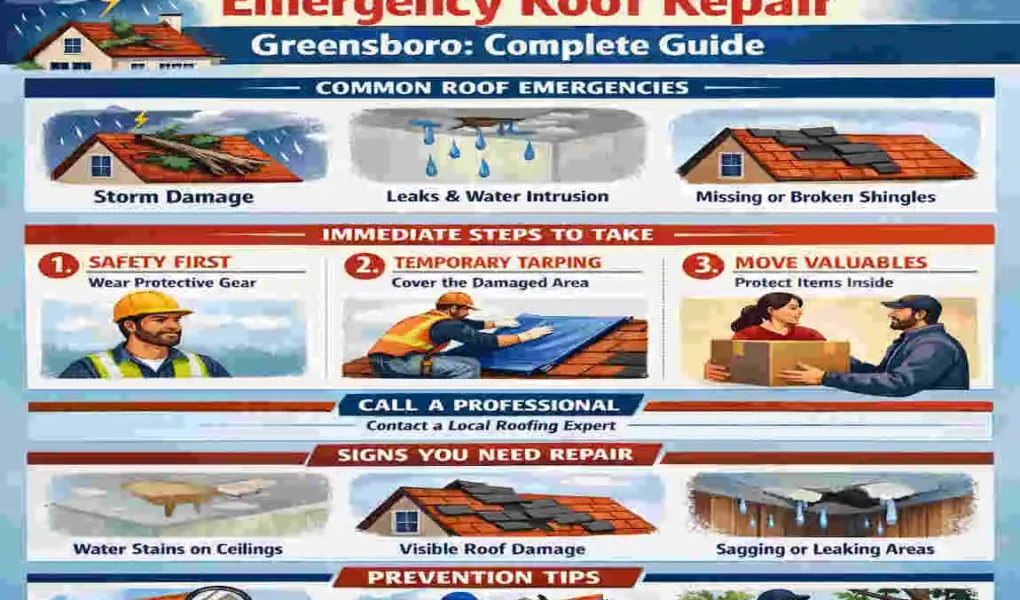
If you live in Greensboro, a roofing problem can turn serious very quickly. A small leak after a storm can spread into ceilings, walls, insulation, and even the roof structure itself. That is why emergency roof repair in Greensboro matters so much to homeowners.
A roof emergency is not just about water dripping inside. It can also mean missing shingles, storm damage, a fallen tree, or a roof area that is no longer safe. In those cases, fast action can help limit damage and reduce repair costs.
Emergency Roof Repair Greensboro: What Counts as a Roofing Emergency?
What makes roof damage an emergency?
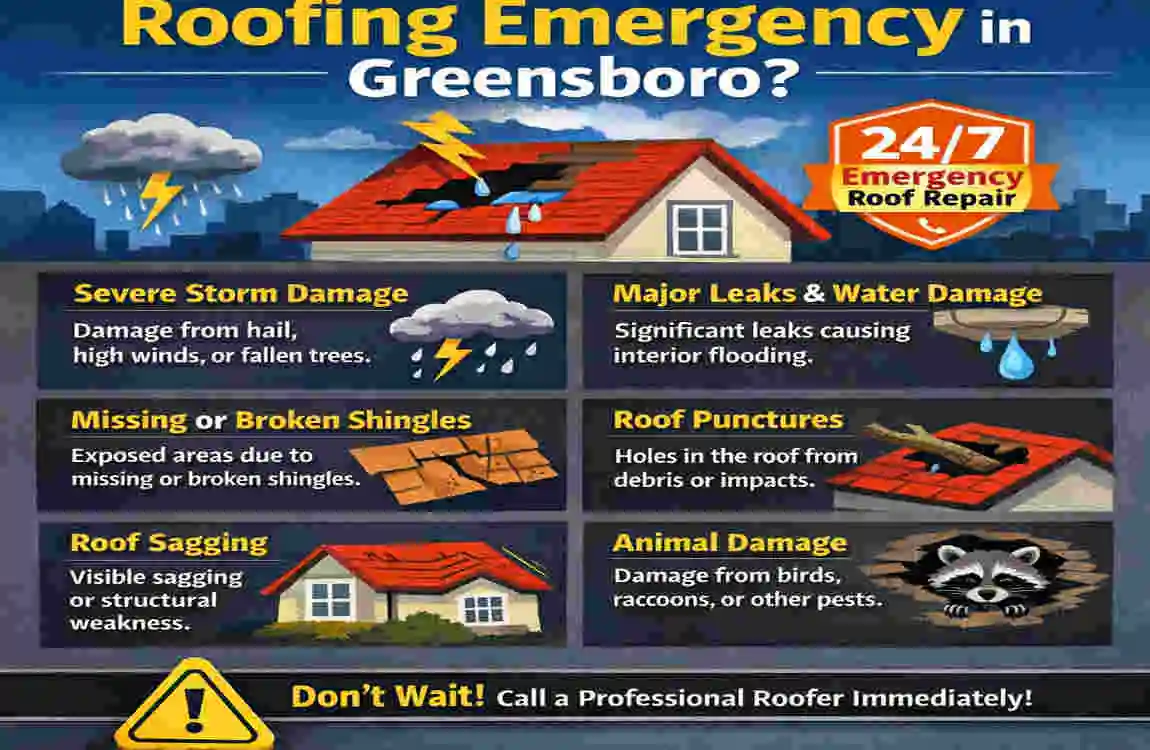
A roof problem becomes an emergency when it puts your home at immediate risk. That risk may involve water damage, structural damage, or safety concerns.
If water is entering your home, a tree has hit the roof, or part of the roof is sagging, treat it as urgent. Waiting often makes the damage worse.
Common emergency roofing problems
Some of the most common issues include:
- Severe roof leaks
- Missing or wind-damaged shingles
- Fallen trees or branches
- Hail damage
- Damaged flashing
- Roof punctures
- Sagging roof sections
- Water reaching ceilings, walls, or the attic
These problems can spread fast, especially during storms or heavy rain.
Emergency repair vs. routine maintenance
Routine maintenance is planned work, like replacing old shingles or cleaning gutters. Emergency repair is different. It happens when a sudden problem needs immediate attention to protect the home.
If you are not sure which one you have, ask yourself one simple question: Is my home still protected from water and weather right now? If the answer is no, it is likely an emergency.
Common Causes of Emergency Roof Damage in Greensboro
Severe weather
Greensboro weather can bring heavy rain, strong winds, and storm debris. These conditions can loosen shingles, damage flashing, and create leaks.
Storms often cause the biggest roofing emergencies because the damage happens fast and can affect many parts of the roof at once.
Aging roofing materials
Old roofs are more likely to fail during bad weather. Shingles can crack, curl, or become brittle over time.
Even a small storm can cause serious trouble if the roof was already weak.
Falling trees and branches
Tree damage is one of the most obvious emergencies. A branch can puncture the roof, break shingles, or damage the structure underneath.
In these cases, safety comes first. The roof may be unstable, and parts of the home may be unsafe to enter.
Hidden damage signs
Not all roof damage is easy to see. Watch for:
- Water stains on ceilings
- Damp attic insulation
- Musty smells
- Peeling paint
- Drips near lights
- Visible daylight in the attic
- Lifted or missing shingles
These signs often mean the roof has already been compromised.
What to Do During a Roofing Emergency
Stay calm and stay safe.
First, avoid panic. The second step is to protect people inside the home.
If the damage is severe, move away from the affected area. If water is near electrical fixtures or outlets, use caution and turn off power only if it is safe to do so.
Protect your home from more damage.
Use buckets, towels, or containers to catch active leaks. Move furniture and valuables away from the damaged area. If possible, place something under the leak to reduce floor damage.
These steps do not fix the roof, but they can help reduce interior damage.
Do not climb onto the roof.
A damaged roof can be slippery, unstable, and dangerous. Even if the problem looks small from the ground, it may be worse up close.
For that reason, avoid inspecting or repairing major damage yourself.
Take photos and call a professional
Document the damage with photos or video if it is safe to do so. This can help with repair planning and insurance claims.
Then contact a qualified emergency roofing professional as soon as possible.
Temporary Roof Protection
Emergency tarping
A properly installed tarp can help protect your home until permanent repairs are made. It is often used after storms or tree damage.
This is a temporary solution, not a final fix. It helps keep more water out while you wait for repair work.
Temporary leak control
Small interior leak control measures, like catching water or protecting surfaces, can help in the short term. But they should never replace actual roof repair.
Why temporary fixes are not enough
Temporary protection buys time. It does not solve the root problem. If you stop at a tarp or sealant, the roof may fail again later.
That is why permanent repair should follow as soon as conditions allow.
Emergency Roof Repair Greensboro: Professional Inspection and Repair Process
What a roofing professional usually does
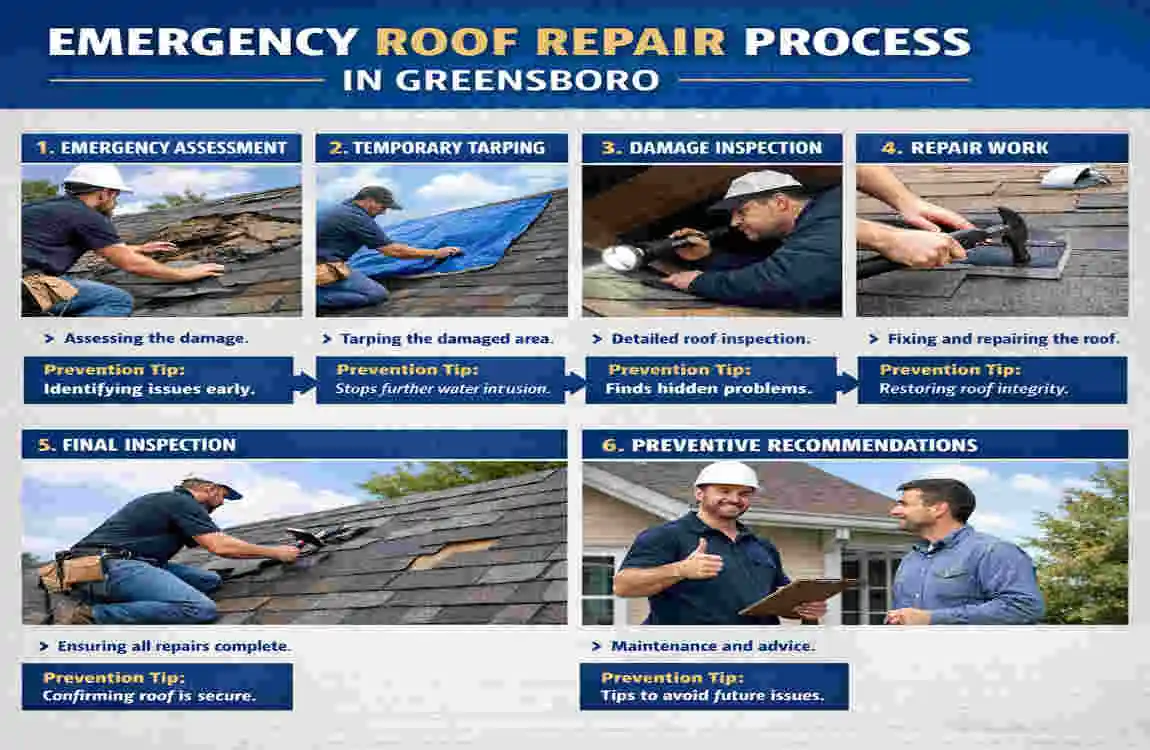
A roofing contractor will usually start with an emergency inspection. They look for the source of the leak, the damaged materials, and any structural concerns.
They may check:
- Shingles
- Flashing
- Gutters
- Vents
- Roof decking
- Attic and interior areas
This helps them understand the full extent of the damage.
Temporary stabilization
If needed, they may install a tarp or other temporary protection first. This reduces immediate risk while they prepare a more complete repair plan.
Permanent repair
Once the contractor understands the damage, they can complete the needed repairs. That may include replacing shingles, fixing flashing, repairing decking, or addressing drainage problems.
Repair vs. replacement
Sometimes a repair is enough. Other times, the roof may be too damaged or too old to repair safely and effectively.
A replacement may be recommended if:
- The roof is very old
- Damage is widespread
- Multiple repairs have already been done
- Structural damage is severe
How Much Does Emergency Roof Repair in Greensboro Cost?
What affects the cost
Emergency roof repair costs can vary a lot. The price depends on:
- Type of damage
- Roof size
- Roof material
- How hard it is to access
- Labor needed
- Temporary or permanent repair needs
- After-hours or storm response
A small leak repair usually costs less than major storm damage or structural work.
Insurance and roof damage
Homeowners insurance may help with some emergency roof damage, especially if a storm, wind, or fallen tree caused it. But coverage depends on the policy and the cause of the damage.
It is smart to:
- Document the damage
- Keep repair receipts
- Review your policy
- Ask the insurer what is covered
Do not assume every repair will be paid for. Check first if you can.
How to Choose an Emergency Roofing Contractor in Greensboro
What to look for
Choose a contractor with real emergency roof experience. You want someone who understands fast response, temporary protection, and permanent repair.
Look for:
- Local experience
- Insurance and licensing
- Good customer reviews
- Clear communication
- Written estimates
- Storm damage knowledge
Preventing Future Roof Emergencies in Greensboro
Regular maintenance helps
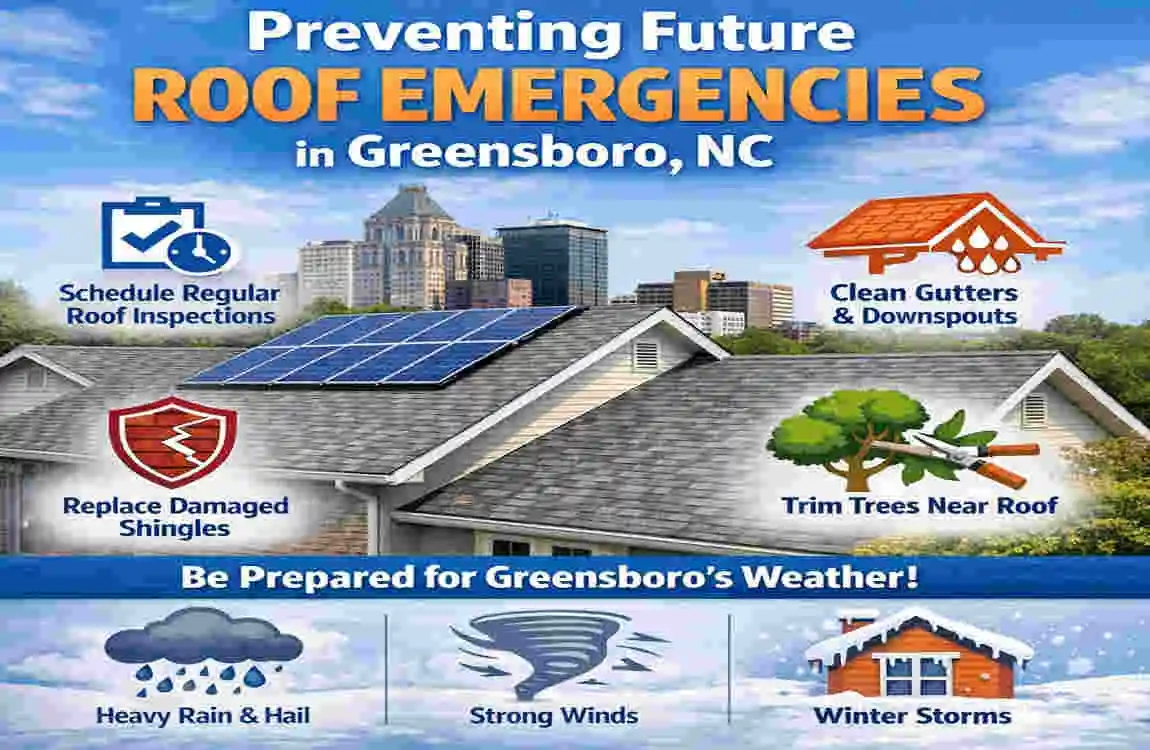
The best way to avoid roof emergencies is to catch problems early. Regular inspections can reveal weak shingles, worn flashing, or drainage issues before they turn serious.
Seasonal checklist
Here are a few simple habits:
- Spring: inspect for storm damage
- Summer: check for heat wear and loose materials
- Fall: clean gutters and trim branches
- Winter: look for leaks and moisture
- After storms: check the roof right away
Small repairs matter
A small leak or loose shingle may not seem urgent, but it can become a big problem fast. Fixing little issues early is usually cheaper and easier than waiting.
FAQ About Emergency Roof Repair Greensboro
How quickly should I repair a leaking roof?
As soon as possible. A leak can spread into insulation, drywall, and wood structure very quickly.
What is considered an emergency roof repair?
Major leaks, storm damage, fallen trees, missing roofing materials, and anything that leaves the home exposed.
Can I temporarily fix a roof leak myself?
You can protect the inside of your home, but do not climb on a damaged roof yourself.
Does homeowners insurance cover emergency roof repairs?
Sometimes, but it depends on the policy and the cause of the damage.
Should I repair or replace my roof?
That depends on the roof’s age, the damage level, and its overall condition.
Can a roof be repaired during bad weather?
Temporary protection may be possible, but permanent repairs are often safer once conditions improve.
What should I do if a tree falls on my roof?
Stay away from the damaged area, document the damage if safe, and call a roofing professional right away.
How can I prevent future roofing emergencies?
Inspect your roof regularly, clean gutters, trim branches, and repair small problems quickly.
| Topic | Quick Information |
|---|---|
| Common Roof Emergencies | Leaks, storm damage, missing shingles, fallen branches, and damaged flashing |
| First Step | Inspect the area safely and identify where water or damage is entering |
| Emergency Protection | Use a tarp or temporary covering to limit further water damage |
| Roof Leak Repair | Seal or repair damaged shingles, flashing, vents, or roof joints |
| Storm Damage | Check for loose shingles, punctures, broken gutters, and structural damage |
| Water Damage | Dry affected ceilings, walls, and insulation quickly to help prevent mold |
| Professional Repair | Hire a qualified roofing professional for major or unsafe repairs |
Related Posts