Red brick houses have long been a timeless classic choice for homeowners, admired for their warm, inviting appearance. However, selecting the right roof color to complement this iconic look can be challenging.
Your roof plays a crucial role in your home’s overall aesthetic. It can either provide a striking contrast to make your brickwork pop or blend harmoniously to create a cozy, unified look. In addition to appearance, the roof color also affects energy efficiency and your home’s resale value.
| Roof Color | Why It Works | Best For |
|---|---|---|
| Charcoal Gray | Strong yet soft contrast highlights brick warmth | Modern & traditional homes |
| Black | Bold, timeless drama makes brick pop | Colonial/Victorian styles |
| Deep Brown | Earthy blend for cozy, rustic feel | Craftsman/ranch houses |
| Weathered Wood | Textured neutral with warm undertones | Suburban family homes |
| Slate Gray | Subtle elegance, cool balance | Classic contemporary |
| Dark Green | Unique earthy standout | Farmhouse in warm climates |
| Hickory | Balanced brown-gray warmth | HOA-friendly modern |
Why Roof Color Matters for Red Brick Houses
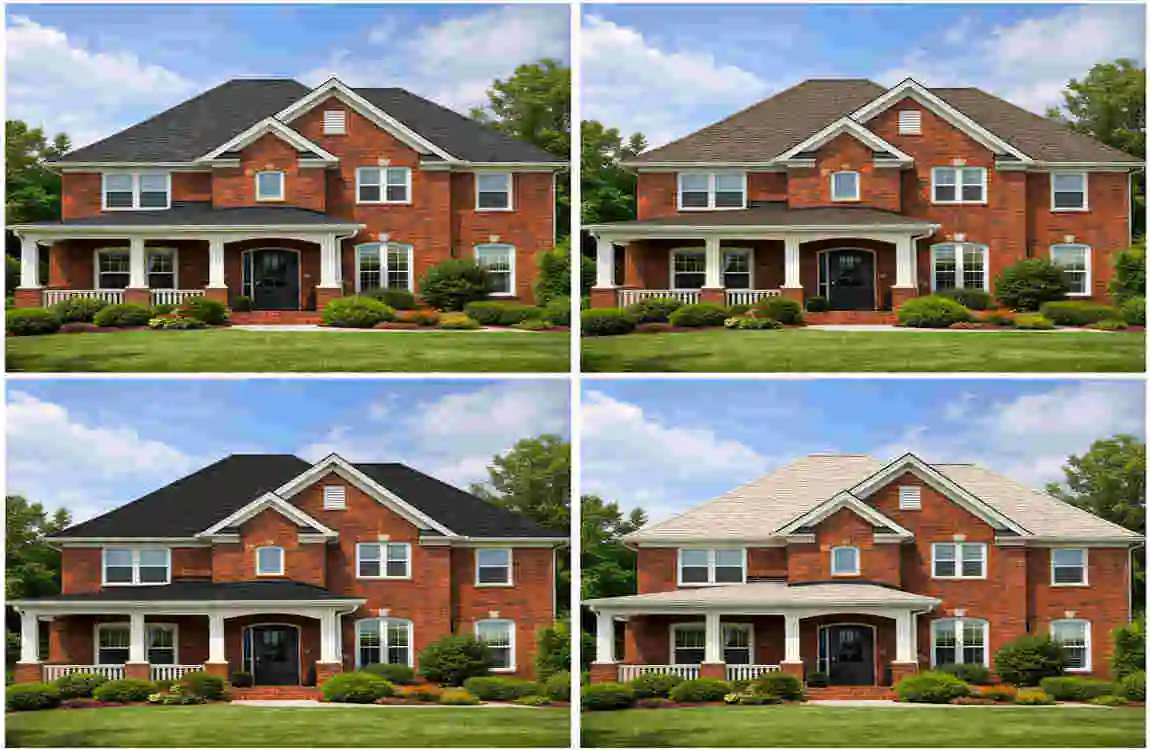
The color of your roof is more than just an aesthetic decision—it affects your home’s style, energy efficiency, and value. For red brick houses, the roof color can either emphasize or soften the natural warmth of the bricks. Here’s why it’s important to get it right.
Brick Shade
Not all red bricks are the same. Some have a brighter, orange-red hue, while others lean towards a deeper, darker red. The shade of your brick will influence whether you should opt for a contrasting roof color (like gray) or a harmonious one (like brown or earth tones).
Climate Considerations
The UK and areas with similar climates benefit from darker roofs that retain warmth in cooler seasons. However, if you live in a hot or sunny climate, a lighter roof color that reflects heat may be a better option.
Architectural Style
Traditional homes often look best with classic, darker roof colors. In contrast, modern homes can experiment with lighter neutrals or bold combinations.
HOA Rules and Neighborhood Trends
If you live in a community with a homeowner’s association (HOA), you may have restrictions on roof colors. Additionally, consider the overall look of your neighborhood—your chosen color should complement nearby homes.
FactorContrast (e.g., Gray Roof)Harmony (e.g., Brown Roof)
Curb Appeal Creates a bold, striking pop Offers a cozy, blended look
Heat Absorption Lower (reflects heat) Higher (retains heat)
Style Impact Modern or contemporary Traditional or rustic
Top Best Roof Colors for Red Brick Houses
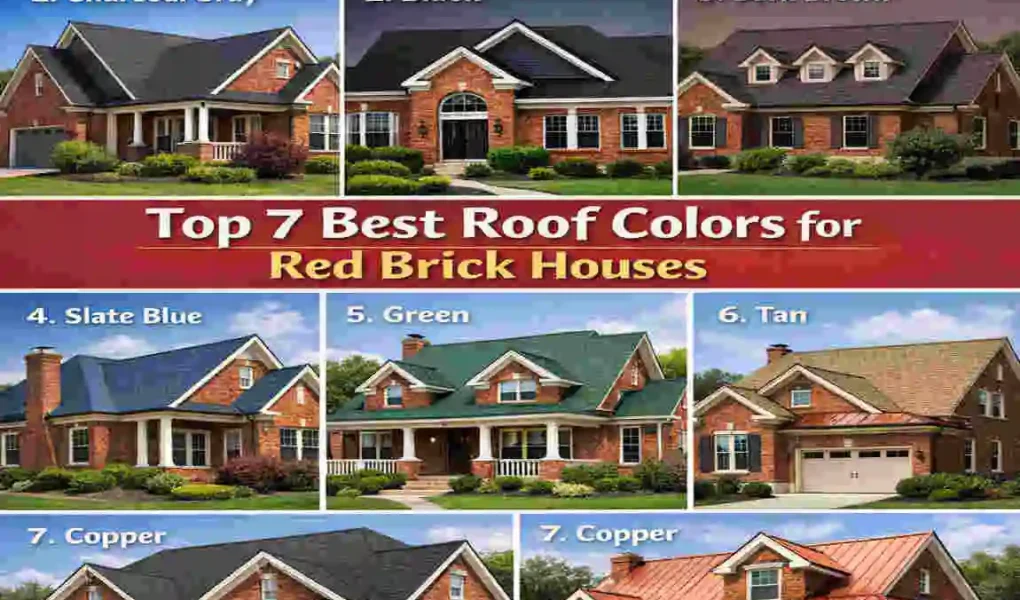
Let’s dive into the top 7 roof colors for red brick homes, their benefits, and how they can transform your property’s appearance.
Charcoal Gray
Charcoal gray is one of the most popular choices for red brick houses. Its soft contrast beautifully highlights the brick’s warm tones, creating a balanced, modern look.
Pros
- Works well with both light and dark red bricks.
- Timeless and versatile for any architectural style.
- Hides dirt and stains effectively.
Cons
- May absorb heat in warm climates.
Best For
- Contemporary or minimalist homes.
- Homes with white or cream trims.
Black
A black roof adds dramatic contrast to red brick homes, creating a bold and sophisticated appearance. Black is especially popular for Victorian and Colonial-style houses, where sharp edges and traditional features stand out.
Pros
- Enhances architectural details.
- Pairs beautifully with white trim and shutters.
Cons
- Absorbs heat, which could increase cooling costs in hot climates.
Best For
- Homes in cooler climates.
- Traditional and formal architectural styles.
Deep Brown/Earth Tones
Deep brown roofs provide a natural and earthy complement to red brick houses. This color adds a sense of warmth and blends seamlessly with rustic or country-style homes.
Pros
- Eco-friendly appeal with wood-like accents.
- Harmonizes beautifully with natural surroundings.
Cons
- It may not stand out as much in urban settings.
Best For
- Ranch-style or Craftsman homes.
- Homes with natural landscaping.
Weathered Wood
Weathered wood shingles offer a textured mix of gray and brown tones, making them a versatile choice for suburban homes. This color is trending in 2026 for its ability to add depth and character.
Pros
- Unique and eye-catching texture.
- Complements both modern and traditional homes.
Cons
- More expensive than solid colors.
Best For
- Suburban neighborhoods with mixed architectural styles.
Slate Gray
Slate gray is a lighter neutral that offers subtle elegance. It’s perfect for homeowners who want a softer look compared to charcoal gray but still want to maintain a modern aesthetic.
Pros
- Works well with brighter red bricks.
- Reflects more heat than darker grays.
Cons
- Needs regular cleaning to prevent dirt buildup.
Best For
- Classic or transitional home designs.
Dark Green
For a unique and earthy look, consider a dark green roof. This earthy standout pairs beautifully with red brick, adding a natural and refreshing vibe to your property.
Pros
- Ideal for homes surrounded by greenery.
- Stands out without overwhelming.
Cons
- Limited availability in some shingle brands.
Best For
- Craftsman or farmhouse-style homes.
Hickory/Brown-Gray
Hickory combines warm brown tones with subtle gray accents, offering a modern twist on traditional brown roofs. This color is HOA-friendly and works well in most climates.
Pros
- Balanced warmth and modern appeal.
- Matches a wide range of trims and siding.
Cons
- It can appear dull in low light.
Best For
- Homes with beige or cream siding.
Color Pairing Tips with Trim and Siding
The roof color is only one part of your home’s color palette. To achieve a cohesive look, coordinate it with your trim and siding. Follow the 60-30-10 color rule, where:
- 60% is the primary color (brick).
- 30% is the secondary color (roof).
- 10% is the accent color (trim).
Roof Color, Best Trim, Siding Match
Charcoal Gray, White, or Cream , Beige or Taupe
Black Light Gray Stone or White
Deep Brown/Earth Tones Tan or Off-White Natural Wood
Slate Gray, White, or Pale Gray Warm Neutrals
Common Mistakes to Avoid
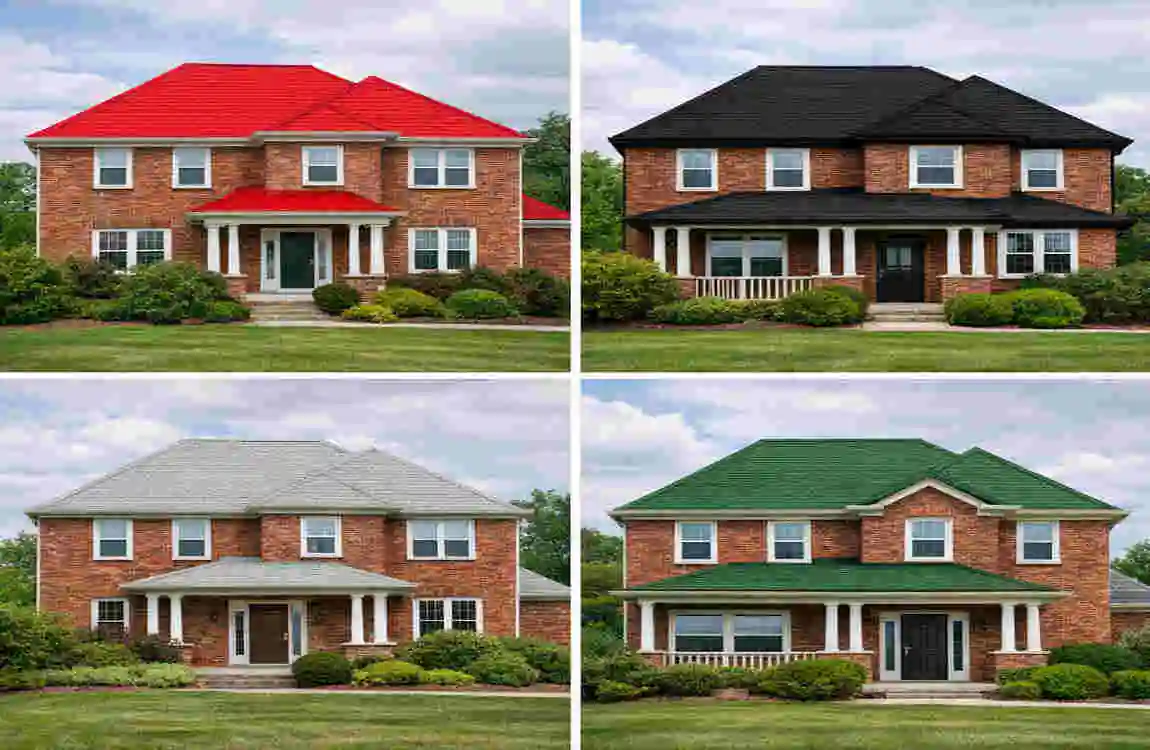
When choosing a roof color for your red brick house, avoid these common pitfalls:
- Choosing overly light roofs: These can dull the brick’s vibrancy.
- Ignoring the climate: Consider heat absorption and reflection.
- Skipping samples: Always test shingles in natural sunlight to see how they look.
FAQ Section
What color roof is best for a red brick house in a hot climate?
For warmer climates, lighter colors like slate gray or weathered wood are ideal as they reflect heat.
Does a black roof work on a red brick house?
Yes, a black roof provides bold contrast and works well with traditional styles.
How do I choose a roof color that boosts curb appeal?
Focus on creating either contrast or harmony, depending on your home’s style and surroundings.
Related Posts